Palazzo Cavriani, Neoclassical palazzo in central Mantua, Italy
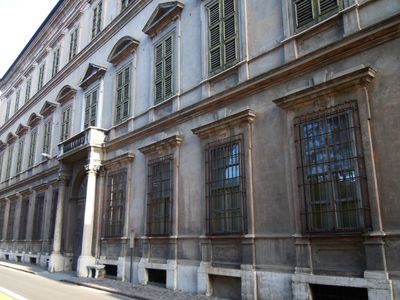
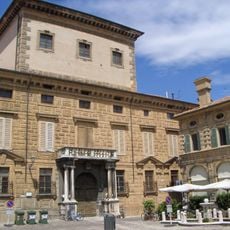
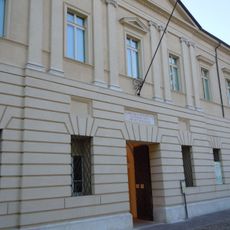
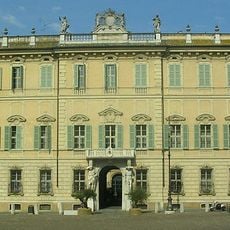
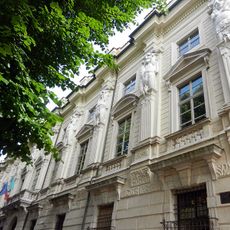
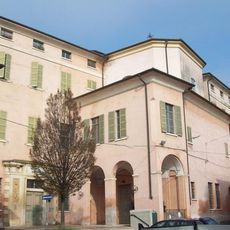
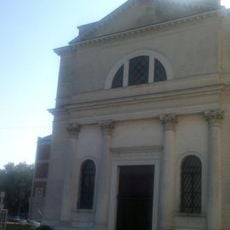
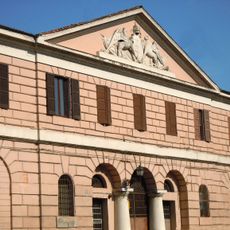
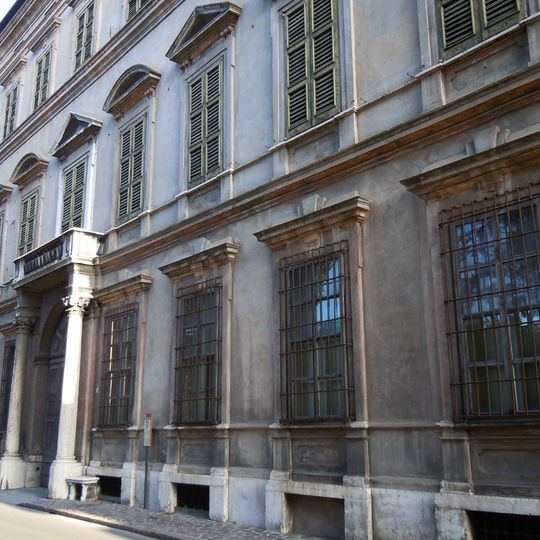
Palazzo Cavriani is a neoclassical palace on Via Trento in Mantua, rebuilt in 1756 by architect Alfonso Torreggiani for Marquis Antonio Cavriani. Its exterior has windows with sturdy iron grilles, and the upper-floor windows are topped with triangular and half-moon pediments. Inside, a large hall is decorated with stuccoes and frescoes by Mantuan painters including Giuseppe Bazzani and Francesco Maria Raineri; the building has 140 rooms over 12,000 square metres.
The building was first constructed in the 16th century and later transformed by the Cavriani family during the 18th century. This renovation followed designs by architect Alfonso Torreggiani and gave the palazzo its current neoclassical style.
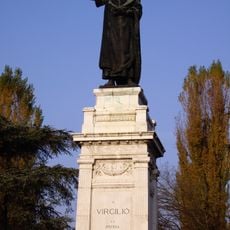
The garden's iron fence carries thirteen outward-facing busts of Renaissance Mantuans, among them Baldassarre Castiglioni, Teofilo Folengo, Sordello Visconti and Cardinal Ercole Gonzaga. In the centre stands a marble statue of Virgil, carved in 1835 by the Milanese sculptor Stefano Gerola.
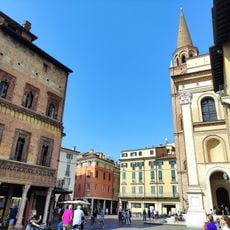
The palazzo stands on via Trento, facing the garden laid out in 1826 on the site of the demolished Spolverini house. The garden is enclosed by an iron fence set with thirteen busts of Renaissance Mantuans and entered toward the palace; Virgil's marble statue by Stefano Gerola stands at its centre. The palace itself was abandoned by the Cavriani family after 2004 and sold at auction in November 2017, so it is seen from the street and garden rather than visited inside.
In September 1838, when Emperor Ferdinand I visited Mantua, Marquis Cavriani lit his garden with an elaborate system of lights. The garden's painted perspectives on the far walls were made by the Mantuan painter Alessandro Ferraresi, while Chiozzini and Silva produced the wrought iron.
The community of curious travelers
AroundUs brings together thousands of curated places, local tips, and hidden gems, enriched daily by 94,669 contributors worldwide.