Milonia, Archaeological site in Ortona dei Marsi, Italy
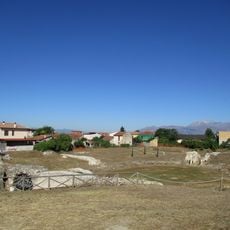
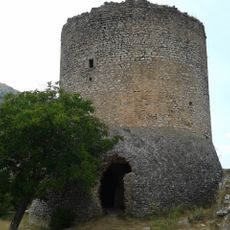
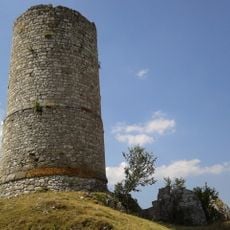
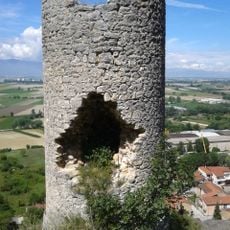
Milonia is an ancient Marsic fortified settlement in the territory of Ortona dei Marsi, in the province of L'Aquila. Its remains lie between the mountain localities of Casei and Colle Cavallo and near the hamlets of Cesoli and Rivoli, where traces of tombs, sections of the circuit wall and the ancient gates are still visible. The site was identified with certainty by the English scholar Andrew Slade in 1975.
Milonia was founded as a Marsic oppidum in the 5th century BC. In 301 BC the dictator Marcus Valerius Corvus forced the Marsi into Milonia, Plestinia and Fresilia and took them; in 294 BC the Samnites sheltered there and the consul Lucius Postumius destroyed the town. Rebuilt near Colle Cesoli, it was sacked in the late 6th century by the Lombards under Faroald I.
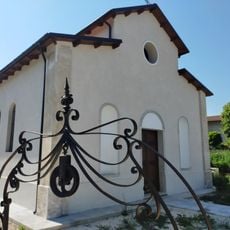
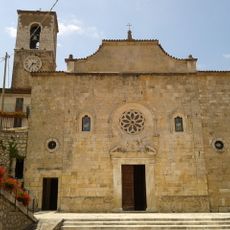
The name shifted from Milionia to Melogne, Melogna and finally Milonia, a change tied to the local dialect. Church documents from the 10th century call the place Melonie, and the toponym Melogne appears beside the church of Sancti Quirici, attested in diocesan archives until the early 16th century. The Marsic cult of the goddess Vesuna is also recorded here.
The remains lie between the mountain localities of Casei and Colle Cavallo, above the hamlets of Cesoli and Rivoli in the municipality of Ortona dei Marsi. The walls, tomb remains and traces of the ancient gates are visible on foot along unpaved mountain ground, so sturdy shoes help.
The site was identified in 1975 by the English scholar Andrew Slade, who placed the Marsic stronghold between the mountain localities of Casei and Colle Cavallo, near the hamlets of Cesoli and Rivoli. Traces of tombs, stretches of the wall circuit and the ancient gates are still visible there.
The community of curious travelers
AroundUs brings together thousands of curated places, local tips, and hidden gems, enriched daily by 94,057 contributors worldwide.