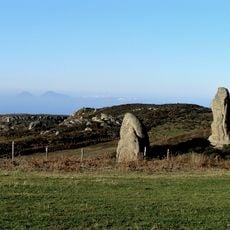
Area archeologica di Tindari, Archaeological site and museum in Patti, Sicily
The Tindari archaeological area in Sicily contains Greek-Roman ruins scattered across a hillside, including an ancient theatre, thermal baths, and residential houses featuring columned courtyards. The remains are spread over substantial grounds and show how the city was laid out and organized in antiquity.
Dionysius I of Syracuse founded Tyndaris around 396 BC on land taken from Abacaenum, settling Greek mercenaries devoted to the Dioscuri, from whom the city took its name. After Timoleon's victory in 344 BC the colony enjoyed about sixty years of peace and grew wealthy. In 257 BC the naval Battle of Tyndaris took place in the waters between the city and the Aeolian Islands, won by the Roman fleet under Marcus Atilius Regulus.
The colony's name comes from the Tindaridi, the Dioscuri Castor and Pollux, sons of Leda and step-sons of Tyndareus, king of Sparta; the settlers were devoted to them, and their images appear on coins found in the excavations. Tuna fishing and the seasonal processing of the catch were practised in the waters below from antiquity.
The site lies on the Capo Tindari promontory above the sea, in the municipality of Patti. The main approach climbs the southern slope, where the squared-stone walls of the double circuit run beside the path up to the summit. The ground is uneven and the route rises and falls, so wear sturdy shoes.
The Greek theatre was built with sandstone blocks in the 3rd century BC but was later modified by Romans to host circus games and performances. This transformation demonstrates how occupying powers adapted existing structures to their own forms of entertainment.
The community of curious travelers
AroundUs brings together thousands of curated places, local tips, and hidden gems, enriched daily by 94,547 contributors worldwide.