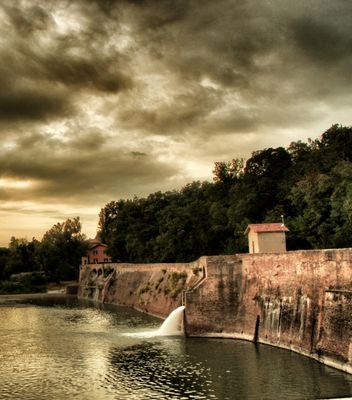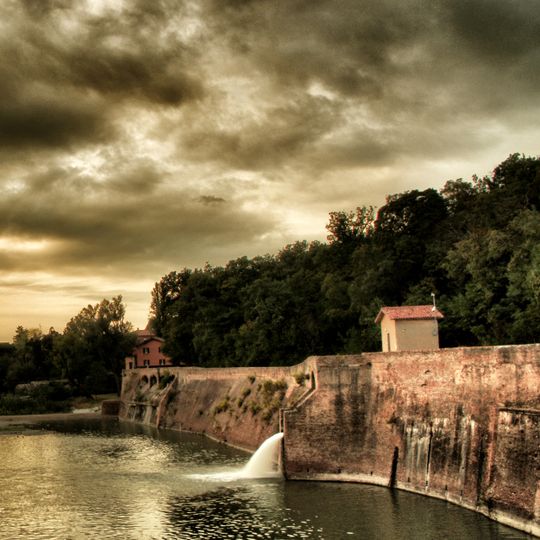
Chiusa di Casalecchio di Reno, Medieval water lock in Casalecchio di Reno, Italy
The Chiusa di Casalecchio di Reno sits on the Reno River and regulates water flow through gates and channels at the transition from mountains to plains. The structure contains multiple water chambers and openings that control the water level and direct the current.
A wooden weir on the Reno is documented in 1183, when the Reno canal opened. In 1250 Bologna built a stone lock upstream, completed in 1278, and the old timber weir was dismantled in 1309. After 1360 Cardinal Egidio Albornoz ordered a reorganisation of the lock. Ruins of the structure wrecked in 1325, probably during the Zappolino war, remain visible downstream.
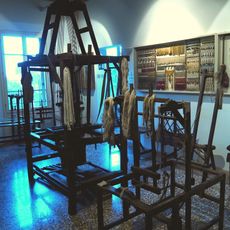
The lock sustained Bologna's silk industry from the 13th to 18th centuries by powering mills throughout the canal network. It allowed an entire region to benefit from the trade of precious fabrics.
The lock stands where the Reno leaves its mountain course for the plain, in Casalecchio di Reno. The ruins of the earlier structure destroyed in 1325 are still visible downstream of the present lock. Paths along the river allow visitors to view the weir and the head of the Canale di Reno from outside; no guided tours are organised.
The ruins of the lock destroyed by Passerino Bonacolsi's troops after the 1325 Battle of Zappolino are still visible downstream of the present structure. Historians debate whether the damage came from the troops or from a violent flood of the Reno.
The community of curious travelers
AroundUs brings together thousands of curated places, local tips, and hidden gems, enriched daily by 94,430 contributors worldwide.