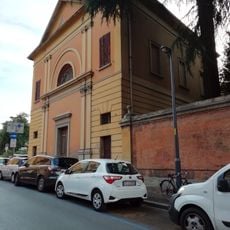
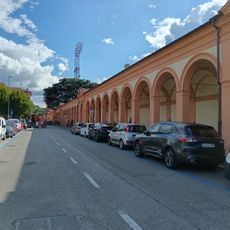
Villa Spada, Neoclassical villa and urban park in Bologna, Italy.
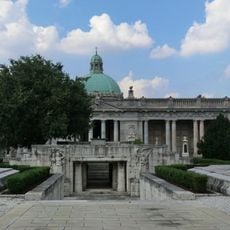
Villa Spada is a neoclassical villa with gardens in Bologna, featuring an elegant main building with symmetrical classical design. The grounds are filled with expansive green areas connected by paths that allow visitors to explore different sections of the estate.
Villa Spada was built in the 18th century for Jacopo Zambeccari, who entrusted the neoclassical design and the Italian-style garden to the Italo-Swiss architect Giovan Battista Martinetti. The property stayed with the Zambeccari family until 1811; in 1820 it was bought by the marquise Beaufort, wife of the Roman prince Clemente Spada Veralli, who added the strip along Via Saragozza to the park. In 1849 it housed the Austrian headquarters.
The property houses the Vittorio Zironi Textile and Tapestry Museum, where textile art collections are displayed within neoclassical rooms. Visitors can explore traditional craft techniques and historical fabrics from different periods here.
The park is accessible through the main gate on Via Saragozza and clearly marked for visitors. The different garden areas are connected by paths that are easy to follow and suitable for various walking paces.
The park existed before the villa was built and covers six hectares. In its southern Italian garden stands a memorial to the 128 partisan victims of the province of Bologna, erected in 1975. A second entrance on via di Casaglia leads to a hill about 50 m high with a near-360° view of Bologna's historic centre.
The community of curious travelers
AroundUs brings together thousands of curated places, local tips, and hidden gems, enriched daily by 92,858 contributors worldwide.