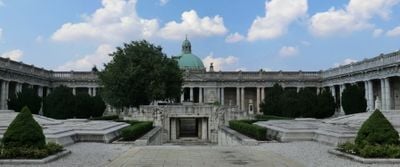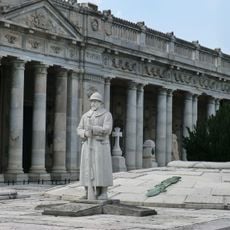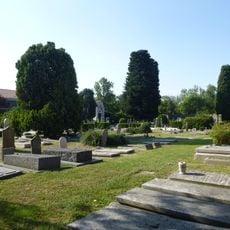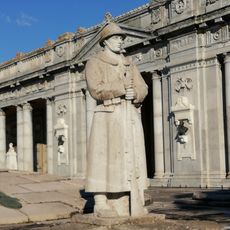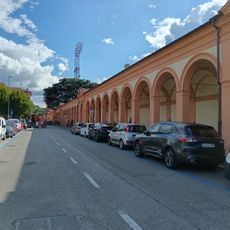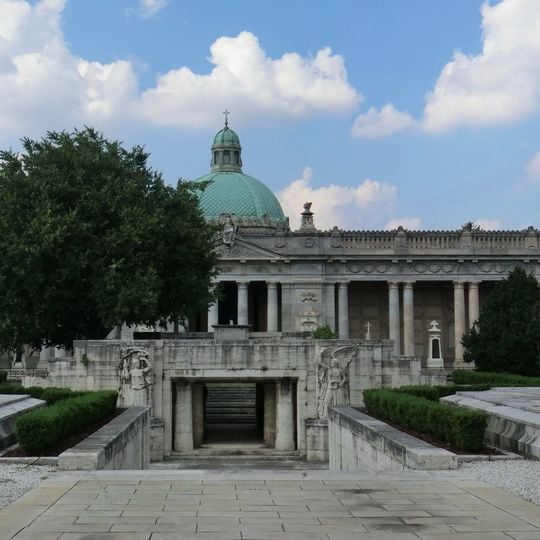
Certosa di Bologna, Monumental cemetery in Bologna, Italy.
Certosa di Bologna is a monumental cemetery in Bologna, Italy, occupying the buildings of a former Carthusian monastery. Its thirty hectares hold cloisters, galleries and chapels with at least 6,000 funerary works by more than 200 artists. The church of San Girolamo preserves seventeenth-century paintings, and the site lies near the Renato Dall'Ara stadium at the foot of the Colle della Guardia.
A Carthusian monastery was founded here in 1334 and served as a retreat for monks for over four centuries. Napoleon dissolved the monastery, and the grounds became a municipal cemetery starting in 1801.
The name comes from the Carthusian monastery (certosa) founded here in 1334. The Etruscan situla found on the site, a bronze banded vase used as a cinerary urn, is called the queen of situlae and is kept in Bologna's civic archaeological museum. The cemetery was a stop on the Grand Tour and later drew nineteenth-century international tourism.
Visits take place through guided walks that begin at Via della Certosa 18 and must be booked in advance by email. The tour follows the covered passages and provides access to multiple sections of the grounds.
Archaeologists uncovered an Etruscan burial ground from the seventh to third centuries BCE during excavations in 1869. The discovery shows that the site has been used for burials since ancient times.
The community of curious travelers
AroundUs brings together thousands of curated places, local tips, and hidden gems, enriched daily by 92,620 contributors worldwide.