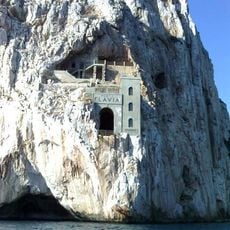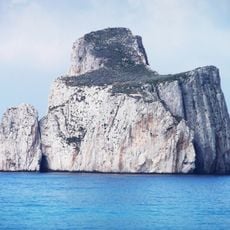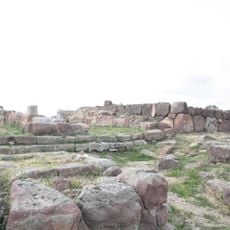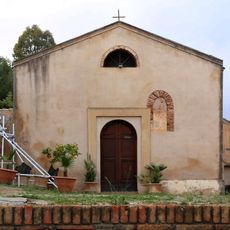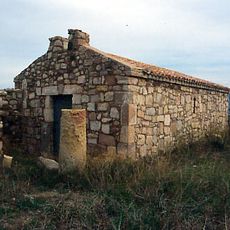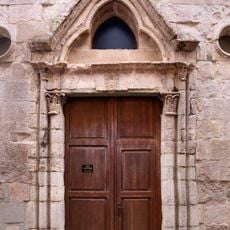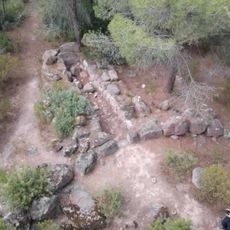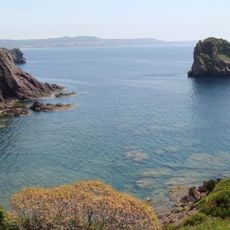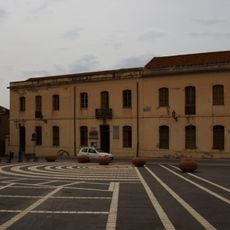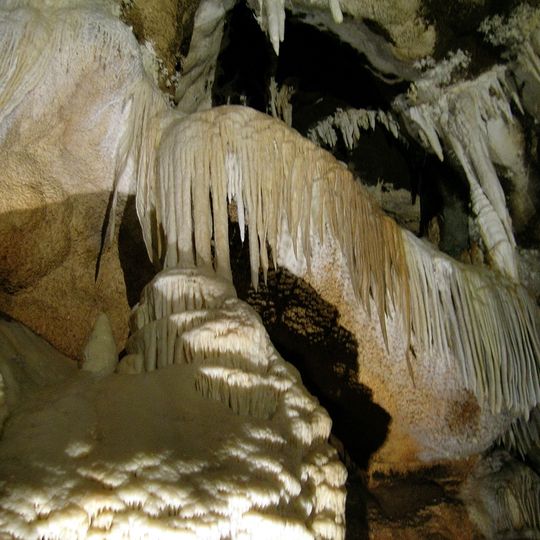
Grotta di Santa Barbara, Cave in Iglesias, Italy.
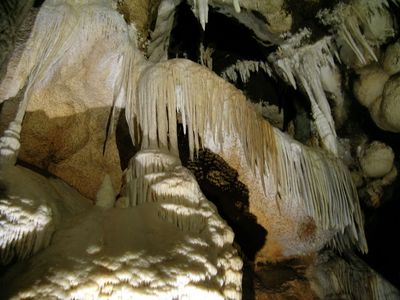
Grotta di Santa Barbara is a natural cave located within the abandoned San Giovanni mine, formed at the intersection of carbonate rocks from the lower Paleozoic era. The chamber sits deep below ground where visitors can view the geological layers and mineral formations that developed over millions of years.
In April 1952 miners digging a shaft to move extracted material between mine levels set off explosives and withdrew while the fumes cleared. The next shift found the cavity. Mine director Pietro Stefani came from the nearby village of Normann, gave up that section of the ore vein, had a gate installed and banned blasting within 1,000 metres of the cave.
The cave takes its name from Saint Barbara, patron saint of miners, a devotion rooted in the San Giovanni mine at Bindua, where the deposit was worked for lead and zinc. The discovery in April 1952 was reported to the mine director, engineer Pietro Stefani, who came from the nearby village of Normann and gave up working that section of the ore vein.
Access is provided through guided tours where visitors ride a motorized train deeper into the mine, then use an elevator and descend a spiral staircase. Plan for a full experience that involves multiple methods of transportation and walking through underground passages.
The dark brown tabular baryte crystals coating the walls and the pure white calcite hemispheres with aragonite eccentrics, including columns up to 25 metres high, grew over millennia in a cave that stayed hidden inside the mountain until 1952. The surrounding rock is Lower Cambrian limestone and silicified yellow dolomite, about 500 million years old.
The community of curious travelers
AroundUs brings together thousands of curated places, local tips, and hidden gems, enriched daily by 93,424 contributors worldwide.