Église San Sebastiano, Church building in Panicale, Umbria, Italy
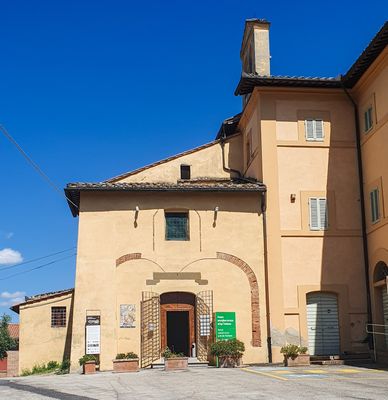
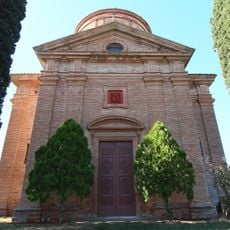
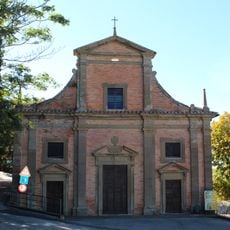
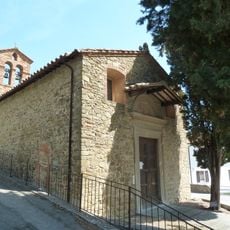
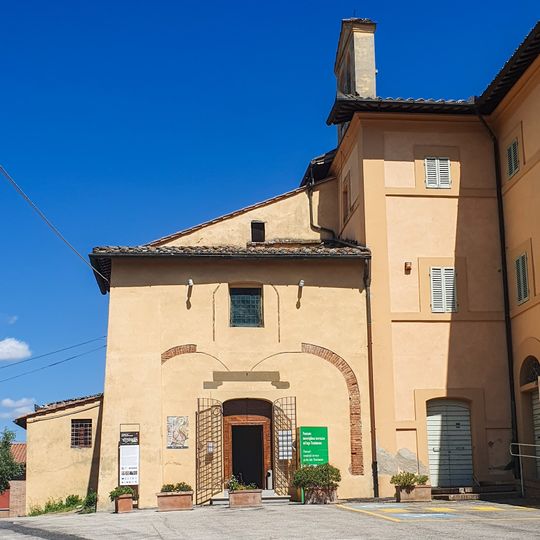
San Sebastiano is a small red-brick church on the edge of Panicale, a hilltop village in Umbria, and is listed as Italian national heritage and a religious museum. Its plain, rectangular facade conceals an interior with two side altars, small choir galleries, and a large fresco covering the back wall.
The church was built in the 15th century by the community of Castello di Panicale, and by the middle of that century it housed people struck by the plague. The inscription on the portal architrave still reads "ECC[LESI]A S[ANC]TI SEBAST[IAN]I C[AST]RI PANICALIS". In the early 17th century it was ceded to the Jesuits, then bought by the Order of the Vergini Marie to house a school for young girls.
The name and the Latin inscription on the portal architrave, "ECC[LESI]A S[ANC]TI SEBAST[IAN]I C[AST]RI PANICALIS", record that the church belonged to the castle of Panicale and was dedicated to the saint invoked against plague. In the early 17th century it passed to the Jesuits, then to the Order of the Vergini Marie, who used it for the education of young girls.
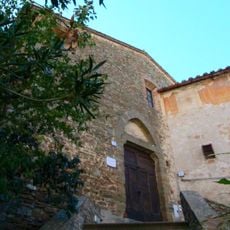
The church stands just outside Panicale's town walls. Look for the inscription "ECC[LESI]A S[ANC]TI SEBAST[IAN]I C[AST]RI PANICALIS" on the portal architrave, which identifies it as belonging to the castle of Panicale. Two arches are all that remain of the portico that once preceded the entrance.
The church also holds a fresco of the Virgin with Music-Making Angels that carries no signature and is attributed to Raphael, and above a side altar a canvas of the Madonna delle Grazie attributed to Antonio Circignani. The portal architrave still reads ECCLESIA SANCTI SEBASTIANI CASTRI PANICALIS, marking the building as belonging to the castle of Panicale.
The community of curious travelers
AroundUs brings together thousands of curated places, local tips, and hidden gems, enriched daily by 95,106 contributors worldwide.