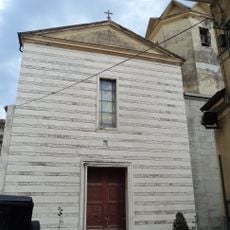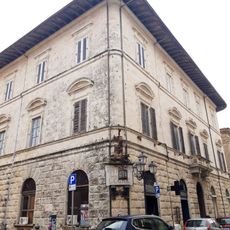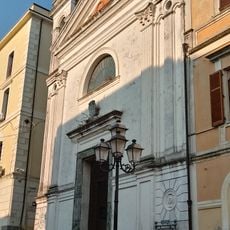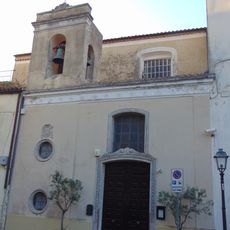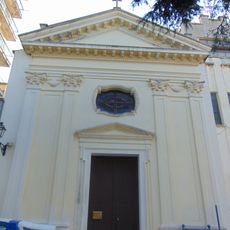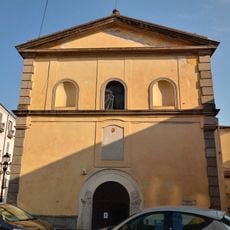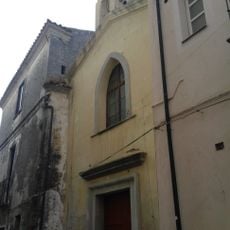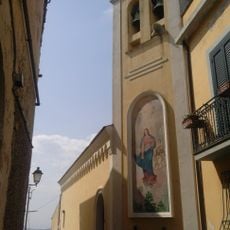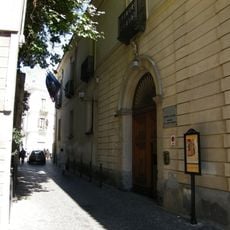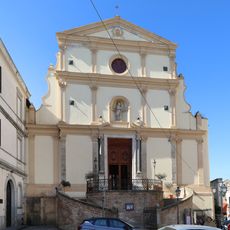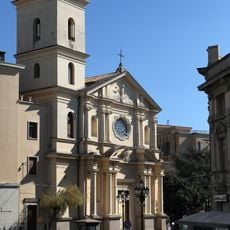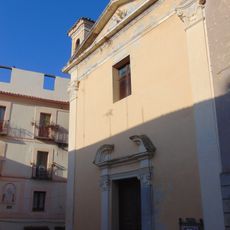
Church of Sant'Omobono, Medieval church in Catanzaro, Italy.
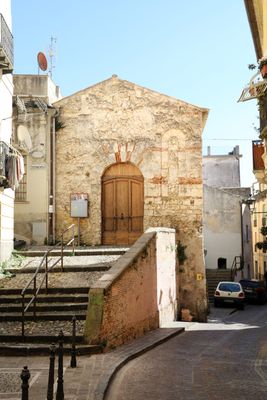
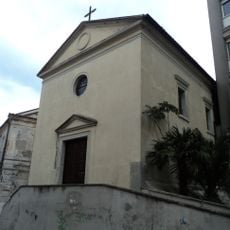
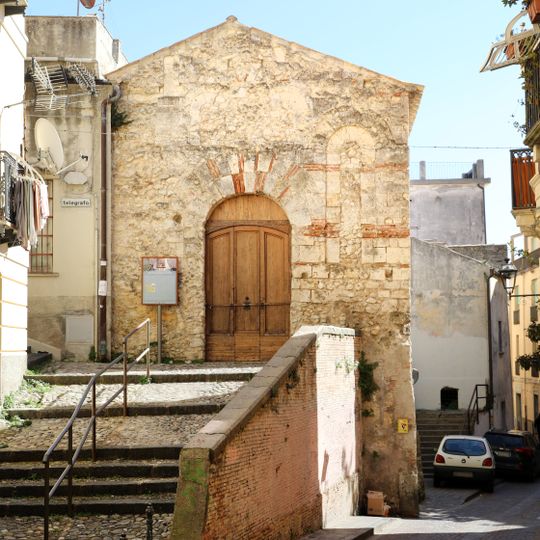
The Church of Sant'Omobono is a medieval religious building in Catanzaro that combines Norman and Byzantine architectural elements through rounded arches, sturdy columns, and narrow stone windows. The structure displays a distinctive blend of both styles visible throughout its exterior and interior.
Legend holds it was built over a Temple of the Sun in western Catanzaro, and it was originally tied to the Greek-Orthodox rite of Constantinople. Earthquakes in 1744, 1783 and 1832 caused heavy damage and repeated rebuilding, leaving the left side shorter than the right. Under the Kingdom of Naples it was seized and used as a munitions depot; in the Kingdom of the Two Sicilies Luigi Varano bought it for 320 ducats. In 1999 it passed to the Curia and was reconsecrated in 2002.
The church was the seat of the Congrega dei Sarti, the guild of tailors, active from the 17th century. Inside is kept a relic of Saint Homobonus, the patron saint of tailors, and the building is linked to the 19th-century legend of the Curatolo sect, whose members lured victims to the church and buried them there.
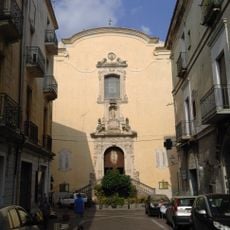
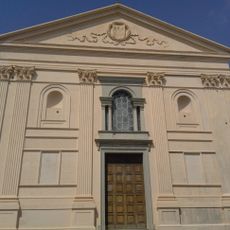
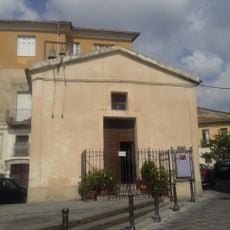
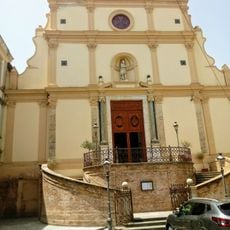
The church stands in the western part of Catanzaro, and the entrance is reached by a flight of steps, so access involves climbing. The left side of the building is shorter than the right, a visible result of the earthquake repairs, which helps orient yourself along the exterior. Look for the blind single window to the right of the entrance and the three single windows between the arches on the right side.
The church was the seat of the Congrega dei Sarti, the tailors' guild, from the 17th century. A relic of Saint Homobonus, patron of tailors and merchants, is kept inside. Local legend also links the building to the 19th-century Curatolo sect, whose members allegedly lured victims to the church and buried them there.
The community of curious travelers
AroundUs brings together thousands of curated places, local tips, and hidden gems, enriched daily by 93,789 contributors worldwide.