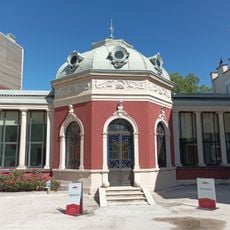
Cave di Pila, Historic quarry site in Villamontagna, Trento, Italy.
Cave di Pila is a quarry near Villamontagna in Trento where red ammonitic limestone, grey limestone and white limestone were extracted. The rock layers, composed of calcium carbonate, include the varieties known locally as Rosso Moro, Ziresol and Verdello. The old quarry was abandoned after World War II, partly filled with earth and turned into vineyards, and partly made into a public park through the work of the Ecomuseo Argentario.
The quarry opened in 1830 under Paolo Redi and supplied gray and red limestone for many buildings in Trento. Extraction continued for many decades and shaped the city's construction throughout the 19th and 20th centuries.
The quarry was a major workplace for the community, employing many in extraction and stone transport for generations. The materials quarried here shaped the appearance of local buildings and remain visible throughout the region today.
The old quarry stands at Pila, near Villamontagna, about 4 km east of Trento at an elevation of 547 m, on the slopes below Monte Celva. The abandoned extraction area was partly filled with earth and turned into vineyards and a public park through the work of the Ecomuseo Argentario. Paths cross uneven ground, so sturdy shoes help.
Stone from this quarry was later used in the renovation of Trento's historic center and contributed to a project that won a major European design prize in 1995. This reuse shows how the quarry's output continues to shape the city today.
The community of curious travelers
AroundUs brings together thousands of curated places, local tips, and hidden gems, enriched daily by 93,700 contributors worldwide.