Sestiere di Porta Nuova, Historical district in Milan, Italy
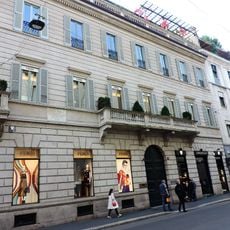
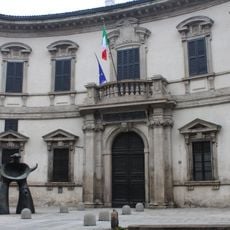
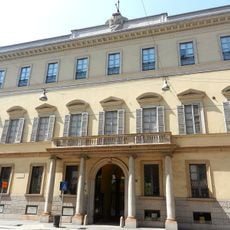
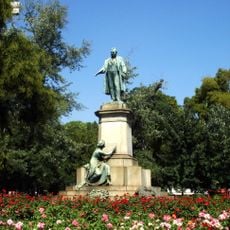
Sestiere di Porta Nuova is one of the six historic districts of Milan, bounded by the Cerchia dei Navigli, the line of the medieval walls. It takes its name from the medieval Porta Nuova gate. The Palazzo della Ragione, for centuries Milan's municipal seat, stood within it, and the boundaries of all six districts radiated from that building.
The Roman Porta Nuova, also called Porta Aurea, was built after 291 under Emperor Maximian, when Mediolanum became capital of the Western Roman Empire and the walls were extended northeast. In the Middle Ages the gate was moved outward along the new defensive ditch, and the Spanish walls later shifted it again. The sestiere took its name from this gate.
The sestiere's emblem is four squares alternating white and black, described by Bonvesin de la Riva; Galvano Fiamma records an earlier white lion on a black field, later dropped. Bernardino Corio and Giacomo Filippo Besta also mention the lion, Besta as chequered white and black. The scheme mirrors that of Porta Comasina, which used red instead of black.
The district sits on major transportation routes and connects easily to public transit, as it links Milan's historic center with northern city areas. Walking through it allows visitors to fully experience the tight urban layout and details of the medieval streets.
The Palazzo della Ragione, for centuries Milan's municipal seat, stood in this sestiere, and the boundaries of all six sestieri radiated outward from it. The district's emblem, described by Bonvesin de la Riva, is four squares alternating white and black; Galvano Fiamma records an earlier white lion on a black field, later dropped.
The community of curious travelers
AroundUs brings together thousands of curated places, local tips, and hidden gems, enriched daily by 95,475 contributors worldwide.