Castello di Nicastro, Medieval castle in Lamezia Terme, Italy.
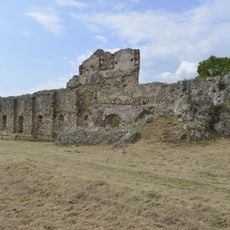
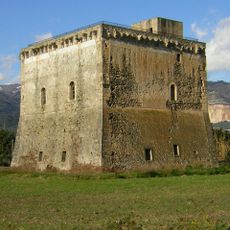
Castello di Nicastro is a castle on San Teodoro hill distinguished by four cylindrical towers and defensive walls that look out over the Lamezia plain and gulf. The structure contains remains from different periods that reflect the site's architectural evolution.
The Normans built the fortress in the 11th century over Byzantine foundations, and Frederick II later added a pentagonal keep. These changes show how the fortress reflects different rulers layer by layer.
The castle's name comes from the San Teodoro hill district of Nicastro, the oldest quarter of what is now Lamezia Terme. The site is tied to the fate of Henry VII of Hohenstaufen, son of Frederick II, held here from 1240 under the castellan Martino d'Ippolito of the House of D'Ippolito, originally from Mantua. Accounts of his end differ: suicide on 12 April 1242 at 31, a fatal fall from his horse while being moved to Martirano, or death from illness caught in prison.
The castle is visitable despite its unstable condition, so access is possible but requires care around the ruined towers and walls. The site stands on San Teodoro hill, the oldest district of Nicastro, overlooking the plain down to the sea. Henry Swinburne described it in 1778 as a romantic ruin perched above a roaring stream in a dark, wooded valley.
Henry VII, son of Frederick II, was held in the castle from 1240 under castellan Martino d'Ippolito. He died on 12 April 1242, aged 31, during transfer to Martirano; one account says he threw himself from his horse, while documented research points to illness contracted in prison.
The community of curious travelers
AroundUs brings together thousands of curated places, local tips, and hidden gems, enriched daily by 94,255 contributors worldwide.