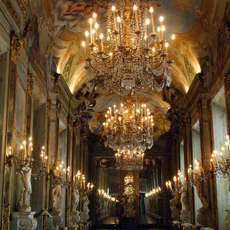
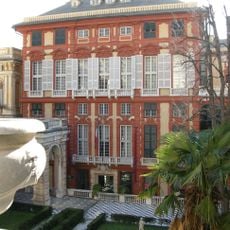
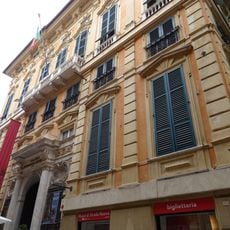
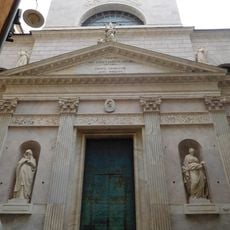
Via Cairoli, 18th-century street in Genoa, Italy
Via Cairoli is an 18th-century street in Genoa's historic centre, laid out between 1778 and 1786 by architect Gregorio Petondi as Strada Nuovissima. It links the 16th-century Strada Nuova (now Via Garibaldi) and the 17th-century Strada Balbi (now Via Balbi). Its construction required demolishing old working-class houses and adapting aristocratic palaces such as Palazzo Lomellini-Doria Lamba.
The street developed between 1778 and 1786 as part of the Strade Nuove initiative, when Genoa held considerable maritime power in the Mediterranean region. The construction was part of a major urban redesign intended to modernize Genoa as an important trading center.
The palaces lining the street belonged to noble families who entertained diplomatic visitors according to the Rolli system, making their homes centers of political and social life. This practice shaped how the neighborhood functioned and who held power within Genoa's society.
The street is accessible daily for walking and observing the external architecture of the palaces. Interior access to many buildings is available during special Rolli Days events held several times a year, when owners open their doors to visitors.
The street formed part of a system where palaces were officially listed to accommodate important visitors, a practice not widely adopted by other European cities. This Rolli registry created a centralized way to manage guest accommodations that set Genoa apart from other trading centers.
The community of curious travelers
AroundUs brings together thousands of curated places, local tips, and hidden gems, enriched daily by 94,389 contributors worldwide.