Megalithic Walls of Altamura, Ancient defensive walls in Altamura, Italy.
The Megalithic Walls of Altamura are the remains of the defensive circuit of the ancient city, built around the 4th century BCE. The original wall ran for about 3.6 km, stood about 4 m high and had a base over 5 m wide. Only a few sections survive, including fragments inside Palazzo De Angelis Viti and along the southern stretch of the later town wall.
These defensive works were built in ancient times around the 4th century BCE as the earliest fortifications of the region. Many centuries later, in the 13th century, new walls were constructed under Frederick II of Hohenstaufen, partly overlapping with the older structures.
Porta Alba, also called Porta Aurea, is the only gate of the megalithic walls that still survives; its name likely dates from the second millennium AD. Cesare Orlandi, in Delle città d'Italia (1770), linked the city's name Altamura to these walls, reading it as "high wall".
The walls run along Via Mura Megalitiche, where information boards explain details about the structure to visitors. This location offers good conditions for exploring and understanding the ancient fortification.
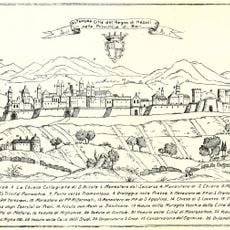
Cesare Orlandi in 1770 suggested the city's name may come from these walls, and reported many finds nearby that are now lost. Rocca map P/33, kept in Rome's Angelica Library, shows memorial stones on the walls that no longer exist.
The community of curious travelers
AroundUs brings together thousands of curated places, local tips, and hidden gems, enriched daily by 93,542 contributors worldwide.