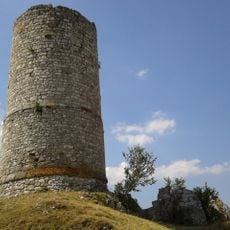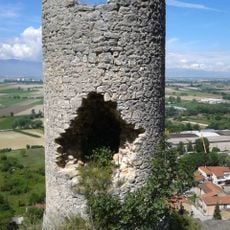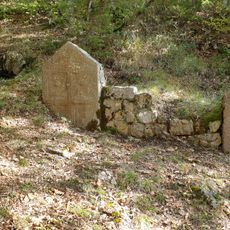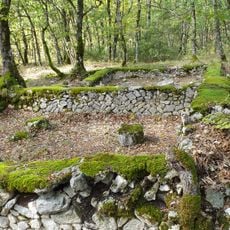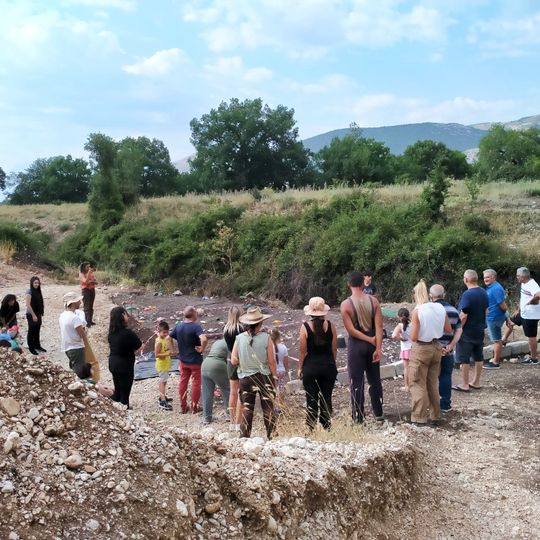
Area archeologica di Rio Tavana, Neolithic archaeological site near Tavana river, Lecce nei Marsi, Italy
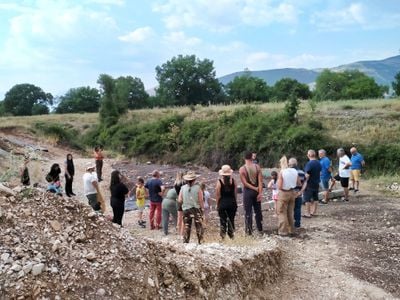
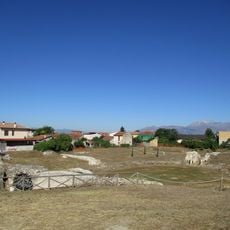
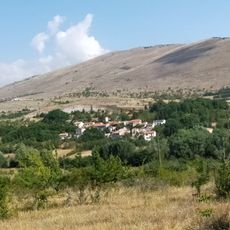
The Rio Tavana excavation area sits along a river valley at about 735 meters elevation and reveals traces of early settlements. The site contains remains of wooden structures, stone and bone tools, and other objects from the daily life of these early inhabitants.
The excavation dates to around 6900 years ago and shows evidence of early settlers who established themselves in this region. Archaeological findings suggest these communities gradually transitioned from moving from place to place to practicing farming.
The remains show simple dwellings made of wooden poles and clay walls that early inhabitants built for shelter. These structures reveal how the first settled communities organized their living spaces and practiced their crafts.
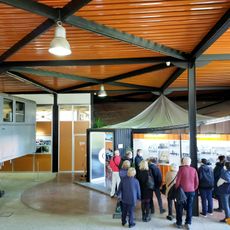
The site sits in a river valley and can be explored on foot while paying attention to marked paths. It serves as a learning place where visitors can observe excavation work and learn about the early history of this area.
A semicircular deposit revealed rare bone tools that show how people refined their farming methods over time. These special finds offer glimpses into how agriculture developed in central Italy.
The community of curious travelers
AroundUs brings together thousands of curated places, local tips, and hidden gems, enriched daily by 60,000 contributors worldwide.