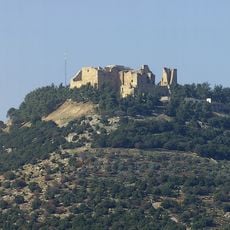
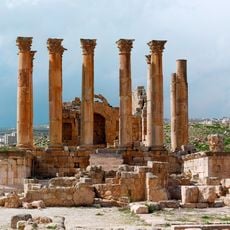
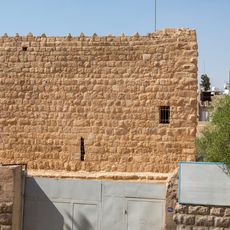
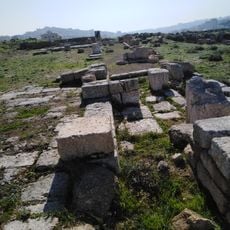
Ancient Jerash, Archaeological site from Greco-Roman period in northern Jordan.
Ancient Jerash is a Greco-Roman city in northern Jordan that spreads across a wide plain ringed by hills. The surviving structures include colonnaded streets, theaters, and buildings of marble and granite that reflect the architectural style of that period.
Gerasa was a Decapolis city that flourished under Rome after Pompey annexed the region in 64 BC. In the 1st century AD it was laid out with a north-south cardo and two decumani, and Trajan's annexation of the Nabataean kingdom in 106 brought further wealth. Hadrian visited in the winter of 129-130 and a triumphal arch was built in his honour. The Persian occupation of 614, the Arab conquest of 636 and the earthquake of 747 ended its prosperity.
Temples and churches mark the shift from Roman to Christian worship that took place here over time. Visitors can see today how multiple faiths left their mark on the same spaces through different religious structures.
The oval forum sits in a hollow near the south gate, and a stairway with carvings of vine tendrils and pomegranates climbs from it to the Temple of Zeus. Hadrian's Arch stands 250 m south of the walls, 37 m wide and 13 m high. The ground is uneven and largely unshaded, so sturdy shoes and sun protection matter.
The oval forum's limestone paving grows larger from the centre to the edge, and its 56 Ionic columns enclose a space about 90 by 80 metres. In the 7th century the pedestal at its centre became a fountain; the water system is still visible beneath the podium.
The community of curious travelers
AroundUs brings together thousands of curated places, local tips, and hidden gems, enriched daily by 93,598 contributors worldwide.