Hidden Christian Sites in the Nagasaki Region, Religious architectural ensemble in Nagasaki, Japan
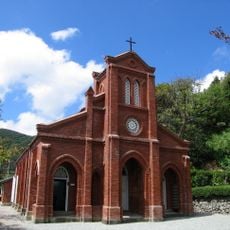
The Hidden Christian Sites in the Nagasaki Region is a UNESCO World Heritage listing of twelve component properties in Nagasaki and Kumamoto Prefectures. They include the Ōura Cathedral in Nagasaki, the stone-walled villages of Shitsu and Ōno, the Amakusa Shitsu settlement, and the island communities of Kuroshima, Nozaki, Tōgō, Hisaka and Naru. The churches and villages show how Hidden Christians adapted their faith to local conditions.
Christianity reached Japan in 1549 with Francis Xavier and spread from Nagasaki. After the Shimabara Rebellion of 1637–1638, the Tokugawa shogunate suppressed Christian practice and closed the country for over two centuries. Without missionaries, believers formed hidden communities; when Japan reopened in the 1850s, many resurfaced, and Ōura Cathedral was built in 1864. The twelve sites were inscribed by UNESCO on 30 June 2018.
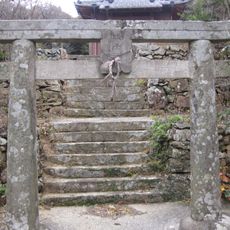
The name refers to the Hidden Christians (kakure kirishitan), who kept their faith without missionaries for about 250 years under the Edo-period ban. In the Goto islands, stonework techniques developed in the Outouchi and Ono settlements were carried to Kuroshima, Nozaki and Hisaka, where they were used for church construction and harbour works. Descendants still live in several of the villages.
Multiple locations are accessible by car or train from Nagasaki, though some lie in remote rural areas. Guided tours with English-speaking interpreters can be arranged to understand the full story and meaning of each site.
Christians openly revealed their faith only after 1873 once persecution officially ended, finally displaying their churches to the world. This sudden disclosure after generations of concealment makes these sites a remarkable historical turning point.
The community of curious travelers
AroundUs brings together thousands of curated places, local tips, and hidden gems, enriched daily by 94,364 contributors worldwide.