Mount Funaoka, Mountain and historic site in Kita-ku, Japan.
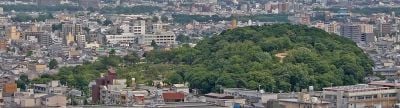
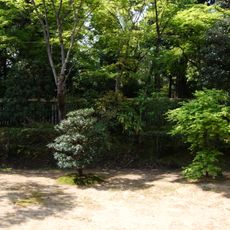
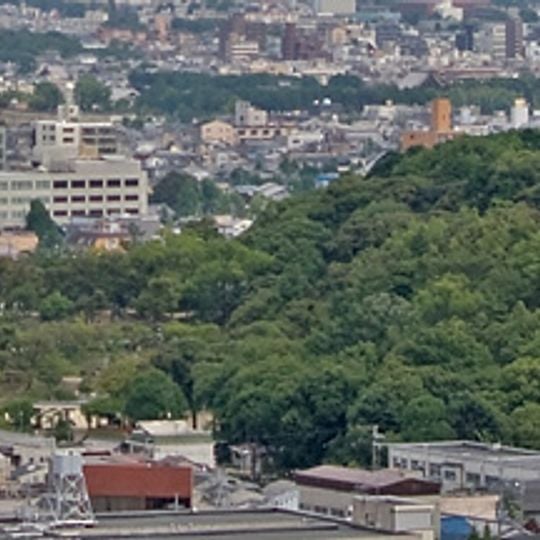
Mount Funaoka is a rounded hill in Kyoto's Kita-ku, 111.7 m high and covering 25,000 tsubo, its slopes covered by a continuous canopy of trees. The summit holds a third-order triangulation point, and chert rock of Jurassic origin outcrops near the top. The hill's south side falls away as a cliff, thought to be a fault line.
Funaoka-yama was the execution site of Minamoto no Tameyoshi and his sons after their defeat in the Hōgen Rebellion of 1156. In 1467, during the Ōnin War, Yamana Noriyuki of Bizen and Isshiki Yoshinao of Tango built Funaoka Castle here as a stronghold of the Western Army; the surrounding area has been called Nishijin since. The whole hill was designated a national Historic Site on 15 February 1968.
The name comes from the hill's boat-like shape, as recorded in the Miyako Meisho Zue. Sei Shōnagon listed it first among hills in her Pillow Book (chapter 231), writing "Oka wa Funaoka." Yoshida Kenkō's Tsurezuregusa (chapter 137) names Funaoka alongside Toribeno as a burial ground where the city's dead were carried.
Buses 1, 12, 204, 205, 206, North 8 and M1 stop at Funaoka-yama and Kenkun-jinja-mae, a short ride from Kitaoji Station on the Karasuma subway line. The summit holds a third-order triangulation point and fills up on 16 August for Gozan no Okuribi, when the five bonfires are watched from here.
The name comes from the hill's boat-like shape, as recorded in the Miyako Meisho Zue, not from any waterway. The summit holds a third-order triangulation point, and the chart rocks outcrop near the top; the southern side drops as a cliff, thought to be a fault.
The community of curious travelers
AroundUs brings together thousands of curated places, local tips, and hidden gems, enriched daily by 93,661 contributors worldwide.