Benten-jima, Desert island in Wakkanai, Japan
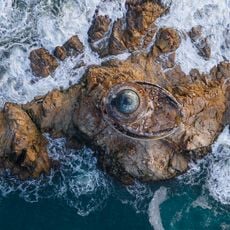
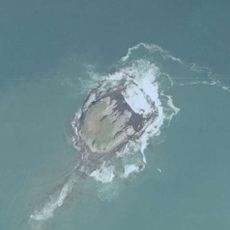
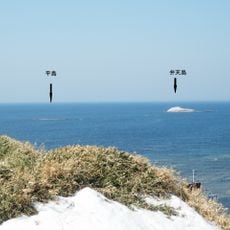
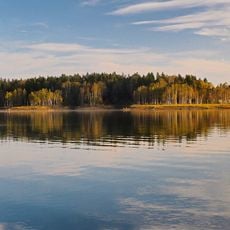
Benten-jima is a 0.5-hectare uninhabited island of basalt rising 20 metres above the sea, with a perimeter of about 500 metres. Its grey-brown rock has a scallop-shell outline, widest across the middle and tapering at both ends, with vertical ridges running from the flattened top to the waterline. A small pale structure stands on a separate rock to the far left.
The island appears as "Soya Stone" in Edo-period records: the 1712 Wakan Sansai Zue shows an island off Sannahi, and Matsuura Takeshiro's 1846 Rekō Ezo Nisshi names it Soya-iwa with Benten-jima as an alternative, noting a small shrine where Ainu offered inau. By 1896 it was charted as Benten-jima; a 1928 village survey describes it sheltering the Sannai anchorage.
The island's name comes from Benzaiten, a deity once enshrined here; the Edo-period explorer Matsuura Takeshirō recorded a small shrine where Ainu offered inau. Ainu folklore links Benten-jima to the nearby Hira-shima as wife and mistress of a spirit, and a rock feature said to be a treasure box tied with a rope.
The island is surrounded by water and can only be approached safely during calm conditions, so checking weather beforehand is important. Binoculars or telephoto cameras are useful for observing seabirds and marine mammals from a distance.
The island's Ainu name Soya was long explained as meaning "bee", from a supposed bee-shaped rock; the 1891 Hokkaido Ainu place-name dictionary rejected this as "greatly mistaken". Older maps label the rock Soya-ishi, and an 1898 sailing directory calls it a white island 38 feet high.
The community of curious travelers
AroundUs brings together thousands of curated places, local tips, and hidden gems, enriched daily by 93,252 contributors worldwide.