Kiyomizu-dera, Buddhist temple in Higashiyama, Kyoto, Japan
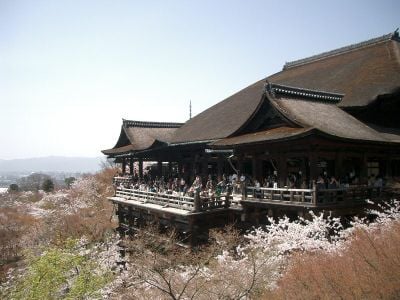
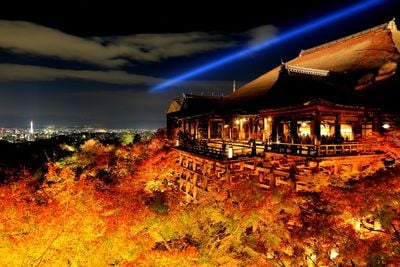
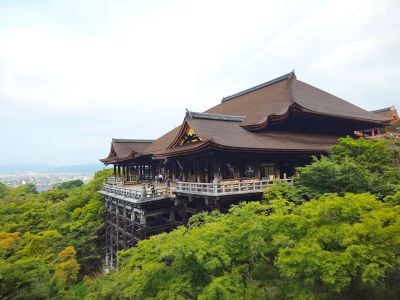
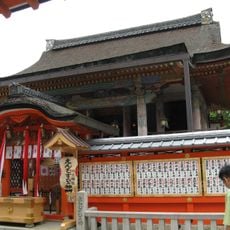
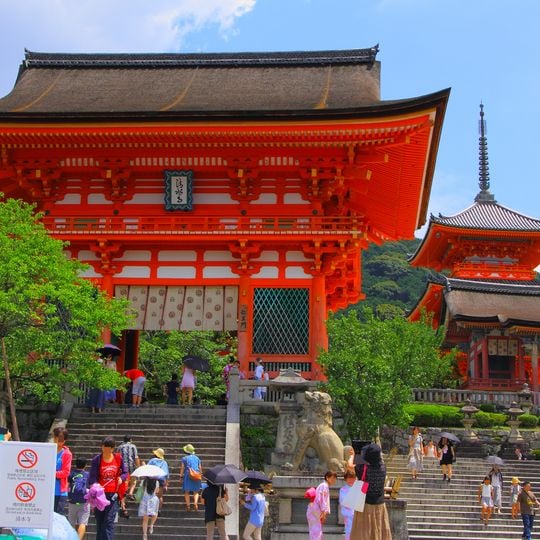
Otowa-san Kiyomizu-dera is a Buddhist temple complex on the wooded slope of Mount Otowa in eastern Kyoto. Its main hall, rebuilt in 1633, stands on a large wooden platform projecting over the hillside on tall pillars in the kakezukuri technique, with a broad dark roof and an open veranda behind a low railing. The Niō-mon gate, a two-storey building of vermilion timber and white plaster with a bark-shingled roof, opens the approach at the top of a stone staircase.
Founded in 778 AD by the monk Enchin, the temple was later supported by military leader Sakanoue no Tamuramaro, who donated his residence to establish the main hall.
The honzon is a hibutsu statue of Jūichimen Kannon, kept hidden from public view. The temple is the 16th stop on the Saigoku Kannon Pilgrimage, and since 1995 it hosts the Kanji of the Year ceremony on 12 December. Below the halls, visitors drink from the three channels of Otowa Falls, said to grant health, longevity and success in studies.
The approach climbs a wide stone staircase to the Niō-mon gate, then continues past the west gate and three-story pagoda to the main hall. The main hall's stage and the Oku-no-in stand on a hillside above the Otowa waterfall, reached by sloping paths and steps. The grounds cover about 130,000 square meters.
The Japanese phrase "to jump off the Kiyomizu stage" means to take a plunge. It comes from an Edo-period belief that surviving a jump from the platform would grant a wish; 234 jumps were recorded, with an 85.4% survival rate. The drop is about 15 metres, and the practice is now banned.
The community of curious travelers
AroundUs brings together thousands of curated places, local tips, and hidden gems, enriched daily by 92,144 contributors worldwide.