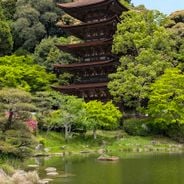
Hiroshima Peace Memorial, UNESCO World Heritage memorial in Hiroshima, Japan.
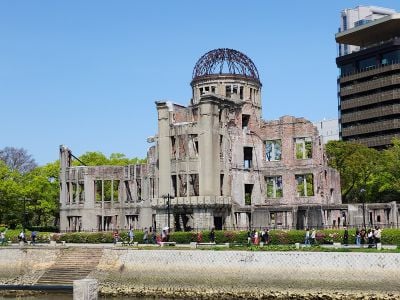
The Hiroshima Peace Memorial, or Genbaku Dome, is the ruin of the Hiroshima Prefectural Industrial Promotion Hall, designed by Czech architect Jan Letzel and completed in 1915. Exposed red brick and grey concrete walls with rectangular window openings stand around a skeletal steel dome of concentric rings and radiating spokes, open to the sky. A black metal fence runs along the base.
The building survived the atomic bomb explosion on August 6, 1945, even though it stood just 150 meters from the hypocenter. The dome structure remained partially upright because the blast pressure came almost directly from above rather than from the side.
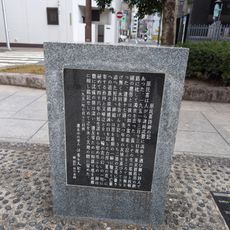
The ruin is officially named the Hiroshima Peace Memorial, though it is commonly called the Genbaku Dome for the exposed steel dome frame at its top. The Hiroshima City Council resolved in 1966 to preserve it permanently, and the annual peace ceremony is held at the memorial. Visitors leave folded paper cranes, linked to Sadako Sasaki, along the riverbank.
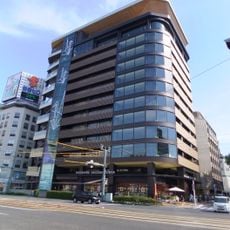
The site is open to visitors at all times and can be reached on foot from the nearby peace park. Streetcars operated by Hiroshima Electric Railway stop at Genbaku Dome-Mae, which places you directly across from the memorial.
The ruin remains deliberately unrestored, maintaining the exact condition of destruction since 1945 to serve as a physical witness. Specialists only stabilize the structure against further decay without altering the appearance of the damaged materials.
The community of curious travelers
AroundUs brings together thousands of curated places, local tips, and hidden gems, enriched daily by 92,154 contributors worldwide.