Mount Ibuki, Mountain summit on the Shiga–Gifu prefecture border, Japan
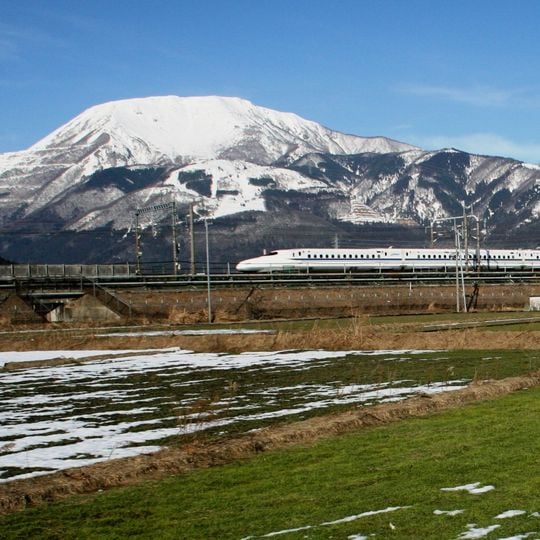
Mount Ibuki is a 1,377-meter limestone summit on the border of Shiga and Gifu prefectures, with its peak in Maibara, Shiga. The upper slopes are covered by a grassland of about 300 temperate and subalpine plant species, a community protected as a national natural monument since 2003. The summit holds a first-order triangulation point and a stone statue of Yamato Takeru.
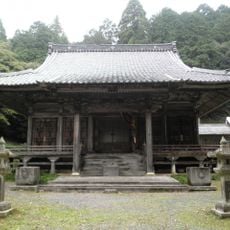
Mount Ibuki was long a sacred mountain: the Kojiki and Nihon Shoki tell of Yamato Takeru, who fought the mountain's deity, described as a great white boar or a serpent, and died of the illness he contracted there. In the Nara period the mountain's kami were worshipped in both Ōmi and Mino provinces, and in 851–854 the monk Sanshū founded the mountain temple Myōkō-ji on a ridge of the southern slope. Oda Nobunaga had a herb garden planted on the summit between 1558 and 1570, stocked with some 3,000 herbs said to come from Portuguese priests.
The summit is surrounded by sacred shrines scattered across different routes, visited by pilgrims for centuries. Hikers encounter Buddhist statues and stone markers along the trails that point to the religious importance this peak holds.
Several hiking trails lead to the summit from the towns of Maihara, Ibigawa, and Sekigahara, with climbs taking between three and five hours. A road allows drivers to reach a higher parking area from which shorter walks are possible.
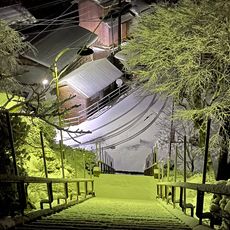
In February 1927, this summit recorded 230 centimeters of snow in a single day, among the highest daily totals ever measured worldwide. This extreme snowfall resulted from moist air masses moving from the Sea of Japan into the mountain range.
The community of curious travelers
AroundUs brings together thousands of curated places, local tips, and hidden gems, enriched daily by 92,790 contributors worldwide.