Miho Shrine, Shinto shrine in Mihonoseki, Matsue, Japan
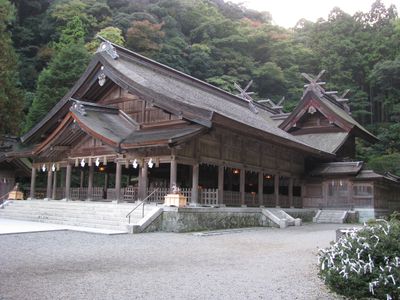
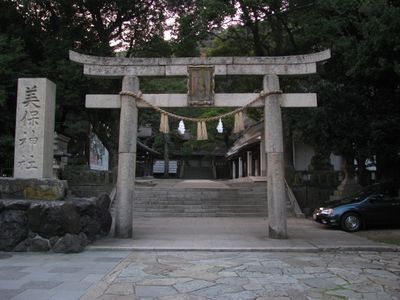
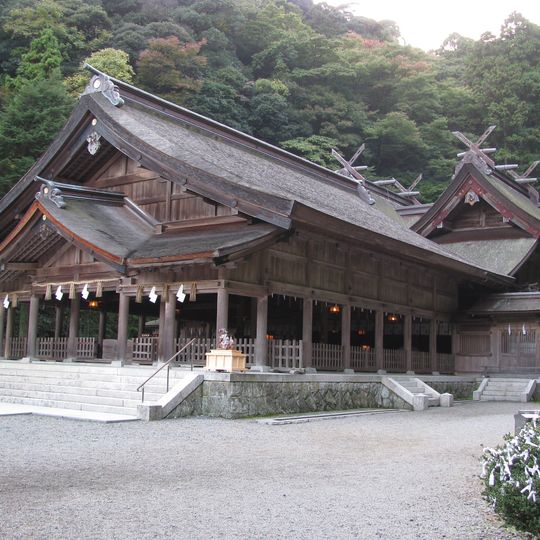
Miho Shrine is a Shinto sanctuary in Mihonoseki, Matsue, Japan, near the entrance of the local fishing harbor. Its main hall, rebuilt in 1813, consists of two connected sanctuaries in the Taisha-zukuri style, called Miho-zukuri or Hiyoku Taisha-zukuri. The right sanctuary enshrines Kotoshironushi, the left Mihotsuhime. A stone torii gate with a rope and paper streamers stands at the top of a broad flight of stone steps.
The main building was constructed in the early 19th century using the traditional Taisha construction method and later recognized as an important cultural asset. This architectural approach is also found in other major Shinto sanctuaries in the region, pointing to shared building techniques.
The shrine's name comes from Mihotsuhime, wife of Ōmononushi and daughter-in-law of Ōkuninushi; she is not a sea deity. The shrine is the head of some 3,300 Ebisu shrines, and its name 'Miho' matches the 'Miho' in Mihotsuhime. The April 7 Aofushigaki rite reenacts Kotoshironushi hiding in a green brushwood fence, and the December 3 Morotabune rite reenacts the gods' boat.
From Mihonoseki Terminal, take the community bus to Mihonoseki and walk about one minute from the Miho Shrine entrance stop. A free car park for around a dozen cars and a public toilet stand next to the community hall, one minute on foot from the shrine. The shrine is reached by a broad stone staircase beneath a stone torii.
The shrine keeps 846 donated musical instruments as an Important Tangible Folk Cultural Property, reflecting its role as a deity of sound. Two morotabune dugout canoes, also nationally designated, are paddled in the December 3 rite reenacting the cession of the land.
The community of curious travelers
AroundUs brings together thousands of curated places, local tips, and hidden gems, enriched daily by 93,252 contributors worldwide.