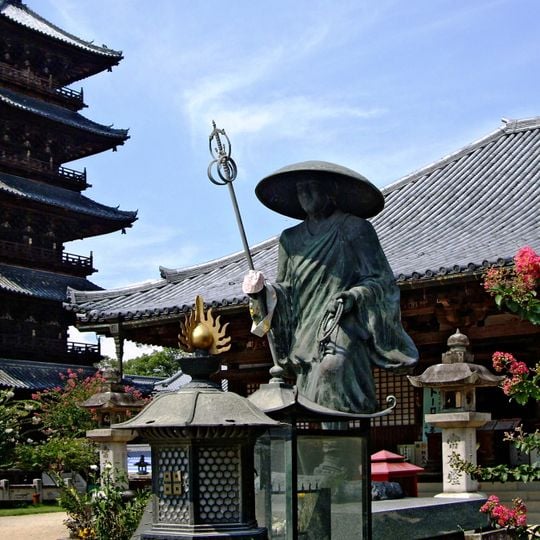
Motoyama-ji Temple, Buddhist temple in Mitoyo, Japan
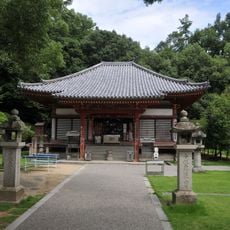
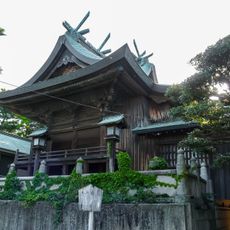
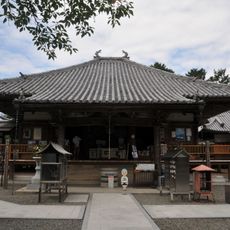
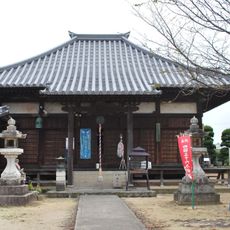
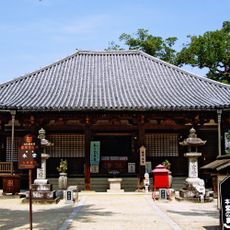
Motoyama-ji is a temple whose main hall displays architectural elements from the Kamakura period, showing traditional wooden construction techniques. The building preserves features from this early period, with its simple roof design and carefully finished wooden beams.
Founded in 807 by order of Emperor Heizei, with a Hayagriva image said to have been carved by Kūkai; the main hall was rebuilt in 1300 with donations from the Kyōgoku and Sasaki families, as ink inscriptions on its ridge beam and foundation stones record. The temple escaped the wars of 1573–1593 and was renamed Motoyama-ji during the Tenpō era (1830–1844).
The temple's name changed to Motoyama-ji in the Tenpō era (1830–1844), taken from the locality. Every year on the Day of the Ox in midsummer, a cucumber blessing (kyūri kaji) is held, when worshippers may enter the inner sanctuary. The temple's pilgrimage song (goeika) mentions flowers planted at Motoyama.
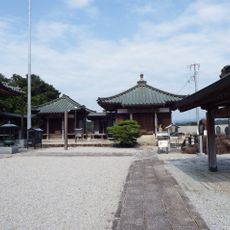
Motoyama-ji is 1.2 km from JR Motoyama Station on the Yosan Line, and 0.3 km from the Motoyama-bashi north end on Route 11; the Sanuki-Toyonaka interchange is 2.2 km away. Free parking is in front of the Niō Gate. The temple has no lodging. Entering the Niō Gate, the Main Hall is straight ahead with the Daishidō to its right; the stamp office is past the left side of the Main Hall, through the main gate and to the left.
The main image is a horse-headed Hayagriva, and the temple keeps a front image said to have been copied from it by Kitagawa Uncho, the sculptor of Zentsu-ji's main hall image; it was shown publicly in 2014. The temple also preserves a legend of the "sword-receiving Amida" in the main hall.
The community of curious travelers
AroundUs brings together thousands of curated places, local tips, and hidden gems, enriched daily by 93,359 contributors worldwide.