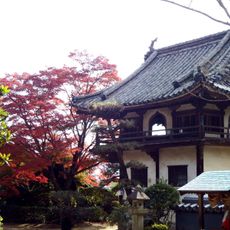
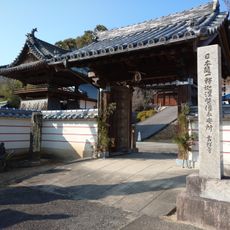
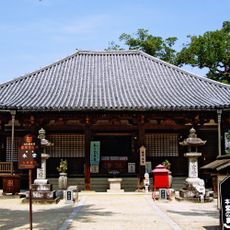
Jinne-in, Buddhist temple in Kanonji, Japan
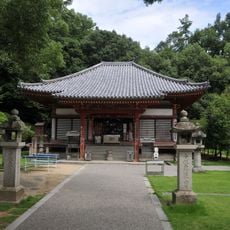
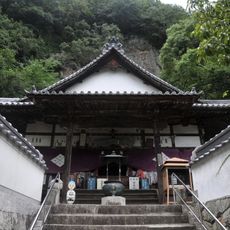
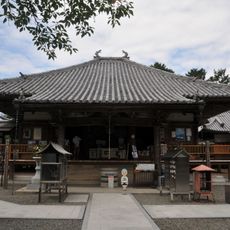
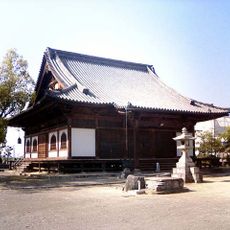
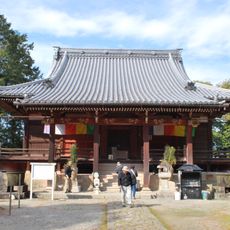
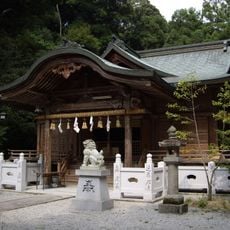
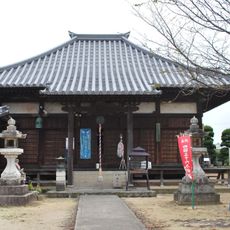
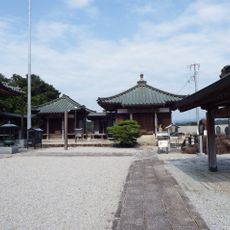
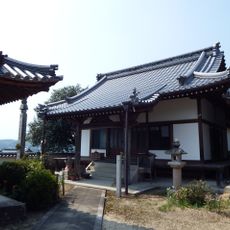
Jinne-in is the 68th temple of the Shikoku pilgrimage, sharing a hillside compound in Kan'onji with Kannonji, the 69th. Its 2002 main hall is a concrete building with a grid of form-tie holes and a square entrance opening reached by stone steps; a white sign reads 四国三十六不動霊場第二十二番札所 and 神峯寺. The older hall, formerly the main hall, stands elsewhere in the compound.
The site began in the 8th century as Jingūji Hōkōin, a temple attached to the Kotohiki Hachimangū shrine; in 807 Kūkai carved a seated Dainichi Buddha that gave the temple its name. During the Edo period the 68th Henro site also served as the shrine's bettō, with pilgrimage stamps issued under the name Jinne-in. Under the Meiji separation of Shinto and Buddhism the honzon Amida image was moved to the Saikondō, which became the main hall until a concrete hall replaced it in 2002.
This temple and Kannonji Temple share the same sacred grounds, making it an unusual destination for pilgrims. Visitors experience two of the 88 temples of the Shikoku pilgrimage route within one location.
Jinne-in shares its precinct with Kannon-ji, the 69th temple, and the two lie about 100 metres apart on the pilgrimage route. Enter through the shared Niō Gate, climb the broad stone steps, and the concrete main hall of Jinne-in stands on the left; Kannon-ji's halls are to the right. Free parking is available in front of the gate, and Kan'onji Station is 1.6 km away.
The temple's main image is a hidden Buddhist painting, a silk scroll of the local deity of Kotohiki Hachimangū, made in the Kamakura period and designated an Important Cultural Property on 27 March 1901. It shows Amida's descent at upper left and Shakyamuni at lower right.
The community of curious travelers
AroundUs brings together thousands of curated places, local tips, and hidden gems, enriched daily by 93,474 contributors worldwide.