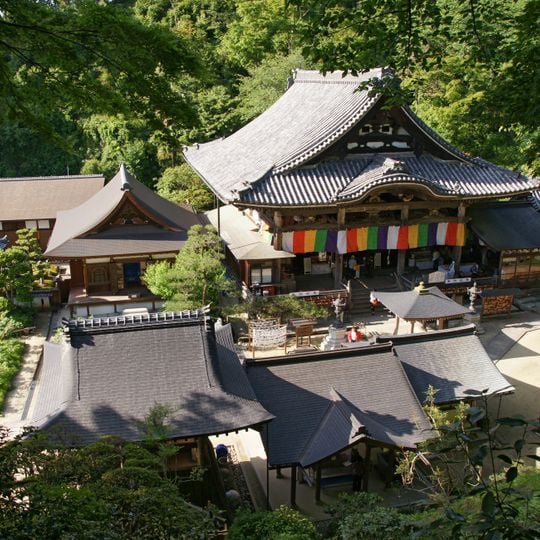
Oka-dera Temple, Buddhist temple in Asuka, Japan
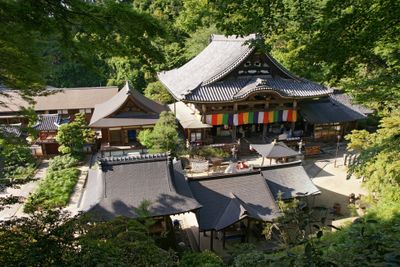
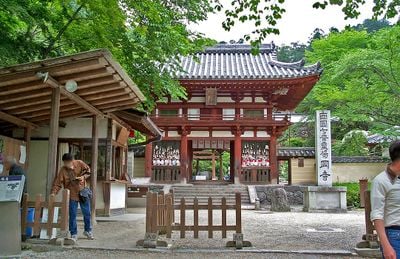
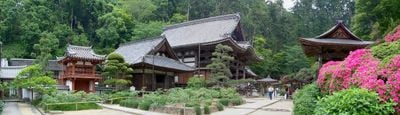
Oka-dera, formally known as Ryugai-ji, is a Buddhist temple in Asuka, Japan, known for its clay statue of Nyoirin Kannon. This 8th-century figure stands 4.85 meters (15.9 feet) tall and occupies the main hall of the complex.
According to the Tōdaiji Yoroku and Fusō Ryakuki, the monk Gien built halls on the site of Okamiya Palace, where Prince Kusakabe, son of Emperor Tenmu, had lived before his death in 689. The temple first appears in written records in July 740, in the Shōsōin Documents. Long a branch of Kōfuku-ji, it was restored by Hase-dera in the Edo period and became a Shingon Buzan-ha temple.
The temple's formal name, Ryūgai-ji ("Dragon Lid Temple"), comes from the legend that the monk Gien sealed an evil dragon under a stone lid in the pond now called Ryūgai Pond. This act made Oka-dera Japan's first pilgrimage site for warding off misfortune, a reputation already widespread by the Kamakura period. Today it is the seventh stop on the Saigoku Kannon Pilgrimage.
Reach the temple by bus from Kintetsu Kashihara Jingu-mae or Asuka Station, getting off at the Oka-dera Mae stop, about ten minutes on foot. Okadera Station on the Kintetsu Yoshino Line is roughly 57 minutes away on foot and has no buses or taxis. A bus from Sakurai Station stops at Haruta Shrine Mae, about seven minutes' walk away.
The temple is considered the first location in Japan officially designated for rituals to ward off misfortune. This role shaped its importance among Buddhist sanctuaries in the region.
The community of curious travelers
AroundUs brings together thousands of curated places, local tips, and hidden gems, enriched daily by 93,240 contributors worldwide.