Sakafuneishi Site, Stone object in Asuka, Japan
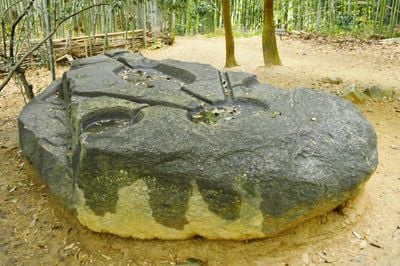
Sakafuneishi Site is an archaeological location in Asuka, Japan, featuring several massive granite stones with carved surfaces. The stones are positioned near one another and display grooves, flat platforms, and carefully chiseled geometric shapes.
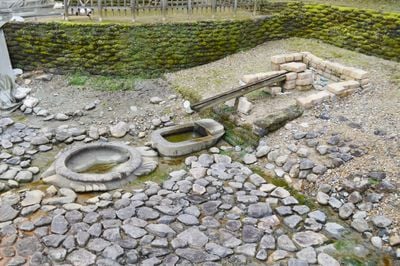
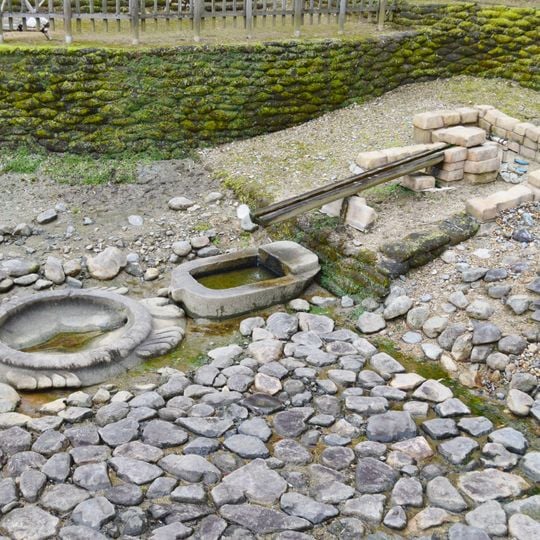
The site comprises the Sakafuneishi stone, known since the Edo period, and the turtle-shaped and oval stone basins found in a 2000 excavation together with sandstone walls and rammed-earth layers. The basins were built in the Saimei era and used continuously into the Nara period, about 250 years, and are thought to relate to imperial rites. The hill itself was reshaped with rammed earth and cut sandstone, and a line of quartz diorite stones on its west slope shows collapse and repair matching a Nihon Shoki record of 656.
The name comes from the largest stone, whose hollows and connecting grooves were likened to a sake-pressing vessel; Edo-period scholars already proposed brewing or medicine-making uses, and no function is settled. The site also includes the 2000-found turtle-shaped basin, which researchers debate as turtle or soft-shelled turtle. Viewing the excavation area requires a conservation donation; the main stone remains freely accessible.
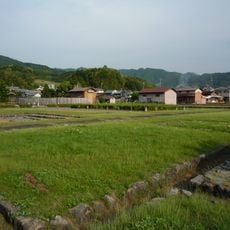
The site lies in an open area that visitors can explore on foot or by bicycle. The stones sit at varying heights, allowing people to approach closely and observe the details of the carved work.
Some of the grooves run so precisely that water could flow along their paths. The largest stone structure is estimated to weigh several tons and was likely transported and shaped without modern tools.
The community of curious travelers
AroundUs brings together thousands of curated places, local tips, and hidden gems, enriched daily by 95,356 contributors worldwide.