Yamada-dera, Former Buddhist temple in Sakurai, Japan
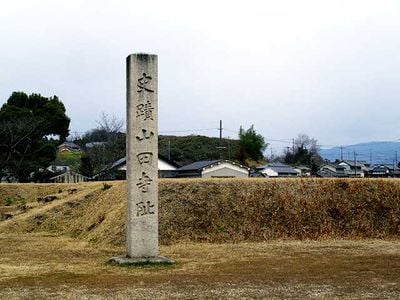
Yamada-dera is a former Buddhist temple in Sakurai with preserved foundation stones, stone alignments, and architectural remains showing a south-to-north layout pattern. The site contains traces of multiple buildings with different functions that reveal how early temple complexes were organized.
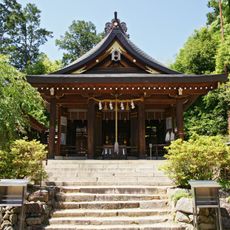
Soga no Kurayamada no Ishikawa no Maro began building Yamada-dera in 641, and the Kondō and corridors were underway when he was accused of treason and killed himself before the Kondō in 649. Work resumed under Emperor Tenchi, whose wife was Ishikawa no Maro's daughter: the pagoda was completed in 676 and a sixteen-foot Buddha was consecrated in 685. Warrior-monks from Kōfuku-ji attacked in 1187 and took the Lecture Hall's Yakushi triad; the Kondō, pagoda and lecture hall burned at the end of the 12th century. Abandoned under the Meiji anti-Buddhist policy, it was rebuilt in 1892 as a small temple.
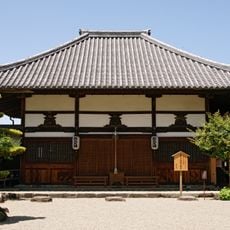
The temple's name appears in the Nihon Shoki, which records Emperor Tenmu's visit to Jōdo-ji in 685, a name also used for Yamada-dera. The present small Hossō-shū temple, rebuilt in 1892, keeps a wooden Jūichimen-Kannon as its main image. In the grounds stands the 1841 "Snow-Clearing" stele, set up by Yamada Shigesada, a claimed descendant of Ishikawa no Maro, to clear his ancestor's name.
The site is accessible on foot and features informative panels explaining the different areas and their significance. Visitors should allow time to carefully explore the stone remains and ground layouts.
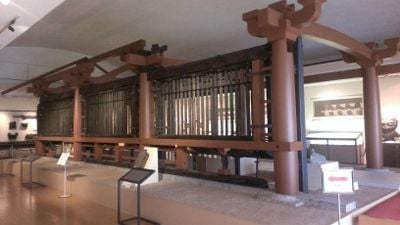
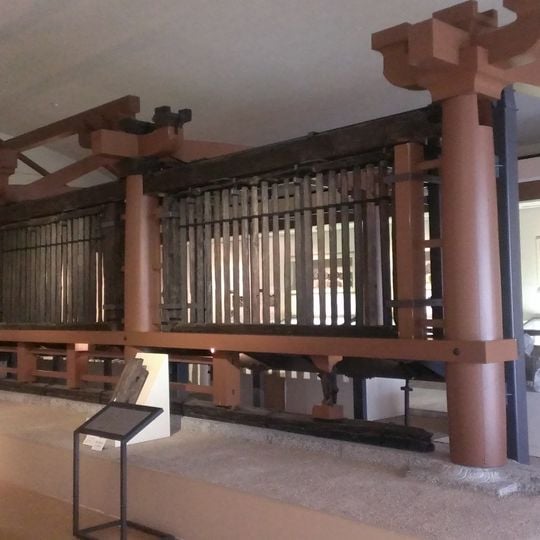
The corridor unearthed in 1982 had collapsed in a landslide and lay buried intact, with pillars and lattice windows preserved. Three bays are reconstructed at the Nara National Research Institute for Cultural Properties' Asuka Historical Museum.
The community of curious travelers
AroundUs brings together thousands of curated places, local tips, and hidden gems, enriched daily by 93,182 contributors worldwide.