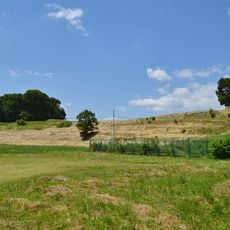
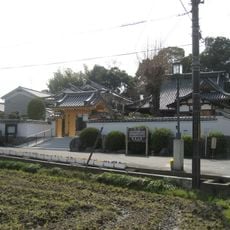
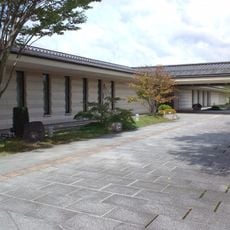
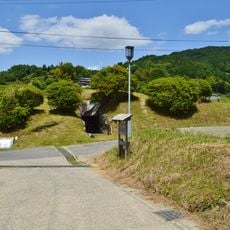
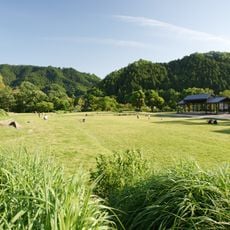
Noguchi Royal Tomb, Imperial mausoleum in Asuka, Japan.
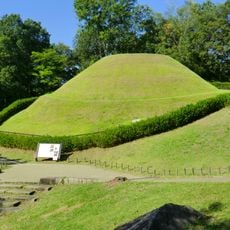
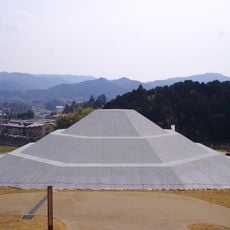
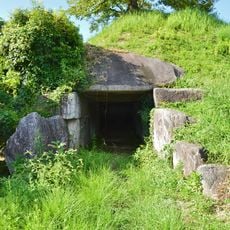
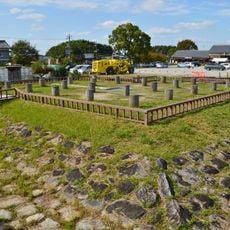
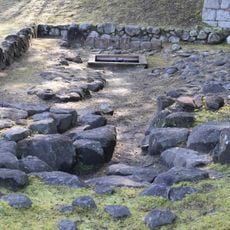
Noguchi Royal Tomb is an octagonal, five-tiered kofun in Asuka, now measuring about 58 m east-west, 45 m north-south and 9 m high, with stone steps around the mound. Two chambers of cut-stone masonry lie inside; the Imperial Household Agency identifies the site as Hinokuma no Ouchi no Misasagi, the joint tomb of Emperor Tenmu and Empress Jitō.
Built in 687 when Asuka was Japan's political center, the tomb marks a period when such burial practices defined imperial succession customs. Its construction reflects the architectural innovations of early Japanese rulership.
The tomb is closed to visitors as an Imperial Household Agency mausoleum, so no court ceremonies are held at the mound itself. Its name in the Nihon Shoki is "Ouchi no Misasagi"; the Engishiki records the tomb lands as five chō east-west by four chō north-south, with five hereditary tomb-keepers (ryōko) attached. In the Edo period travellers climbed the mound and entered the stone chamber, as shown in the 1791 Yamato Meisho Zue.
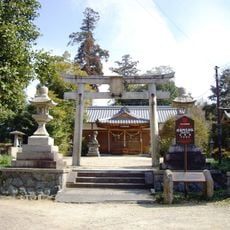
The Imperial Household Agency administers the tomb as the Hinokuma Ouchi Mausoleum, and access to the mound itself is restricted; visitors view it from outside the fence. The site lies in Asuka village, reachable by local transport from Asuka Station. The mound measures about 58 m east-west, 45 m north-south and 9 m high.
The tomb was robbed in 1235, as recorded in Fujiwara no Teika's diary Meigetsuki: raiders broke open Emperor Tenmu's coffin and scattered his bones and white hair in the stone chamber. Jitō's silver urn was taken and her cremated remains left nearby. The survey text Afuki no Sannyōki, written after the theft, describes the chamber as agate and the coffin as dry lacquer.
The community of curious travelers
AroundUs brings together thousands of curated places, local tips, and hidden gems, enriched daily by 94,164 contributors worldwide.