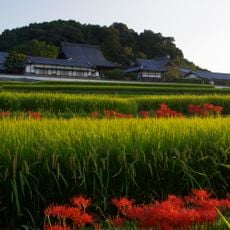
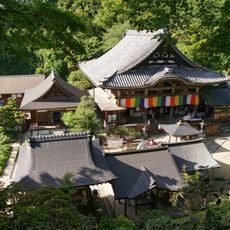
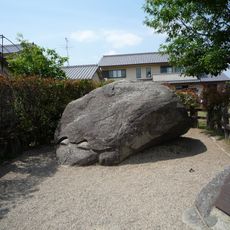
Hinokuma-dera, Former Buddhist temple site in Asuka, Japan.
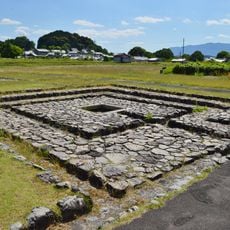
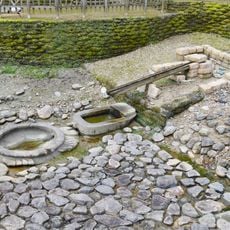
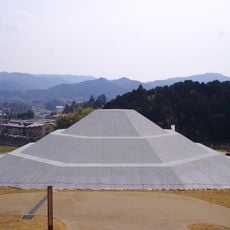
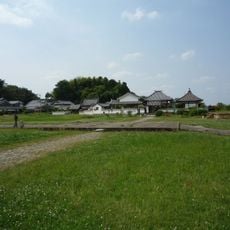
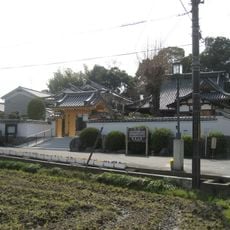
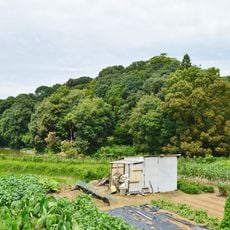
Hinokuma-dera is a former Buddhist temple site in Asuka, now within the grounds of Omiashi Shrine. Excavations from 1969 revealed a unique layout: the central axis shifts west, with the Golden Hall south of the pagoda, the Lecture Hall north, and the Middle Gate on the west side. The pagoda's foundation stones and the Lecture Hall's tiled platform remain.
Hinokuma-dera was the family temple of the Hata clan, founded in the late 7th century. It first appears in the Nihon Shoki in 686, when 100 households were granted to it for 30 years. In the medieval period it was known as Dokō-ji; a 1513 bell cast in Kawachi bears the inscription "Dokō-ji bell." By 1772 only a temporary hut remained, and the temple was later abandoned.
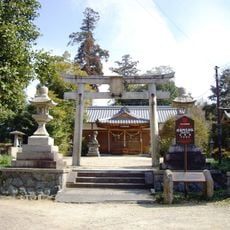
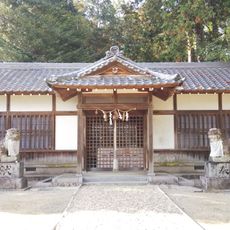
The temple was the family temple of the Hata clan, a clan of continental immigrants who lived at Hinokuma; the grounds today belong to Ōmiashi Shrine, which was founded next to the temple as its guardian shrine. In the Middle Ages the temple was known as Dōkō-ji, a name recorded in the 1513 inscription on a bronze bell cast in Kawachi.
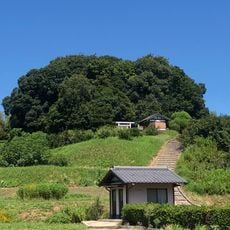
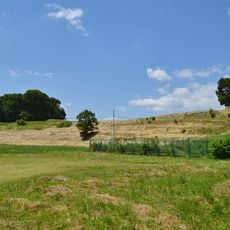
The site lies within the grounds of Omiashi Shrine, south of the Takamatsuzuka Kofun. The pagoda foundations keep the central base stone and all four pillar stones, and the lecture hall platform of stacked tiles survives; the ground is uneven, so wear sturdy shoes. Excavations since 1969 revealed the layout.
The temple's layout is unusual: its central axis is skewed west, the main hall stands south of the pagoda and the lecture hall north, and the middle gate sits on the west side. Excavators link this to the constraints of the hilly terrain. The pagoda's foundation stone and four pillar bases survive, and the lecture hall retains a tile-built platform.
The community of curious travelers
AroundUs brings together thousands of curated places, local tips, and hidden gems, enriched daily by 93,934 contributors worldwide.