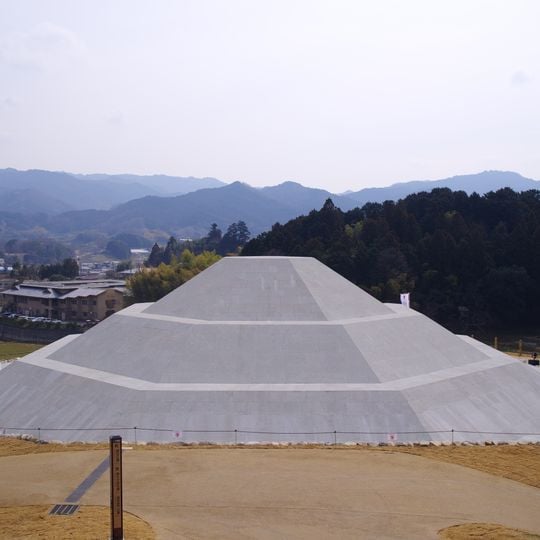
Kengoshizuka Kofun, Ancient burial mound in Asuka, Japan
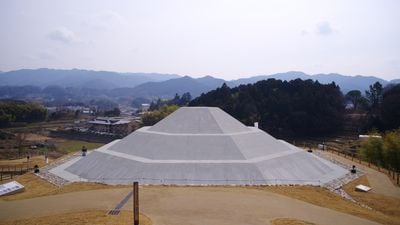
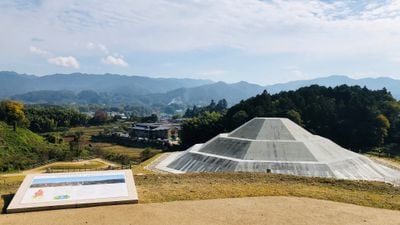
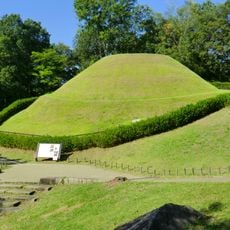
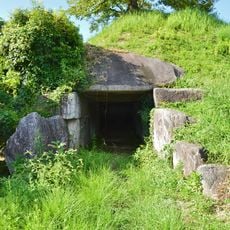
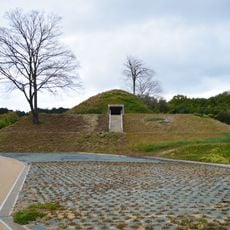
Kengoshizuka Kofun is a three-tiered octagonal mound in Asuka, faced with pale grey stone, with a flat top and a base about 22 metres across. Excavations found that its slopes were once covered with roughly 7,200 white tuff stones cut into triangular prisms. Inside, a single 80-ton tuff breccia block was hollowed into two plastered burial chambers with stone doors.
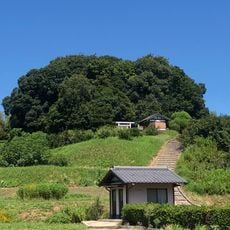
This burial mound was built in the late 7th century as a tomb for important people of that era. Its construction demanded significant effort and resources to position the massive stone blocks in place.
The name "Kengoshizuka" comes from an old reading of its kanji, also read asagao, the morning glory; locally it is called "Omaezuka". The mound is identified with Empress Saimei and her daughter Princess Hashihito, whose joint burial is recorded in the Nihon Shoki. Excavated grave goods, including a lacquered cloth coffin and cloisonné fittings, are kept at the Kashihara Archaeological Institute Museum.
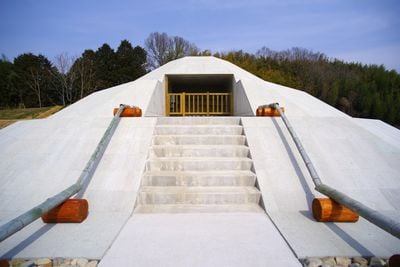
This burial mound is open for free during daylight hours, and you can walk around the site independently. If you want to see the stone chambers inside, you should arrange this ahead of time with local volunteer guides.
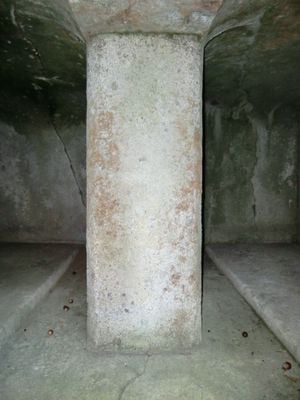
Inside are two separate burial chambers divided by a center partition wall, which suggests two important people were buried here together. This divided layout is surprisingly uncommon in tombs from this period.
The community of curious travelers
AroundUs brings together thousands of curated places, local tips, and hidden gems, enriched daily by 93,476 contributors worldwide.