Kasamori-ji Temple, Buddhist temple in Chōnan, Chiba Prefecture, Japan
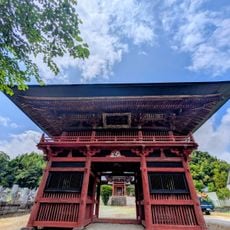
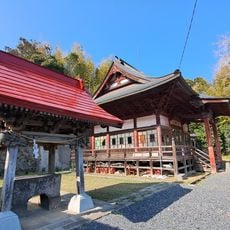
Kasamori-ji is a Tendai Buddhist temple in Chōnan, Chiba Prefecture. Its Kannon-dō, the only surviving example of the shihōkakezukuri style, stands on a large rock, raised on 61 timber posts on all four sides. The hall has a hipped roof, a balustraded rim, and an external wooden staircase; a separate gate with a tiled roof and stone steps stands below.
According to temple tradition, Saichō founded the temple in 784 after carving a Jūichimen Kannon from a sacred camphor tree. The Kannon-dō was first built in 1028 at Emperor Go-Ichijō's request; an inscription found during repairs dates the present hall to between 1579 and 1597. A full dismantling and restoration was carried out from 1958 to 1960.
The honzon, an Eleven-Headed Kannon carved by Saichō, is a hibutsu kept hidden and shown only in the years of the Ox and Horse of the twelve-year zodiac cycle. Nichiren is said to have prayed here often, and an image of him is kept in his quarters. A stone marker in front of the temple gate carries Matsuo Bashō's haiku about Kasamori.
The temple lies in Chōnan, Chiba Prefecture, about 11.7 km west of Mobara Station on the JR Sotobō Line, or 6.9 km east of Kazusa-Ushiku Station on the Kominato Line. From the bus stop Kasamori it is a five-minute walk. The hall closes in rain, and the 75 steps up to the balcony are steep.
The building features an unusual construction with corners that extend beyond the cliff edges, supported by tall wooden pillars creating a suspended effect. This engineering solution allows the hall to expand over the slope while appearing to hover above it.
The community of curious travelers
AroundUs brings together thousands of curated places, local tips, and hidden gems, enriched daily by 93,233 contributors worldwide.