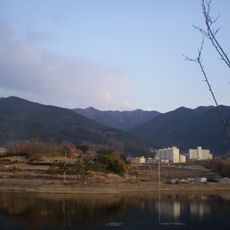
Biseulsan, Mountain summit near Daegu, South Korea
Biseulsan is a 1,084-metre mountain whose summit, Cheonwangbong, lies on the borders of Daegu, North Gyeongsang and South Gyeongsang provinces. Its slopes carry a block stream of Cretaceous granite boulders 2 km long, 80 m wide and 5 m thick, with clasts 1–2 m across, designated Natural Monument No. 435.
Biseulsan was designated a county park on 22 February 1986. The mountain's name appears in the Sinjeung Dongguk Yeoji Seungnam and the Dalseong County Gazetteer, which record the alternate name Posan, meaning a mountain covered with trees. The Yugasa Temple chronicle states that the mountain's shape resembles a geomungo, a Korean stringed instrument, which gave rise to the name Biseulsan.
The mountain's name comes from its profile, likened to a geomungo zither in the Yuga Temple records, while other sources call it Posan, meaning a mountain covered in trees. The spring azalea bloom is celebrated in the Biseulsan Chamkkot Cultural Festival, and since 1998 the Biseulsan Ice Festival has been held each January in the recreational forest, featuring a 200-meter ice wall and ice caves.
The Biseulsan Recreational Forest serves as a convenient starting point, with parking and basic facilities available before you head up. The trails are clearly marked, making it easy to follow a route even without local knowledge.
A trail of about 16 kilometers (10 miles) links Biseulsan directly to the nearby Apsan Mountain, allowing hikers to cross both peaks in a single outing. This connection is well known among local hikers looking for a longer route without retracing their steps.
The community of curious travelers
AroundUs brings together thousands of curated places, local tips, and hidden gems, enriched daily by 93,781 contributors worldwide.