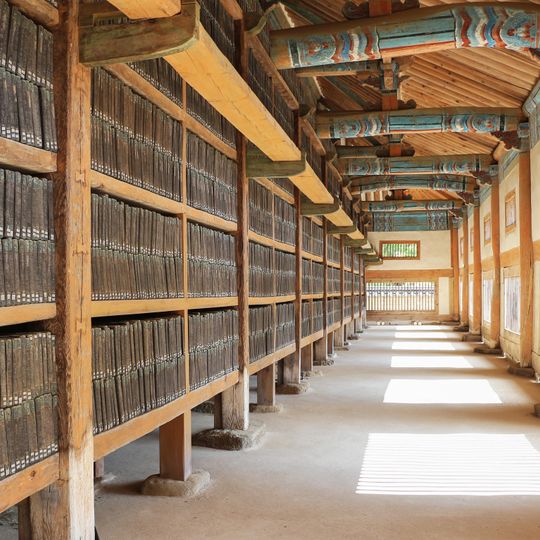
Tripitaka Koreana, Buddhist scriptures at Haeinsa Temple, South Gyeongsang, South Korea
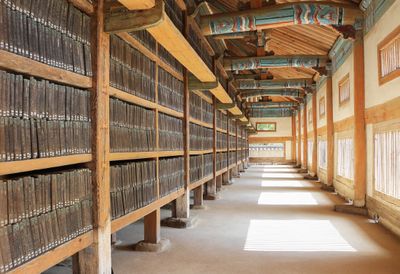
Tripitaka Koreana is a collection of Buddhist scriptures on more than 80,000 wooden blocks at Haeinsa Temple in South Gyeongsang, South Korea. The blocks rest on wooden shelves in two long storage halls, with each block measuring roughly 28 inches (70 cm) in length and 9 inches (24 cm) in width, bearing 23 lines of text.
A first set of blocks, carved from 1011 to 1087 during the Goryeo–Khitan War, was destroyed by fire in 1232 during the Mongol invasions. King Gojong then ordered a new edition to seek divine help against the Mongols; carving began in 1237 and was completed in 12 years with support from Ch'oe U and his son Ch'oe Hang. In 1398 the blocks were moved to Haeinsa.
The name Tripiṭaka Koreana combines the Sanskrit term for the three baskets of Buddhist teaching with Korea, though Koreans call the collection Palman Daejanggyeong, the Eighty-Thousand Tripitaka. The carving was a national project involving monks of the Seon and Gyo schools, and the monk Sugi, who led the work, wrote 30 volumes of Additional Records listing errors and omissions he found. Since 2021 preregistered visitors can enter the storage halls.
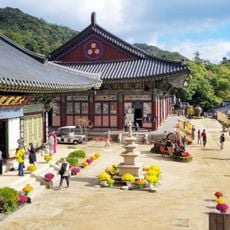
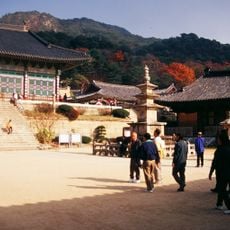
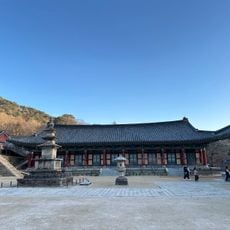
Visitors view the blocks through glass windows in the storage halls, as direct access is restricted to protect the wooden surfaces. The temple sits on a mountain slope, requiring moderate physical effort when ascending from parking areas and lower entrance zones.
The storage halls use windows of different sizes on front and back sides to create natural air circulation that regulates humidity. Not a single block shows signs of insect damage or mold, even though no modern climate control or chemical treatments are used.
The community of curious travelers
AroundUs brings together thousands of curated places, local tips, and hidden gems, enriched daily by 93,464 contributors worldwide.