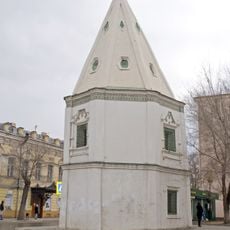
Мұнайшылар қалашығы, Oil workers settlement in Atyrau Region, Kazakhstan.
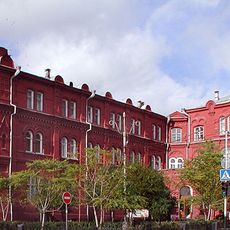
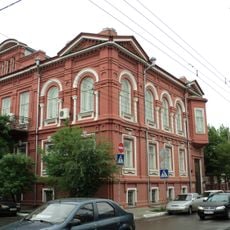
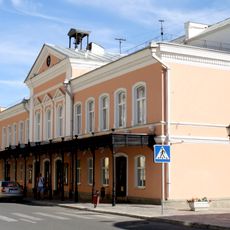
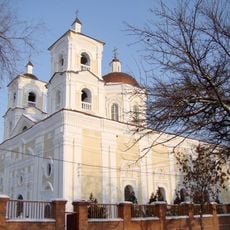
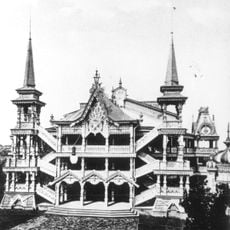
The Residential Town of Oil Workers (Zhilgorodok, also called Akkala, "White Town") is a housing complex built in the bend of the Ural River about two kilometres from Guriev, now part of Atyrau. Its plan is simple and rational: a wide straight main street, Auezov Avenue, links the settlement with the refinery, and five cross streets divide it into blocks of one- and two-storey houses and public buildings. Terraces, aivans, loggias and galleries shade the rooms, and the walls are of gypsum slabs and earth blocks, with brick and gypsum for public buildings.
Construction began in 1943 and the complex was commissioned in 1948, built for workers of the Guriev oil refinery in the Ural River bend two kilometres from the city. Prisoners and labour army conscripts, including Volga Germans, Crimean Tatars, Bulgarians, Greeks and Romanian prisoners of war, did most of the building: in July 1944 about 12,000 worked on site. Architects A. Arefyev, S. Vasilkovsky, A. Lanceray and engineer I. Romanovsky received the Stalin Prize in 1946; in 1982 the town was listed as a monument of republican significance.
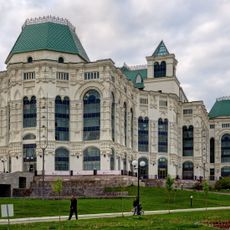
The town's Kazakh name, Munaishylar qalashygy, means "settlement of oil workers"; Russians also call it Bely Gorodok, the White Town. At its centre stands the Oil Workers' House of Culture, and the central pool, flower beds, canteen, shop and pharmacy are laid out around it. The one- and two-storey houses alternate along the streets, each with terraces, aivans and galleries shading the rooms.
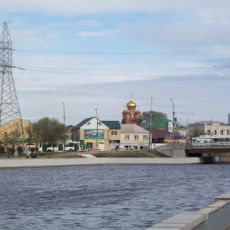
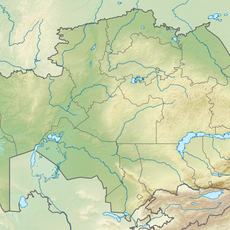
The town lies in a bend of the Ural River, now within Atyrau's southwestern outskirts, about two kilometres from the old Guriev centre. Its single straight main axis, Auezov Avenue, links the settlement to the refinery, with five cross streets dividing it into blocks. A park along the river bank forms a green belt against dry, dusty winds.
The town was built largely by forced labour: in December 1943, 3,687 prisoners and labour-army conscripts worked alongside 311 free hired builders, and by July 1944 the workforce reached 12,000. Most lived in dugouts holding 200 people each, served by a canteen seating 2,000. American specialists were also present, since the refinery was funded under Lend-Lease.
The community of curious travelers
AroundUs brings together thousands of curated places, local tips, and hidden gems, enriched daily by 94,972 contributors worldwide.