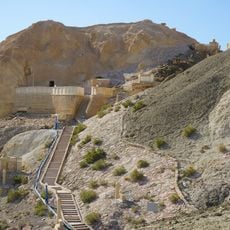
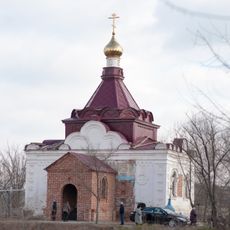
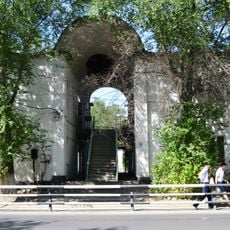
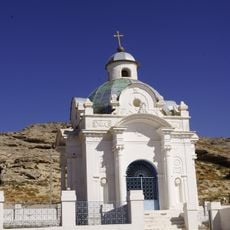
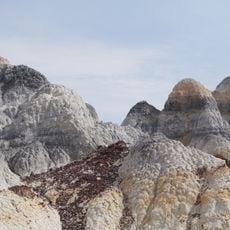
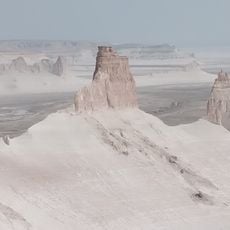
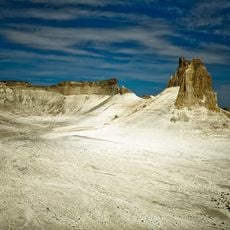
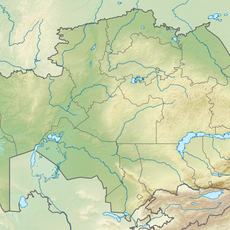
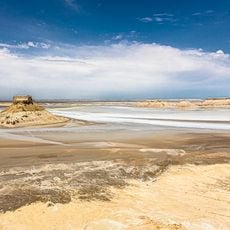
Shakpak-ata mosque, Cave mosque in Mangystau region, Kazakhstan.
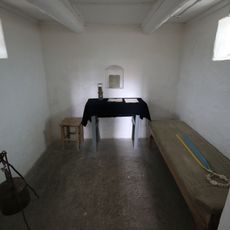
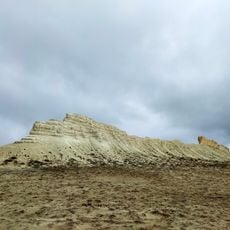
The Shakpak Ata mosque is a cave mosque in the Mangystau region carved into chalk rock with four connected chambers and a central hall supported by massive stone columns. Natural openings in the rock allow daylight to reach the interior spaces, creating an unusual prayer environment.
Scholars disagree on the date of the rock-cut mosque: G. Ts. Medoev places its construction in the 9th–10th centuries, while S. Azhigaliev attributes it to 12th–13th-century architecture. The surrounding cemetery at Taushyk, 25 km west of the village in Tupkaragan district, holds sagana-tam, kulpytas and sagana-koytas built between the 10th and 19th centuries.
The main ornament is concentrated on the entrance slab and the walls of the threshold, carved with animals, weapons, horsemen and inscriptions. The prayer hall walls carry no regular ornament, only shallow hollows cut here and there. In the same burial ground stand sagana-tam, kulpytas and sagana-koytas graves founded between the 10th and 19th centuries.
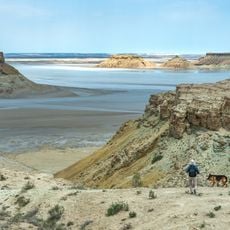
The mosque lies in a cemetery 25 km west of Taushyk village in Tupkaragan district, Mangystau region. The carved chambers are entered through the decorated main doorway; look for the shallow niches cut into the walls. The site is a state-listed monument, so leave the carvings and the surrounding graves untouched.
The square pavilion above the dome is not just a light well: it also served as a watchtower and shielded the opening from rain and snow. The shallow niches scattered across the walls are the only carving inside; the real ornament is concentrated on the entrance slab and doorjambs, where animals, weapons, horsemen and inscriptions are cut. The same burial ground holds sagana-tam and kulpytas graves from the 10th to 19th centuries.
The community of curious travelers
AroundUs brings together thousands of curated places, local tips, and hidden gems, enriched daily by 93,526 contributors worldwide.