Pha That Luang, Buddhist stupa in Vientiane, Laos
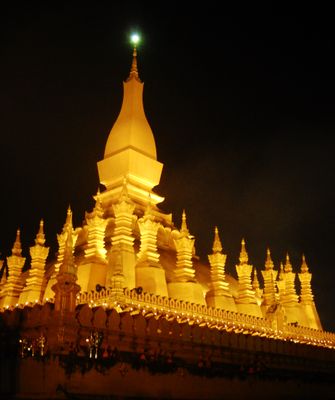
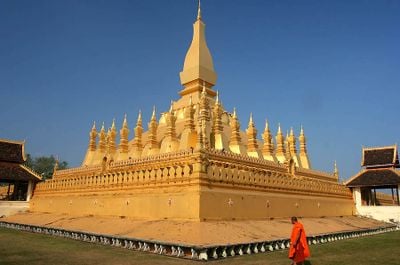
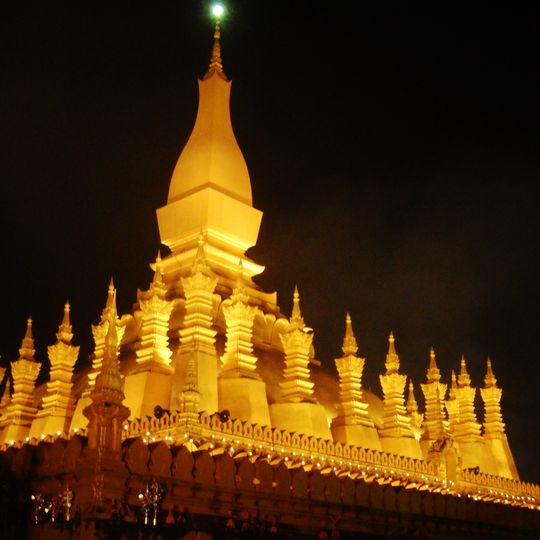
Pha That Luang is a gold-covered stupa in Vientiane whose square base measures 68 by 69 metres and rises through three tiers to a height of 45 metres. A row of small niches runs along the upper edge of the stepped platform, above a lower wall pierced by cross-shaped openings. Above the base, tapering spires rise in tiers around a tall central spire capped by a pointed finial.
The structure was built in the 16th century under King Setthathirat's rule, though sacred buildings had stood on this site for many centuries before. Today's form grew from a long tradition of religious construction that developed at this location over time.
The stupa gives Laos its national emblem: the current state seal shows Pha That Luang as its central image. Its full name, Phra Chedi Lokajulamani, is used in Lao tradition, and the monument is the gathering point for Lao people from across the country, especially around the annual That Luang festival held at the grounds.
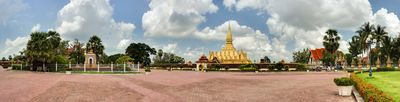
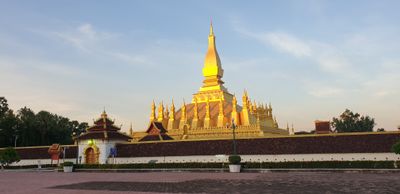
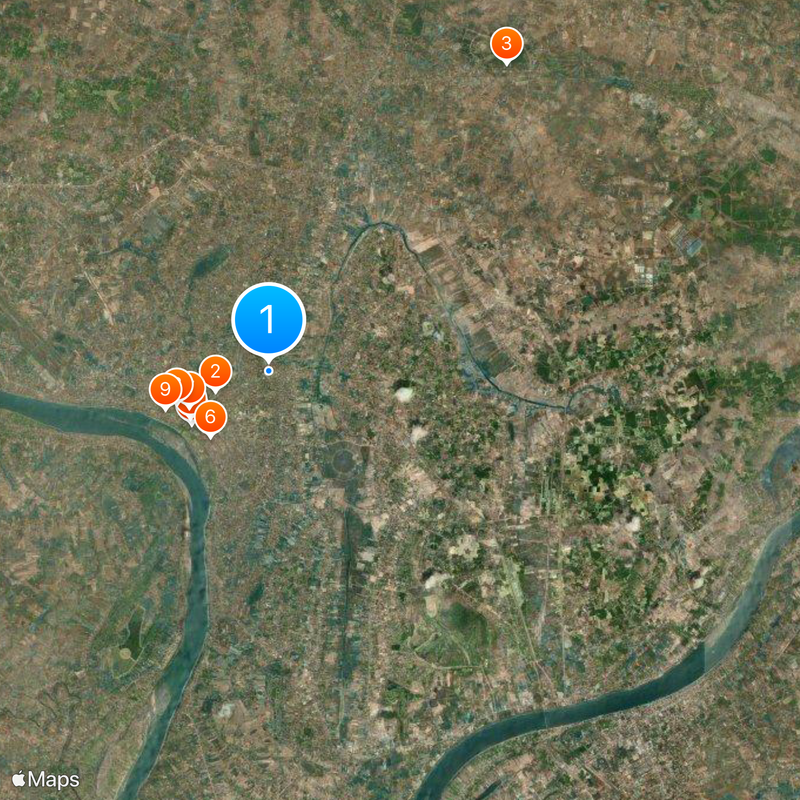
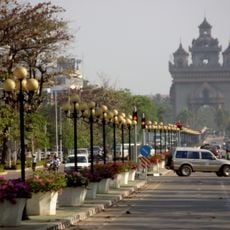
The stupa stands at the end of Pha That Luang Road, about 4 km from central Vientiane. The surrounding area is gated to keep out traffic, so visitors now approach and circle the monument on foot rather than by car. The encircling walls, roughly 85 metres on each side, hold Lao and Khmer sculptures, including one of Jayavarman VII.
The gold leaf that once covered the spire weighed about a thousand pounds, according to Dutch East India Company envoy Gerrit van Wuysthoff, who was received at the stupa by King Sourigna Vongsa in 1641. The encircling walls, roughly 85 metres on each side, hold Lao and Khmer sculptures, including one of Jayavarman VII.
The community of curious travelers
AroundUs brings together thousands of curated places, local tips, and hidden gems, enriched daily by 93,473 contributors worldwide.