See the monuments around you in AROpen chests in the app
Around Us is built for your phone — point your camera at the streets and discover the monuments and places around you in augmented reality.Around Us is built for your phone — chests unlock when you walk, explore and capture nearby places.
Laos features a mix of Buddhist temples, waterfalls, and caves that shape the country's character. Temple complexes such as Wat Xieng Thong in Luang Prabang and Vat Phou in Champasak display religious art and architecture spanning different periods. Natural areas showcase powerful waterfalls like Kuang Si, cave systems like Tham Kong Lo, and mountain ranges offering views over the Mekong River. From Mount Phousi to the Plain of Jars near Phonsavan, Laos combines spiritual sites with natural landscapes that reveal the country's history and environment. Visitors can explore caves where communities once sheltered, temples decorated with intricate details, and rivers flowing through limestone formations.
Laos features a mix of Buddhist temples, waterfalls, and caves that shape the country's character. Temple complexes such as Wat Xieng Thong in Luang Prabang and Vat Phou in Champasak display religious art and architecture spanning different periods. Natural areas showcase powerful waterfalls like Kuang Si, cave systems like Tham Kong Lo, and mountain ranges offering views over the Mekong River. From Mount Phousi to the Plain of Jars near Phonsavan, Laos combines spiritual sites with natural landscapes that reveal the country's history and environment. Visitors can explore caves where communities once sheltered, temples decorated with intricate details, and rivers flowing through limestone formations.
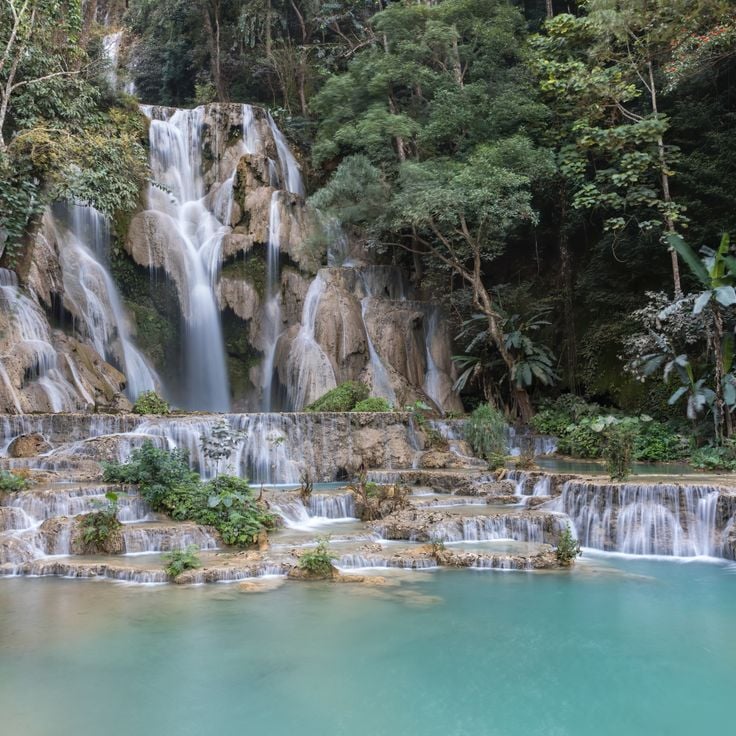
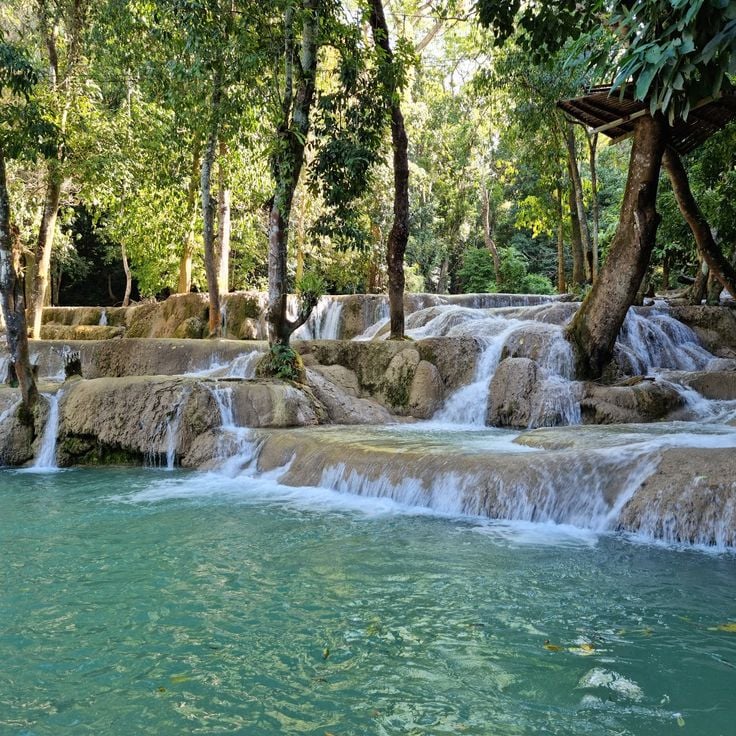
Kuang Si Falls is one of Laos' natural treasures and fits perfectly within the collection of sacred temples and natural sites. The waterfall cascades over several limestone tiers, forming natural pools filled with mineral-rich water that displays a striking turquoise color. The location showcases the geological features that define the country.
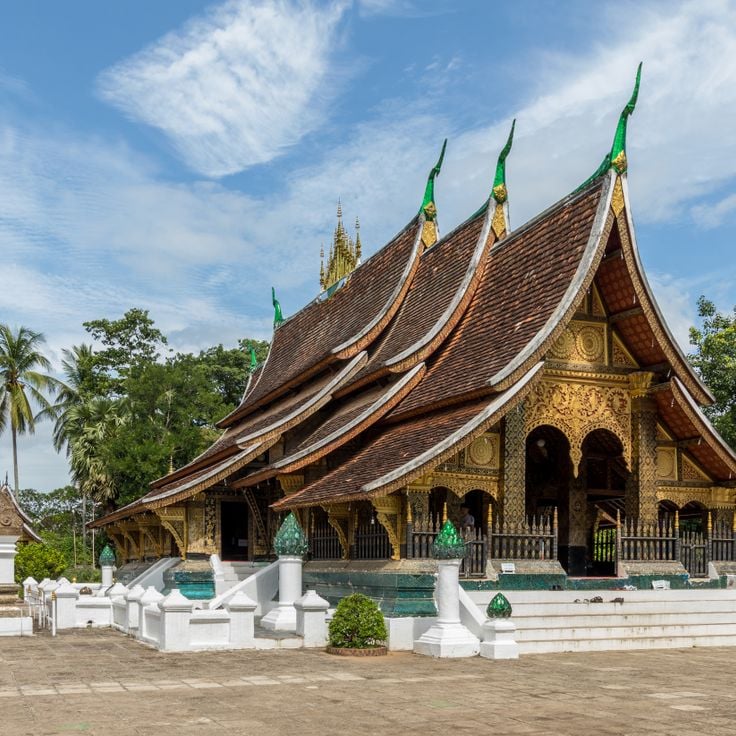
Wat Xieng Thong is a Buddhist temple from the 16th century located in Luang Prabang. It represents the sacred temples and natural sites that define Laos, combining religious art and architecture from different periods. The temple features golden wall paintings, colored glass mosaics and a distinctive multi-tiered roof structure. Its design reflects the spiritual and cultural heritage that makes Laos a place where Buddhist traditions are expressed through craftsmanship and devotion.
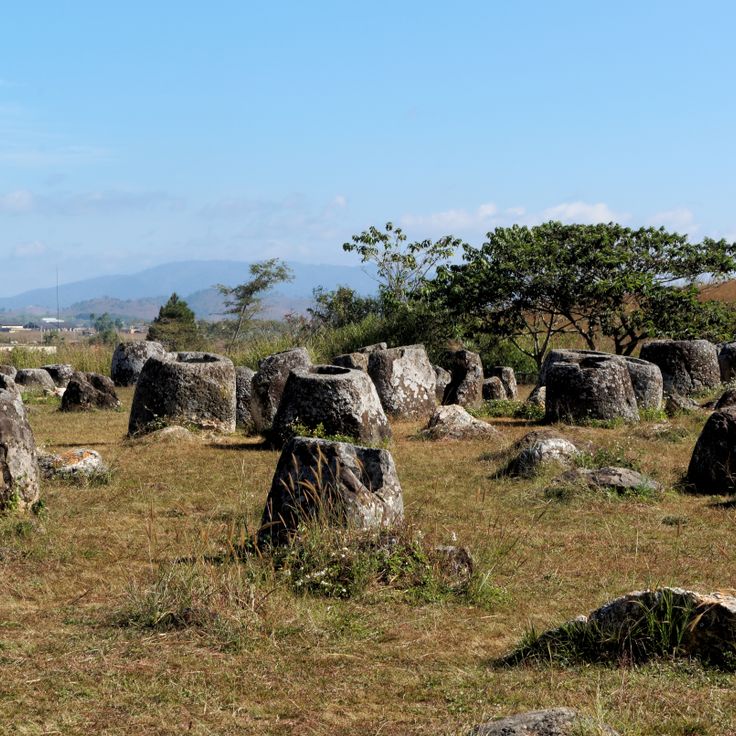
The Plain of Jars is an archaeological site with over 2000 prehistoric stone jars created between 500 BCE and 500 CE. It fits within Laos's collection of sacred temples, natural sites and historical places, where Buddhist temples, waterfalls and caves shape the landscape. The jars reveal the craftsmanship and daily life of ancient people who lived in this region.
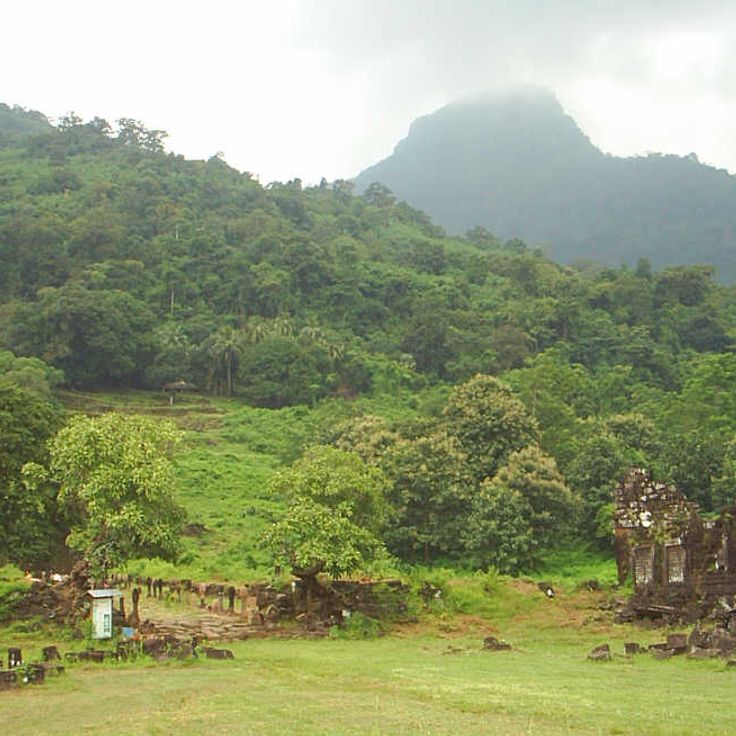
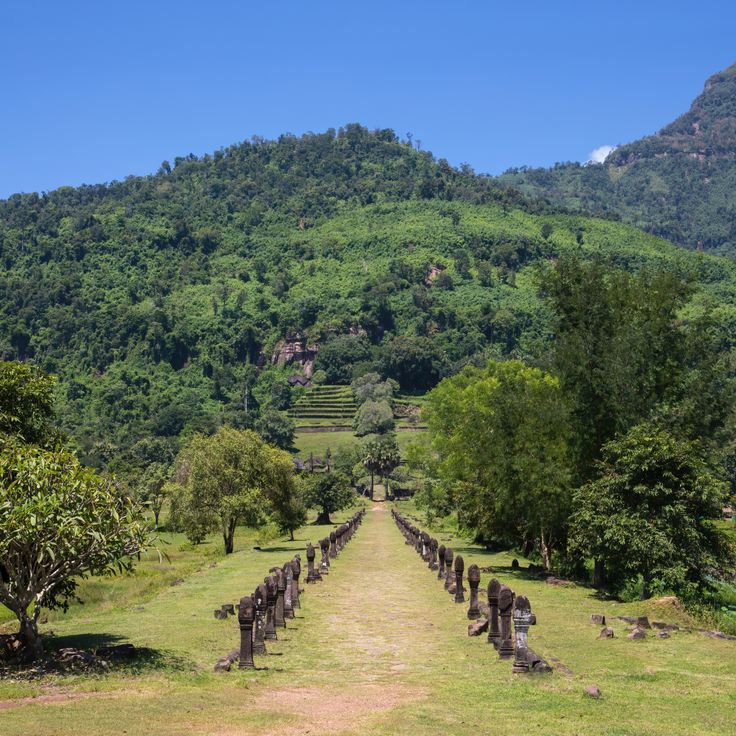
Vat Phou is part of the sacred temples and natural sites that define Laos. This temple complex rises up Mount Phou Kao and dates to the 5th century. Vat Phou displays architectural elements from both Khmer and Hindu traditions, reflecting the religious art and design that characterize the temple complexes throughout the country.
Si Phan Don is a river archipelago within the Mekong that represents the natural and cultural features of Laos. The river splits into multiple channels here, creating thousands of islands of different sizes. Traditional fishing villages are scattered across these islands, where residents have lived from the river for generations. The landscape shows how nature and human life are intertwined in Laos.
Tad Sae Waterfall is a multi-tiered waterfall in the jungle and fits naturally within the collection of sacred temples and natural sites in Laos. You can reach it by boat or elephant tour, and there are natural pools where you can swim. This waterfall represents the natural wonders alongside the temple complexes and cave systems found throughout the country.
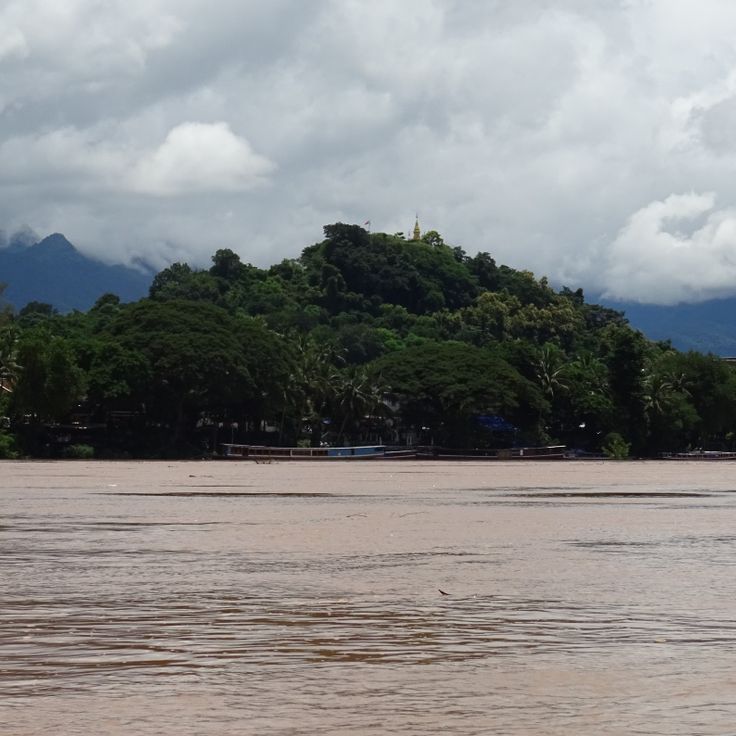
Mount Phousi is a 150-meter high mountain in Luang Prabang with Buddhist temples and an observation platform overlooking the city and Mekong River. This site fits within the collection of sacred temples and natural sites in Laos that combines Buddhist temples, waterfalls and cave systems. Visitors climb the mountain and explore the temples, which display religious art and architecture from different periods. The observation platform provides views across the city and the Mekong valley below.
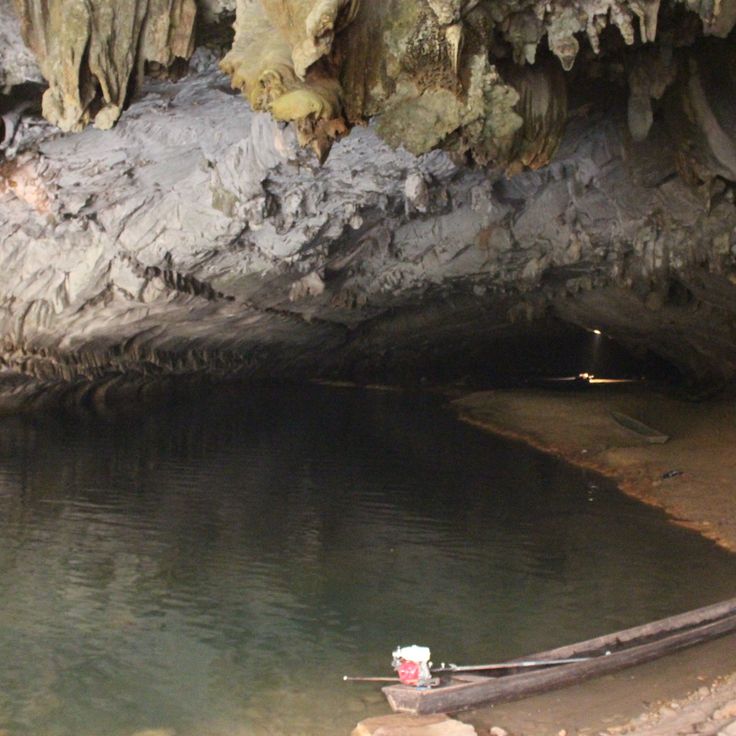
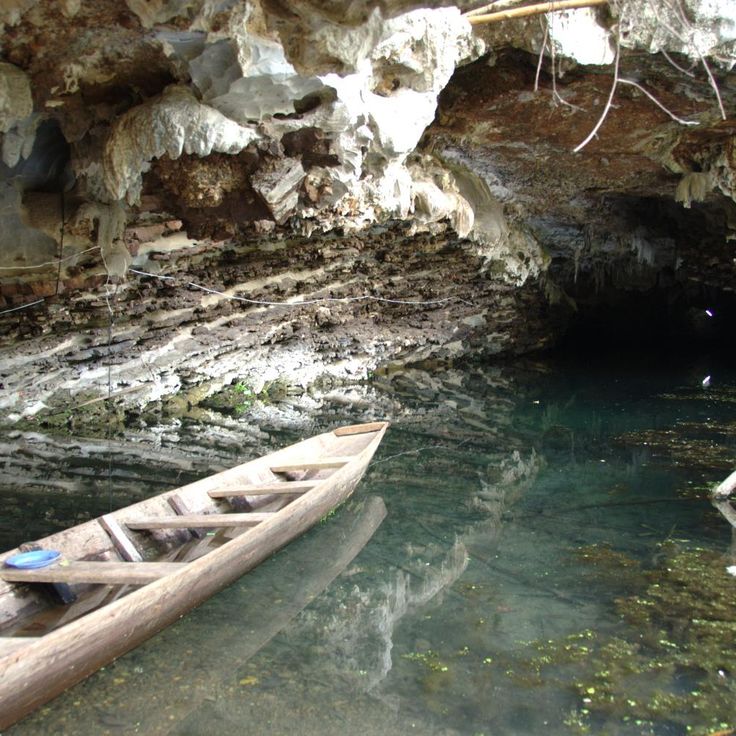
Tham Kong Lo is a cave in the limestone mountains that represents the natural sites of Laos, where the country preserves its geological features. This cave stretches for 7 kilometers and contains an underground river, high ceilings and large stalactites. Visitors can paddle through this subterranean waterway and experience the limestone formations up close.
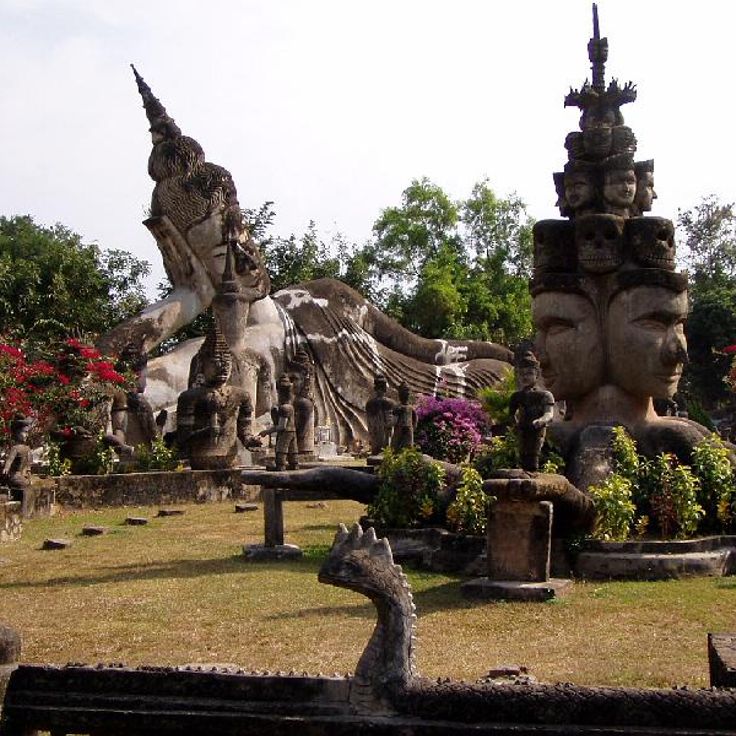
Buddha Park in Vientiane displays around 200 concrete statues representing Buddhist and Hindu figures. Built in 1958, this park offers religious art in an open-air setting. It complements the sacred temples and natural sites found throughout Laos by showcasing the country's spiritual traditions in a distinctive way. Visitors walk among the statues and encounter different religious figures and scenes.
This temple complex sits on a sandstone cliff in northern Laos, with seven levels connected by wooden walkways and stairs. As you climb through the structure, you encounter temples and shrines built at different heights on the rock face. The combination of natural stone and religious architecture reflects how Laos integrates its Buddhist sites with the landscape.
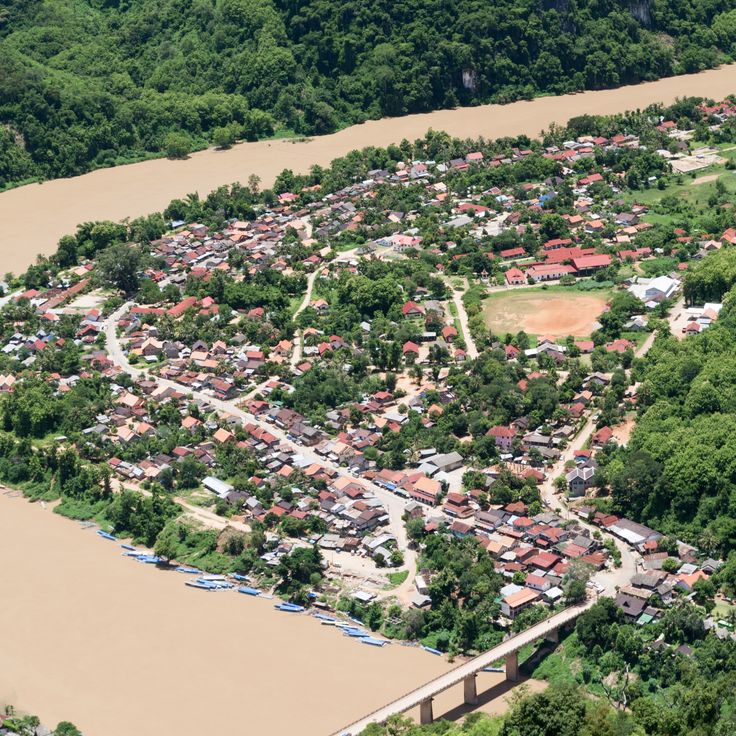
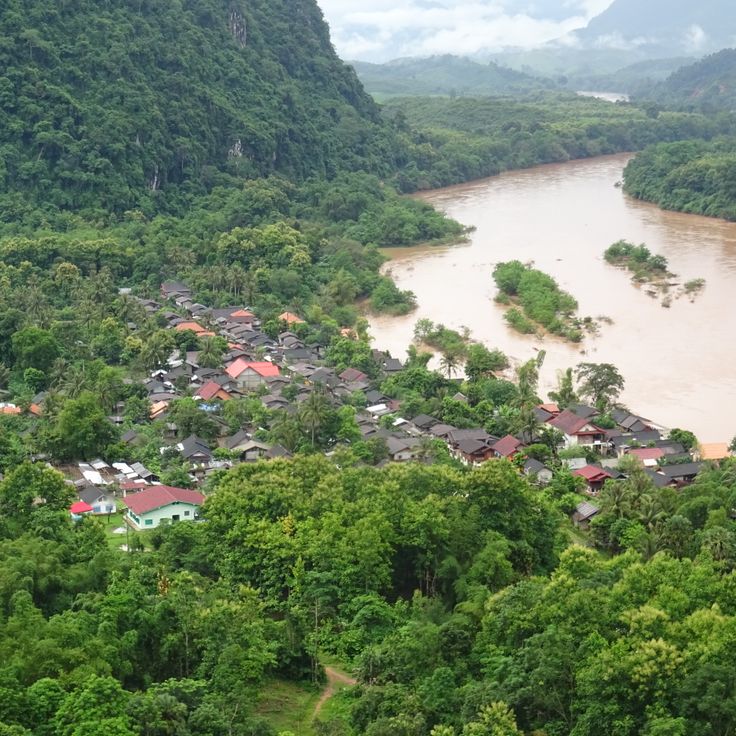
Nong Khiaw sits along the Nam Ou River between tall limestone cliffs and is part of Laos's network of natural and cultural destinations. The town offers hiking trails and caves that lead into the surrounding mountains. Visitors can explore the landscape where the river cuts through the stone cliffs and enjoy the views of the water below.
Muang Ngoi Neua is a village without roads that represents the natural sites documented in this collection of Buddhist temples, waterfalls and caves across Laos. The village sits among rice fields and offers river views along with walking paths to nearby villages and cave systems like Tham Kong Lo. The landscape displays the geological features that characterize the country.
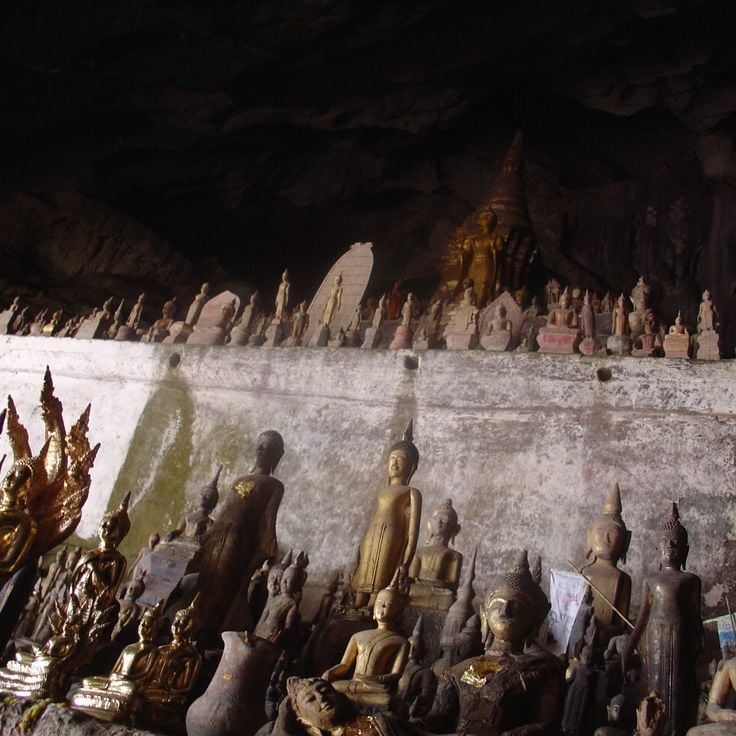
The Pak Ou Caves are a sacred site within Laos' collection of Buddhist temples, waterfalls and caves. These caves contain over 4000 Buddha statues made of wood and bronze. The entrance stands 25 meters above the Mekong River. This natural formation reflects the religious art and architecture that defines the spiritual landscape of the country.
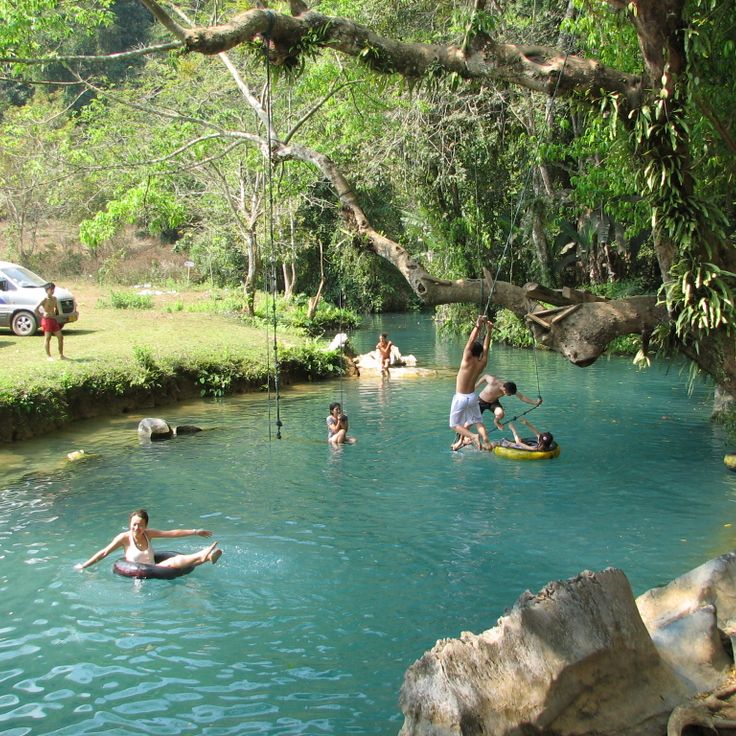
The Blue Lagoon of Vang Vieng is a natural water basin with clear water, surrounded by limestone rocks. This site fits within Laos' collection of natural features where visitors can swim and jump from trees. The setting displays the geological characteristics that shape the country, much like the waterfalls and cave systems found elsewhere in Laos.
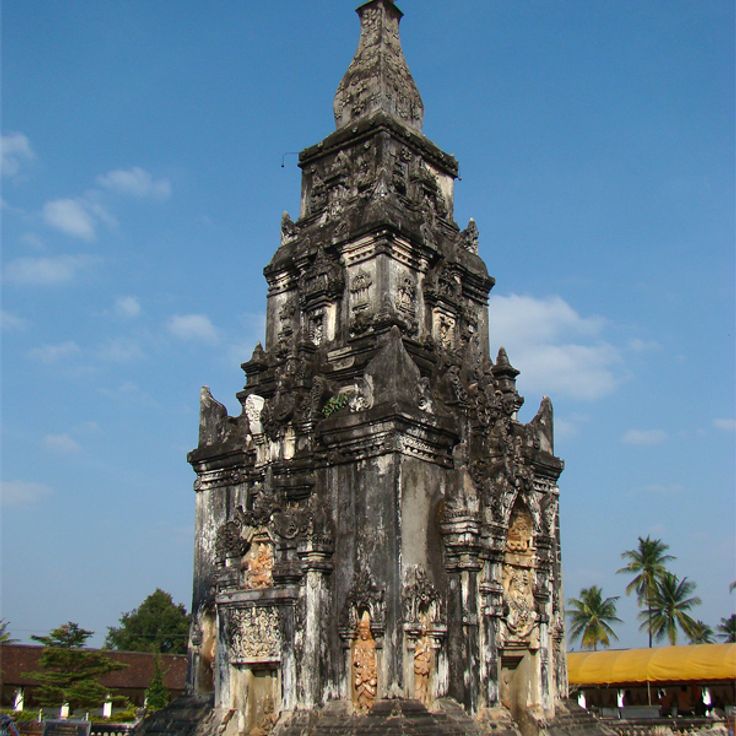
That Ing Hang Stupa in Savannakhet is a Buddhist shrine from the 16th century and part of Laos' network of sacred temples and natural sites. This stupa stands about 9 meters tall and serves as an important religious center for local worshippers. Visitors come to pray and connect with Buddhist traditions. The structure displays traditional architectural features that developed over different periods in Laotian history.
The Bolaven Plateau is a volcanic highland at 1000 meters elevation that fits within this collection of sacred temples and natural sites in Laos. The plateau is known for its coffee production and is home to several waterfalls that flow through the volcanic landscape. Visitors can walk through coffee plantations and enjoy the cooler mountain air while exploring waterfalls and local villages.
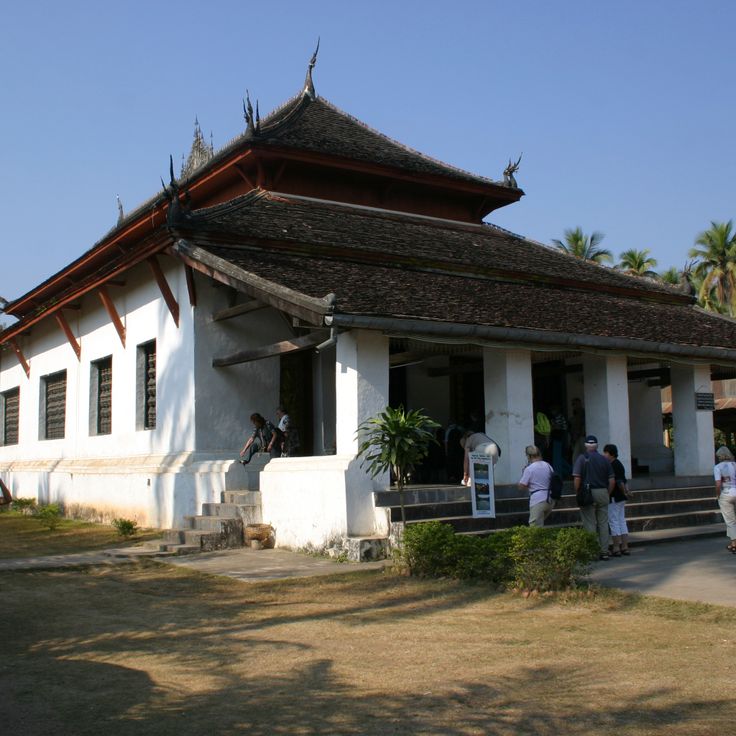
This Buddhist temple from 1818 is part of a collection of sacred temples and natural sites across Laos. Wat Sisaket holds over 2000 ceramic and silver statues arranged within its wall niches and galleries. The statues display religious art and architecture from different periods, showing how temple complexes throughout the country preserve their cultural features.
Wat Long Khoun is an 18th century Buddhist monastery in Luang Prabang and part of Laos' collection of temples that display religious art and architecture from different periods. The monastery preserves traditional wall paintings and a meditation room that was used by the former royal family. This temple shows the cultural and spiritual traditions found throughout the country.
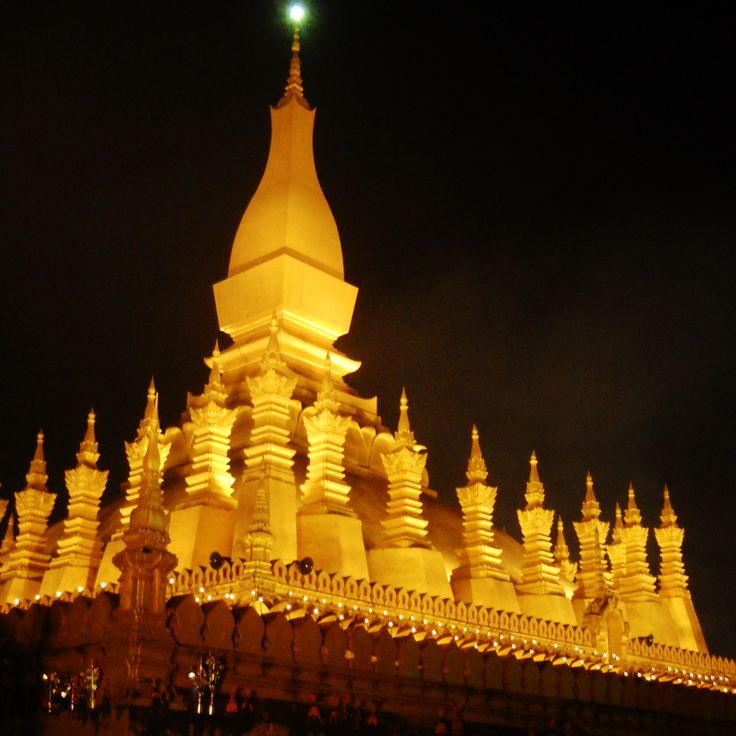
Pha That Luang is a 16th century Buddhist stupa in Vientiane and a major religious structure in Laos. The shrine rises 45 meters high and is covered with gold leaves. Pha That Luang fits into the collection of sacred temples and natural sites in Laos because it displays the religious architecture and art that shaped the country across different periods.
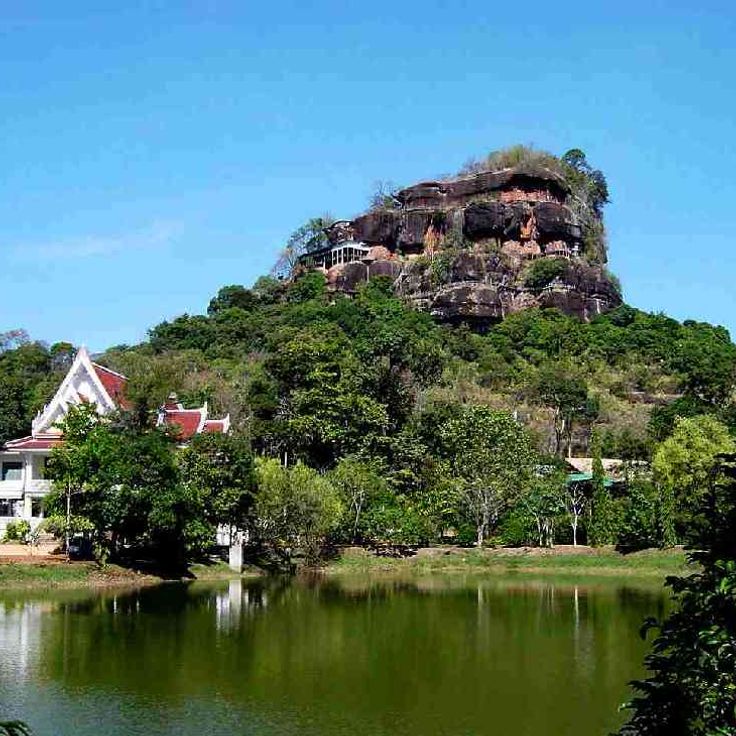
Wat Phabat is a Buddhist temple in this collection of sacred temples and natural sites across Laos, where religious architecture and forests meet. This temple sits on a mountain and houses a stone footprint, a sacred object in Buddhist practice. The surrounding landscape shows rice fields and forest, creating a setting where the religious and agricultural life of the region come together.
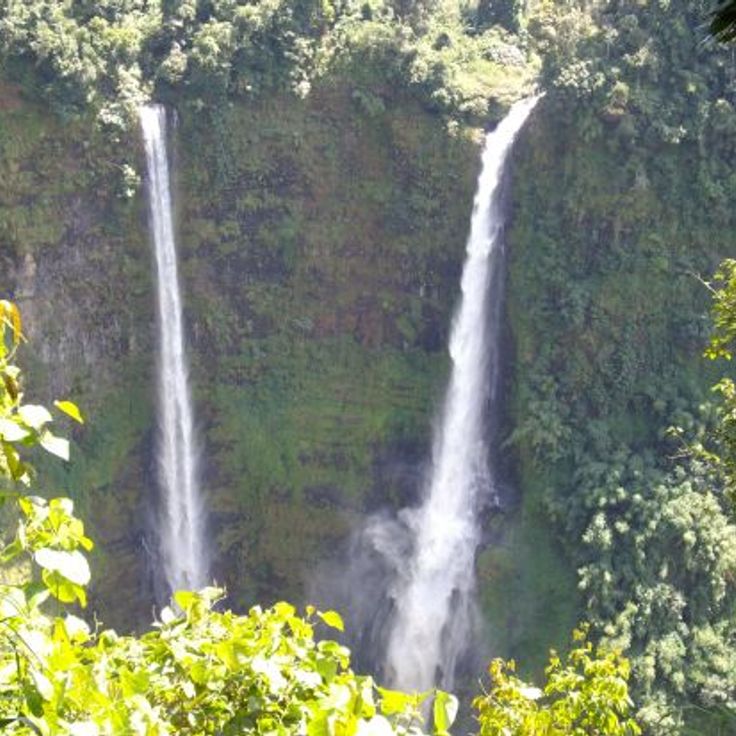
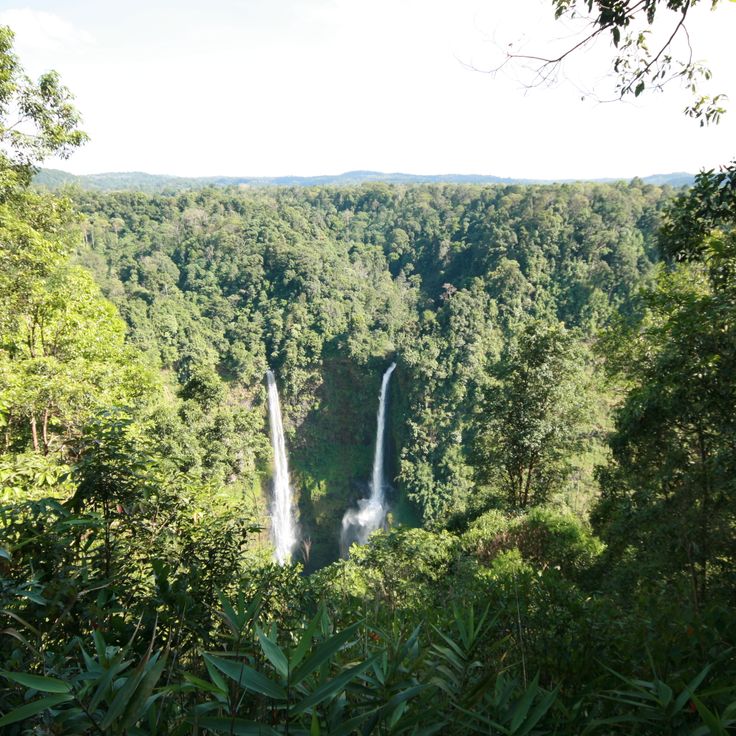
This waterfall consists of two streams that flow parallel to each other, dropping 100 meters into a gorge. Tad Fane Waterfall stands within Dong Hua Sao National Park surrounded by rainforest and represents the natural features that define Laos alongside its Buddhist temples and cave systems.
Wat Simuang is a Buddhist temple in Vientiane that holds deep significance for the city. The temple houses the city pillar of Vientiane, which serves as the spiritual protector of the city. According to local tradition, a woman sacrificed herself during the temple's construction to safeguard it. The temple displays religious art and architecture that reflects Buddhist traditions found throughout Laos.
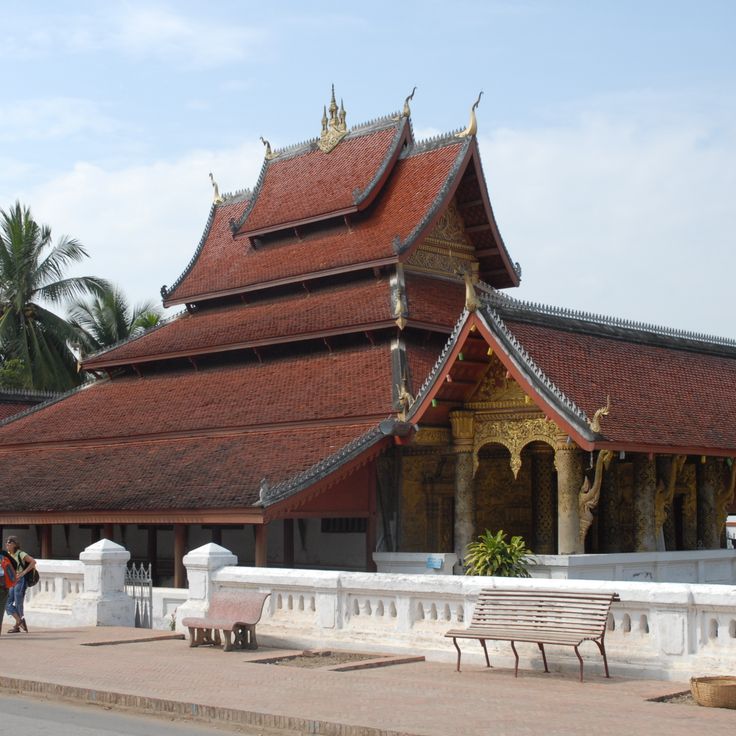
Wat Mai Suwannaphumaham is an 18th-century temple in Luang Prabang that fits within the collection of sacred temples and natural sites in Laos. This temple displays traditional Laotian carvings and gold reliefs that reflect the religious art found throughout the country's temple complexes. The main hall houses Buddha statues and represents the architectural heritage preserved across Laos.
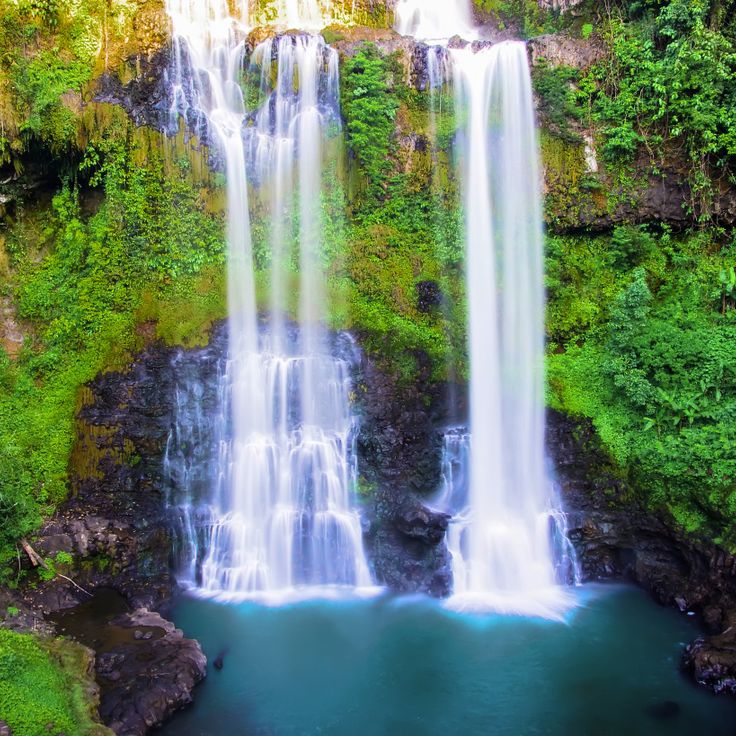
Tad Yuang Waterfall is one of the natural sites in Laos, dropping 40 meters in successive cascades over rock layers. A path leads down to the base of the waterfall where visitors can swim in the pool below. This waterfall adds to the collection of Buddhist temples, waterfalls and cave systems found throughout the country.
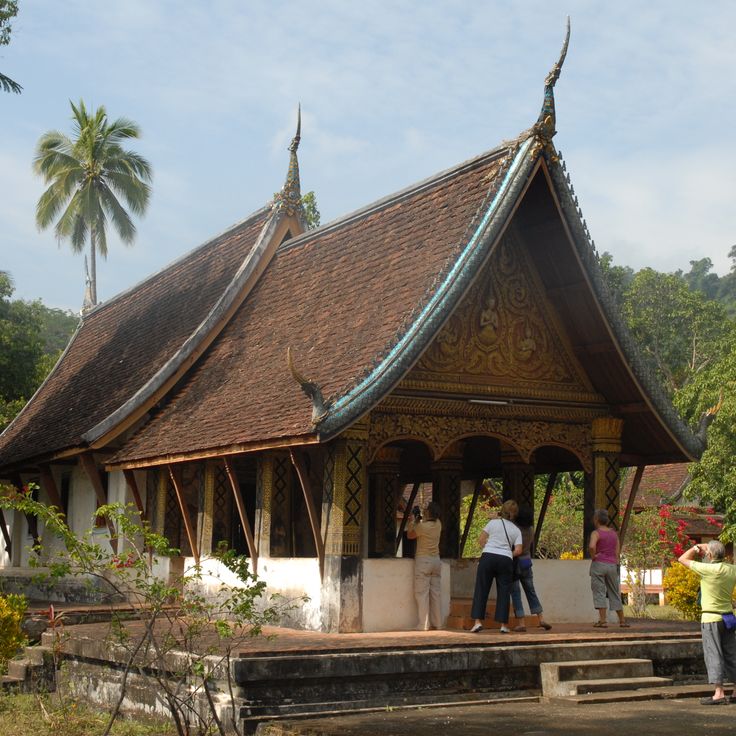
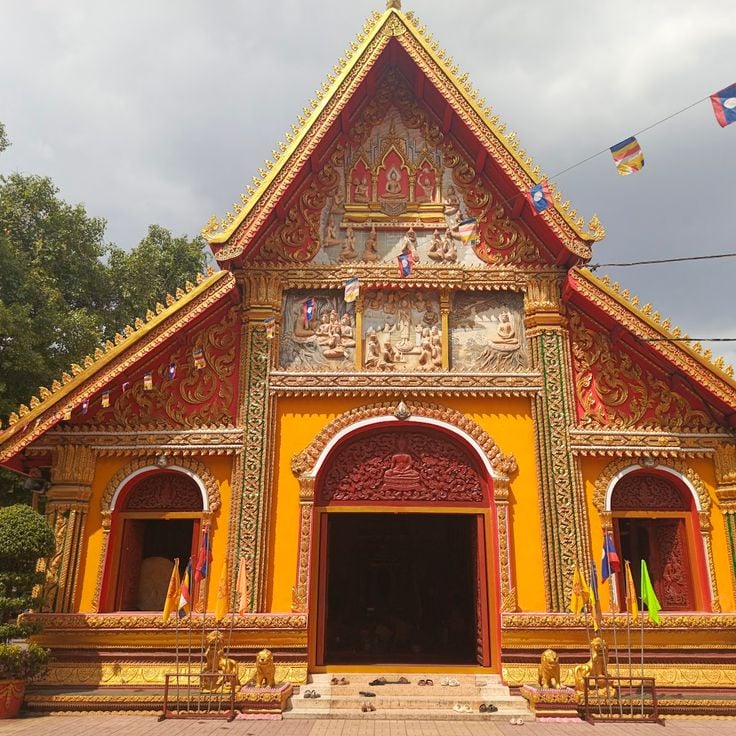
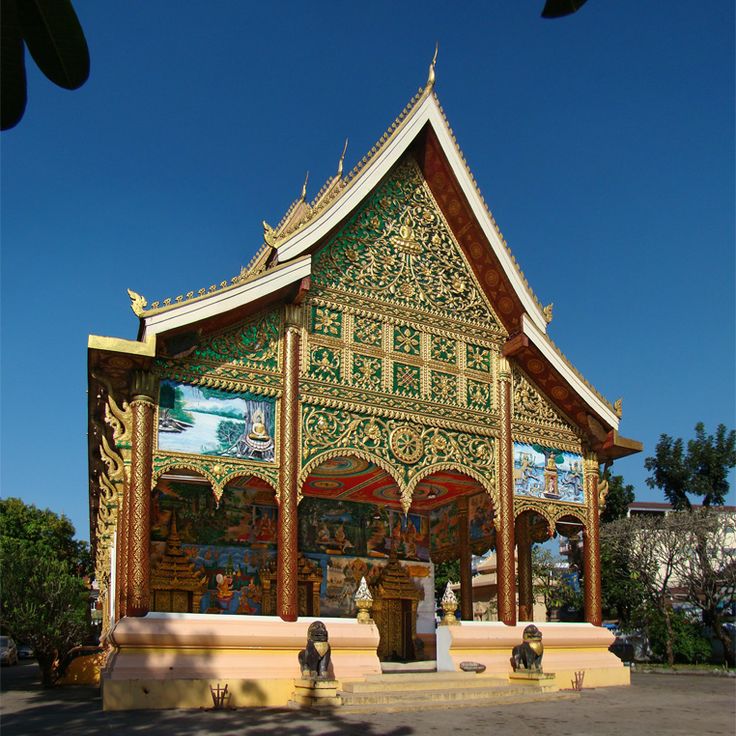
This Buddhist temple from the 16th century belongs to Laos' collection of sacred temples and natural sites. The temple displays religious wall paintings with traditional motifs and features a multi-tiered roof structure that follows ancient architectural practices, reflecting the country's religious heritage.
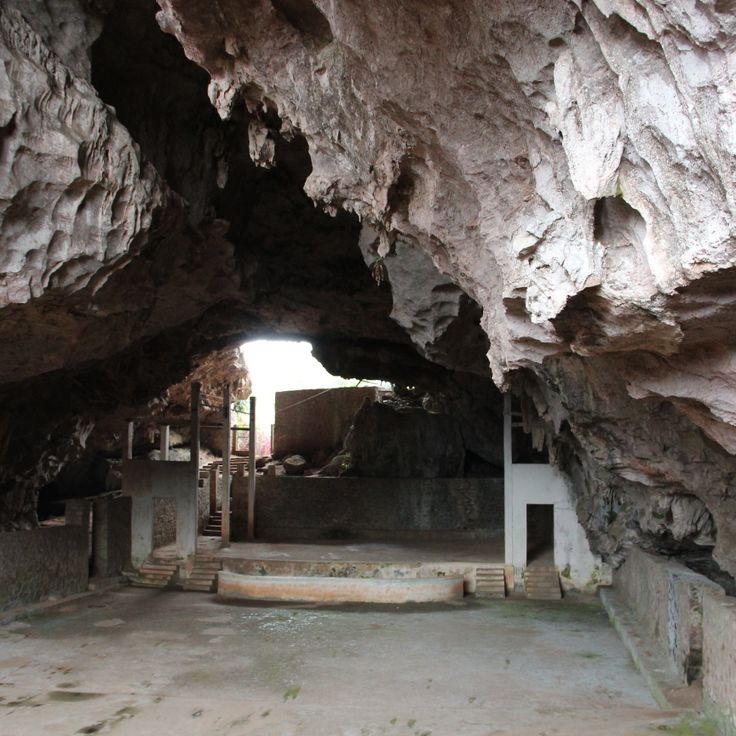
Vieng Xai Caves are limestone caves that served as shelter for over 20,000 people between 1964 and 1973 and housed Pathet Lao administrative offices. As part of Laos' collection of sacred temples, waterfalls and cave systems, this site preserves both geological features and cultural history. The caves offer insight into a defining period of the country's past.
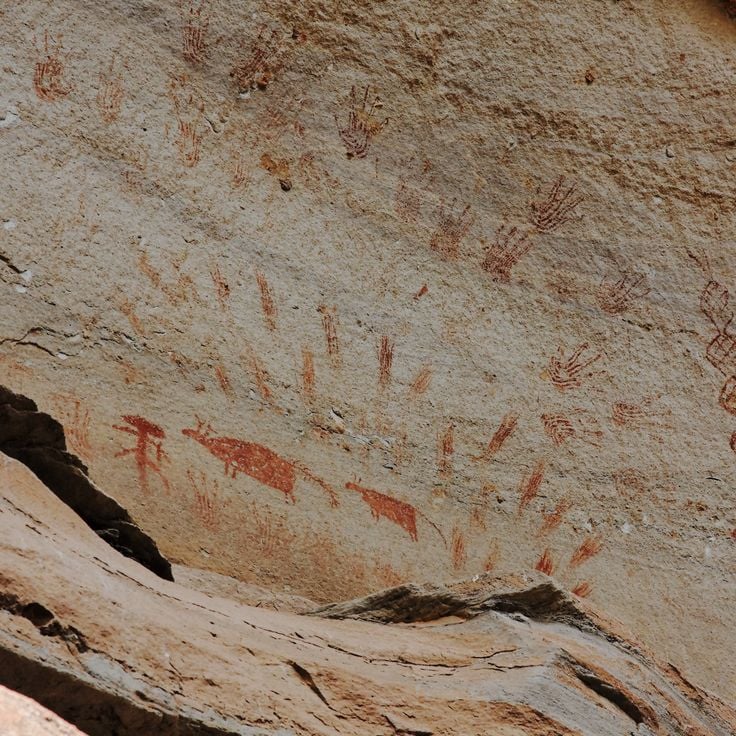
Pha Taem National Park is one of Laos' natural sites that brings together history and geology. The park holds Stone Age rock art, striking rock formations and viewpoints overlooking the Mekong River. Cliffs here reach about 80 meters high. Visitors can experience both the history and landscape of Laos in one place.
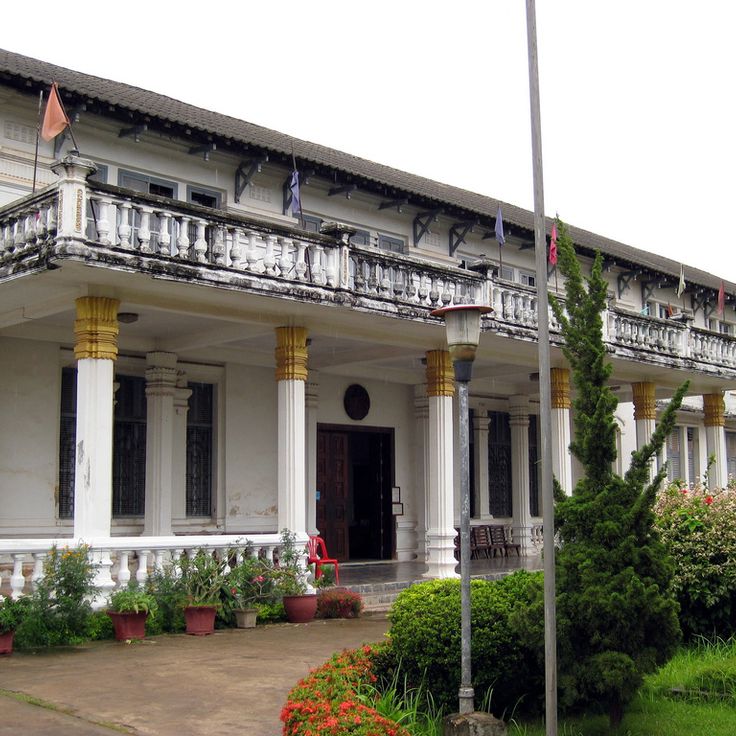
The Lao National Museum in Vientiane displays archaeological finds, traditional artworks and documents about the country's history from kingdom to revolution. It complements the sacred temples and natural sites across Laos by presenting the nation's cultural treasures and helping visitors understand how the past shaped the temples and traditions seen throughout the country.
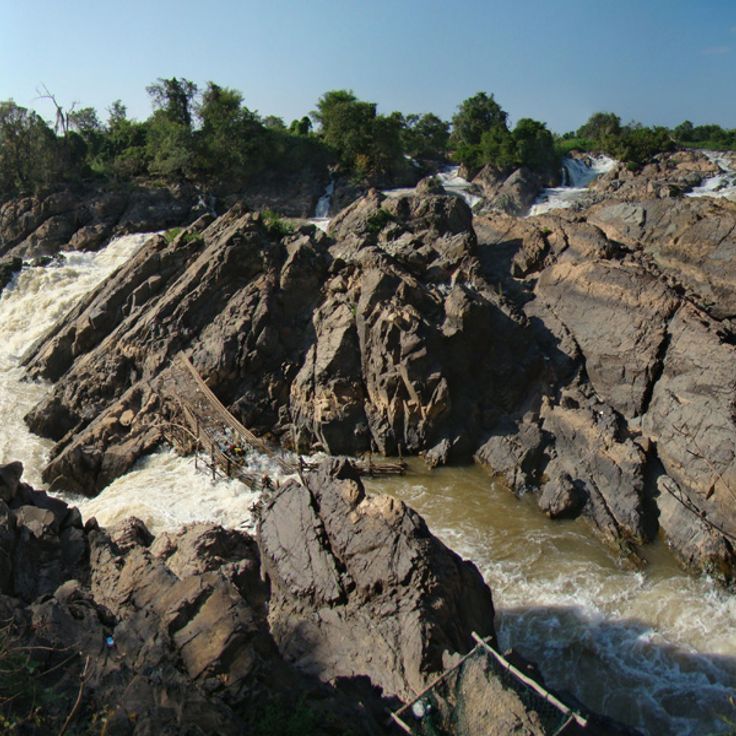
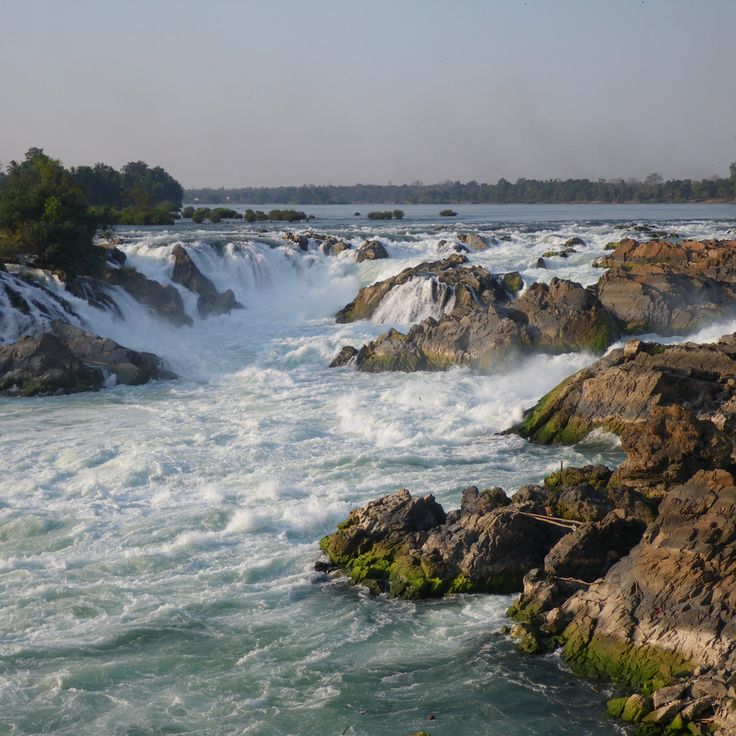
Khone Phapheng Falls are the largest waterfalls on the Mekong River and represent the natural power that complements Laos' collection of sacred temples and geological features. Water cascades over multiple levels and forms rapids among islands scattered throughout. At 21 meters high and stretching 13 kilometers across, the falls create a dramatic display of flowing water and mist. Local fishermen work the area using traditional methods, and the roar of the falling water fills the surrounding space.
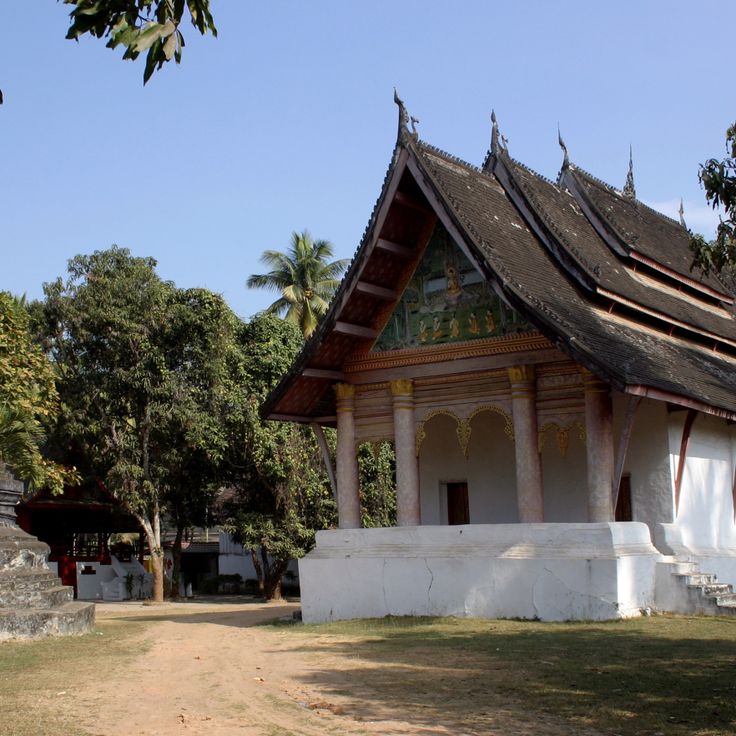
Wat Aham is a 19th century Buddhist temple in Luang Prabang that blends Lao and Tai-Lue architecture. This temple displays religious art and architecture from different periods and is part of Laos' collection of sacred temples and natural sites that preserve the country's cultural heritage.
Wat Visounnarath was built in 1513 and is a Buddhist temple in Luang Prabang. This temple fits among the religious complexes found throughout Laos. Inside, there is a prayer hall with historic wall paintings and a large stupa. The temple shows the architecture and religious art from that period.
The Phou Khao Khuay Trek is a hiking trail through forest areas in Vientiane that features multiple waterfalls and rock formations. Rising to 1761 meters, this trek showcases part of the natural landscape of Laos, which combines Buddhist temples, waterfalls and cave systems like Tham Kong Lo with mountain ranges and views over the Mekong.
Tham Nong Pafa Cave is a limestone cave that forms part of Laos' network of sacred temples and natural sites. It contains 229 bronze Buddha statues discovered by locals in 2004. The cave demonstrates how natural geological formations hold religious significance for the people of the region and showcases the spiritual importance placed on caves throughout Laos.
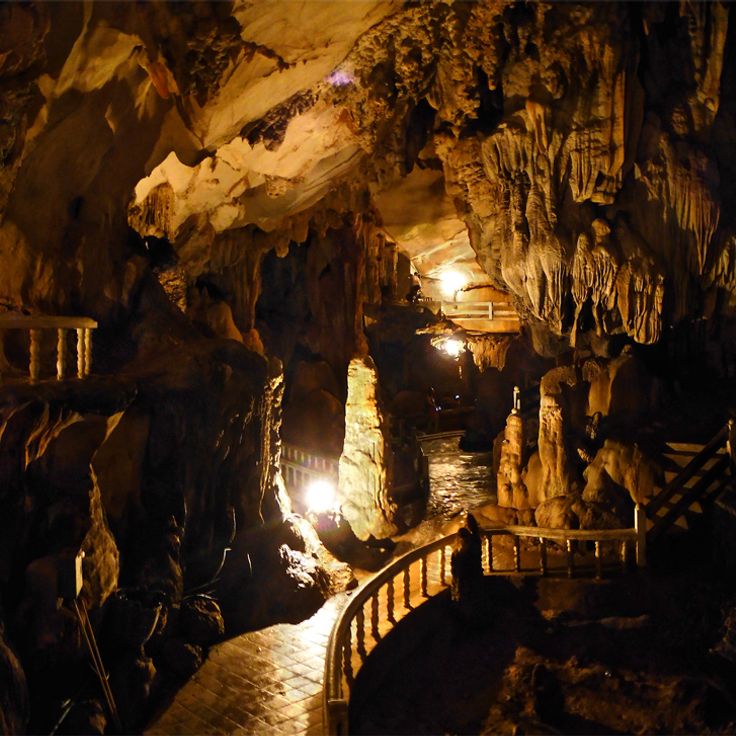
Tham Jang Cave is a limestone cave with natural mineral deposit formations and an illuminated path through several connected chambers. It fits within the pattern of natural sites in Laos, where cave systems like this stand alongside temples and waterfalls as important geological features of the country.
The Champasak Cultural Landscape is part of Laos' sacred temples and natural sites. This UNESCO World Heritage site contains Hindu temple ruins dating from the 5th to 12th centuries, featuring geometric patterns and irrigation systems. The site combines religious architecture with the region's landscape systems and represents part of Laos' cultural and geological heritage.
Kuang Si Falls is one of Laos' natural treasures and fits perfectly within the collection of sacred temples and natural sites. The waterfall cascades over several limestone tiers, forming natural pools filled with mineral-rich water that displays a striking turquoise color. The location showcases the geological features that define the country.
Wat Xieng Thong is a Buddhist temple from the 16th century located in Luang Prabang. It represents the sacred temples and natural sites that define Laos, combining religious art and architecture from different periods. The temple features golden wall paintings, colored glass mosaics and a distinctive multi-tiered roof structure. Its design reflects the spiritual and cultural heritage that makes Laos a place where Buddhist traditions are expressed through craftsmanship and devotion.
The Plain of Jars is an archaeological site with over 2000 prehistoric stone jars created between 500 BCE and 500 CE. It fits within Laos's collection of sacred temples, natural sites and historical places, where Buddhist temples, waterfalls and caves shape the landscape. The jars reveal the craftsmanship and daily life of ancient people who lived in this region.
Vat Phou is part of the sacred temples and natural sites that define Laos. This temple complex rises up Mount Phou Kao and dates to the 5th century. Vat Phou displays architectural elements from both Khmer and Hindu traditions, reflecting the religious art and design that characterize the temple complexes throughout the country.
Si Phan Don is a river archipelago within the Mekong that represents the natural and cultural features of Laos. The river splits into multiple channels here, creating thousands of islands of different sizes. Traditional fishing villages are scattered across these islands, where residents have lived from the river for generations. The landscape shows how nature and human life are intertwined in Laos.
Tad Sae Waterfall is a multi-tiered waterfall in the jungle and fits naturally within the collection of sacred temples and natural sites in Laos. You can reach it by boat or elephant tour, and there are natural pools where you can swim. This waterfall represents the natural wonders alongside the temple complexes and cave systems found throughout the country.
Mount Phousi is a 150-meter high mountain in Luang Prabang with Buddhist temples and an observation platform overlooking the city and Mekong River. This site fits within the collection of sacred temples and natural sites in Laos that combines Buddhist temples, waterfalls and cave systems. Visitors climb the mountain and explore the temples, which display religious art and architecture from different periods. The observation platform provides views across the city and the Mekong valley below.
Tham Kong Lo is a cave in the limestone mountains that represents the natural sites of Laos, where the country preserves its geological features. This cave stretches for 7 kilometers and contains an underground river, high ceilings and large stalactites. Visitors can paddle through this subterranean waterway and experience the limestone formations up close.
Buddha Park in Vientiane displays around 200 concrete statues representing Buddhist and Hindu figures. Built in 1958, this park offers religious art in an open-air setting. It complements the sacred temples and natural sites found throughout Laos by showcasing the country's spiritual traditions in a distinctive way. Visitors walk among the statues and encounter different religious figures and scenes.
This temple complex sits on a sandstone cliff in northern Laos, with seven levels connected by wooden walkways and stairs. As you climb through the structure, you encounter temples and shrines built at different heights on the rock face. The combination of natural stone and religious architecture reflects how Laos integrates its Buddhist sites with the landscape.
Nong Khiaw sits along the Nam Ou River between tall limestone cliffs and is part of Laos's network of natural and cultural destinations. The town offers hiking trails and caves that lead into the surrounding mountains. Visitors can explore the landscape where the river cuts through the stone cliffs and enjoy the views of the water below.
Muang Ngoi Neua is a village without roads that represents the natural sites documented in this collection of Buddhist temples, waterfalls and caves across Laos. The village sits among rice fields and offers river views along with walking paths to nearby villages and cave systems like Tham Kong Lo. The landscape displays the geological features that characterize the country.
The Pak Ou Caves are a sacred site within Laos' collection of Buddhist temples, waterfalls and caves. These caves contain over 4000 Buddha statues made of wood and bronze. The entrance stands 25 meters above the Mekong River. This natural formation reflects the religious art and architecture that defines the spiritual landscape of the country.
The Blue Lagoon of Vang Vieng is a natural water basin with clear water, surrounded by limestone rocks. This site fits within Laos' collection of natural features where visitors can swim and jump from trees. The setting displays the geological characteristics that shape the country, much like the waterfalls and cave systems found elsewhere in Laos.
That Ing Hang Stupa in Savannakhet is a Buddhist shrine from the 16th century and part of Laos' network of sacred temples and natural sites. This stupa stands about 9 meters tall and serves as an important religious center for local worshippers. Visitors come to pray and connect with Buddhist traditions. The structure displays traditional architectural features that developed over different periods in Laotian history.
The Bolaven Plateau is a volcanic highland at 1000 meters elevation that fits within this collection of sacred temples and natural sites in Laos. The plateau is known for its coffee production and is home to several waterfalls that flow through the volcanic landscape. Visitors can walk through coffee plantations and enjoy the cooler mountain air while exploring waterfalls and local villages.
This Buddhist temple from 1818 is part of a collection of sacred temples and natural sites across Laos. Wat Sisaket holds over 2000 ceramic and silver statues arranged within its wall niches and galleries. The statues display religious art and architecture from different periods, showing how temple complexes throughout the country preserve their cultural features.
Wat Long Khoun is an 18th century Buddhist monastery in Luang Prabang and part of Laos' collection of temples that display religious art and architecture from different periods. The monastery preserves traditional wall paintings and a meditation room that was used by the former royal family. This temple shows the cultural and spiritual traditions found throughout the country.
Pha That Luang is a 16th century Buddhist stupa in Vientiane and a major religious structure in Laos. The shrine rises 45 meters high and is covered with gold leaves. Pha That Luang fits into the collection of sacred temples and natural sites in Laos because it displays the religious architecture and art that shaped the country across different periods.
Wat Phabat is a Buddhist temple in this collection of sacred temples and natural sites across Laos, where religious architecture and forests meet. This temple sits on a mountain and houses a stone footprint, a sacred object in Buddhist practice. The surrounding landscape shows rice fields and forest, creating a setting where the religious and agricultural life of the region come together.
This waterfall consists of two streams that flow parallel to each other, dropping 100 meters into a gorge. Tad Fane Waterfall stands within Dong Hua Sao National Park surrounded by rainforest and represents the natural features that define Laos alongside its Buddhist temples and cave systems.
Wat Simuang is a Buddhist temple in Vientiane that holds deep significance for the city. The temple houses the city pillar of Vientiane, which serves as the spiritual protector of the city. According to local tradition, a woman sacrificed herself during the temple's construction to safeguard it. The temple displays religious art and architecture that reflects Buddhist traditions found throughout Laos.
Wat Mai Suwannaphumaham is an 18th-century temple in Luang Prabang that fits within the collection of sacred temples and natural sites in Laos. This temple displays traditional Laotian carvings and gold reliefs that reflect the religious art found throughout the country's temple complexes. The main hall houses Buddha statues and represents the architectural heritage preserved across Laos.
Tad Yuang Waterfall is one of the natural sites in Laos, dropping 40 meters in successive cascades over rock layers. A path leads down to the base of the waterfall where visitors can swim in the pool below. This waterfall adds to the collection of Buddhist temples, waterfalls and cave systems found throughout the country.
This Buddhist temple from the 16th century belongs to Laos' collection of sacred temples and natural sites. The temple displays religious wall paintings with traditional motifs and features a multi-tiered roof structure that follows ancient architectural practices, reflecting the country's religious heritage.
Vieng Xai Caves are limestone caves that served as shelter for over 20,000 people between 1964 and 1973 and housed Pathet Lao administrative offices. As part of Laos' collection of sacred temples, waterfalls and cave systems, this site preserves both geological features and cultural history. The caves offer insight into a defining period of the country's past.
Pha Taem National Park is one of Laos' natural sites that brings together history and geology. The park holds Stone Age rock art, striking rock formations and viewpoints overlooking the Mekong River. Cliffs here reach about 80 meters high. Visitors can experience both the history and landscape of Laos in one place.
The Lao National Museum in Vientiane displays archaeological finds, traditional artworks and documents about the country's history from kingdom to revolution. It complements the sacred temples and natural sites across Laos by presenting the nation's cultural treasures and helping visitors understand how the past shaped the temples and traditions seen throughout the country.
Khone Phapheng Falls are the largest waterfalls on the Mekong River and represent the natural power that complements Laos' collection of sacred temples and geological features. Water cascades over multiple levels and forms rapids among islands scattered throughout. At 21 meters high and stretching 13 kilometers across, the falls create a dramatic display of flowing water and mist. Local fishermen work the area using traditional methods, and the roar of the falling water fills the surrounding space.
Wat Aham is a 19th century Buddhist temple in Luang Prabang that blends Lao and Tai-Lue architecture. This temple displays religious art and architecture from different periods and is part of Laos' collection of sacred temples and natural sites that preserve the country's cultural heritage.
Wat Visounnarath was built in 1513 and is a Buddhist temple in Luang Prabang. This temple fits among the religious complexes found throughout Laos. Inside, there is a prayer hall with historic wall paintings and a large stupa. The temple shows the architecture and religious art from that period.
The Phou Khao Khuay Trek is a hiking trail through forest areas in Vientiane that features multiple waterfalls and rock formations. Rising to 1761 meters, this trek showcases part of the natural landscape of Laos, which combines Buddhist temples, waterfalls and cave systems like Tham Kong Lo with mountain ranges and views over the Mekong.
Tham Nong Pafa Cave is a limestone cave that forms part of Laos' network of sacred temples and natural sites. It contains 229 bronze Buddha statues discovered by locals in 2004. The cave demonstrates how natural geological formations hold religious significance for the people of the region and showcases the spiritual importance placed on caves throughout Laos.
Tham Jang Cave is a limestone cave with natural mineral deposit formations and an illuminated path through several connected chambers. It fits within the pattern of natural sites in Laos, where cave systems like this stand alongside temples and waterfalls as important geological features of the country.
The Champasak Cultural Landscape is part of Laos' sacred temples and natural sites. This UNESCO World Heritage site contains Hindu temple ruins dating from the 5th to 12th centuries, featuring geometric patterns and irrigation systems. The site combines religious architecture with the region's landscape systems and represents part of Laos' cultural and geological heritage.
Kuang Si Falls is one of Laos' natural treasures and fits perfectly within the collection of sacred temples and natural sites. The waterfall cascades over several limestone tiers, forming natural pools filled with mineral-rich water that displays a striking turquoise color. The location showcases the geological features that define the country.
Wat Xieng Thong is a Buddhist temple from the 16th century located in Luang Prabang. It represents the sacred temples and natural sites that define Laos, combining religious art and architecture from different periods. The temple features golden wall paintings, colored glass mosaics and a distinctive multi-tiered roof structure. Its design reflects the spiritual and cultural heritage that makes Laos a place where Buddhist traditions are expressed through craftsmanship and devotion.
The Plain of Jars is an archaeological site with over 2000 prehistoric stone jars created between 500 BCE and 500 CE. It fits within Laos's collection of sacred temples, natural sites and historical places, where Buddhist temples, waterfalls and caves shape the landscape. The jars reveal the craftsmanship and daily life of ancient people who lived in this region.
Vat Phou is part of the sacred temples and natural sites that define Laos. This temple complex rises up Mount Phou Kao and dates to the 5th century. Vat Phou displays architectural elements from both Khmer and Hindu traditions, reflecting the religious art and design that characterize the temple complexes throughout the country.
Si Phan Don is a river archipelago within the Mekong that represents the natural and cultural features of Laos. The river splits into multiple channels here, creating thousands of islands of different sizes. Traditional fishing villages are scattered across these islands, where residents have lived from the river for generations. The landscape shows how nature and human life are intertwined in Laos.
Tad Sae Waterfall is a multi-tiered waterfall in the jungle and fits naturally within the collection of sacred temples and natural sites in Laos. You can reach it by boat or elephant tour, and there are natural pools where you can swim. This waterfall represents the natural wonders alongside the temple complexes and cave systems found throughout the country.
Mount Phousi is a 150-meter high mountain in Luang Prabang with Buddhist temples and an observation platform overlooking the city and Mekong River. This site fits within the collection of sacred temples and natural sites in Laos that combines Buddhist temples, waterfalls and cave systems. Visitors climb the mountain and explore the temples, which display religious art and architecture from different periods. The observation platform provides views across the city and the Mekong valley below.
Tham Kong Lo is a cave in the limestone mountains that represents the natural sites of Laos, where the country preserves its geological features. This cave stretches for 7 kilometers and contains an underground river, high ceilings and large stalactites. Visitors can paddle through this subterranean waterway and experience the limestone formations up close.
Buddha Park in Vientiane displays around 200 concrete statues representing Buddhist and Hindu figures. Built in 1958, this park offers religious art in an open-air setting. It complements the sacred temples and natural sites found throughout Laos by showcasing the country's spiritual traditions in a distinctive way. Visitors walk among the statues and encounter different religious figures and scenes.
This temple complex sits on a sandstone cliff in northern Laos, with seven levels connected by wooden walkways and stairs. As you climb through the structure, you encounter temples and shrines built at different heights on the rock face. The combination of natural stone and religious architecture reflects how Laos integrates its Buddhist sites with the landscape.
Nong Khiaw sits along the Nam Ou River between tall limestone cliffs and is part of Laos's network of natural and cultural destinations. The town offers hiking trails and caves that lead into the surrounding mountains. Visitors can explore the landscape where the river cuts through the stone cliffs and enjoy the views of the water below.
Muang Ngoi Neua is a village without roads that represents the natural sites documented in this collection of Buddhist temples, waterfalls and caves across Laos. The village sits among rice fields and offers river views along with walking paths to nearby villages and cave systems like Tham Kong Lo. The landscape displays the geological features that characterize the country.
The Pak Ou Caves are a sacred site within Laos' collection of Buddhist temples, waterfalls and caves. These caves contain over 4000 Buddha statues made of wood and bronze. The entrance stands 25 meters above the Mekong River. This natural formation reflects the religious art and architecture that defines the spiritual landscape of the country.
The Blue Lagoon of Vang Vieng is a natural water basin with clear water, surrounded by limestone rocks. This site fits within Laos' collection of natural features where visitors can swim and jump from trees. The setting displays the geological characteristics that shape the country, much like the waterfalls and cave systems found elsewhere in Laos.
That Ing Hang Stupa in Savannakhet is a Buddhist shrine from the 16th century and part of Laos' network of sacred temples and natural sites. This stupa stands about 9 meters tall and serves as an important religious center for local worshippers. Visitors come to pray and connect with Buddhist traditions. The structure displays traditional architectural features that developed over different periods in Laotian history.
The Bolaven Plateau is a volcanic highland at 1000 meters elevation that fits within this collection of sacred temples and natural sites in Laos. The plateau is known for its coffee production and is home to several waterfalls that flow through the volcanic landscape. Visitors can walk through coffee plantations and enjoy the cooler mountain air while exploring waterfalls and local villages.
This Buddhist temple from 1818 is part of a collection of sacred temples and natural sites across Laos. Wat Sisaket holds over 2000 ceramic and silver statues arranged within its wall niches and galleries. The statues display religious art and architecture from different periods, showing how temple complexes throughout the country preserve their cultural features.
Wat Long Khoun is an 18th century Buddhist monastery in Luang Prabang and part of Laos' collection of temples that display religious art and architecture from different periods. The monastery preserves traditional wall paintings and a meditation room that was used by the former royal family. This temple shows the cultural and spiritual traditions found throughout the country.
Pha That Luang is a 16th century Buddhist stupa in Vientiane and a major religious structure in Laos. The shrine rises 45 meters high and is covered with gold leaves. Pha That Luang fits into the collection of sacred temples and natural sites in Laos because it displays the religious architecture and art that shaped the country across different periods.
Wat Phabat is a Buddhist temple in this collection of sacred temples and natural sites across Laos, where religious architecture and forests meet. This temple sits on a mountain and houses a stone footprint, a sacred object in Buddhist practice. The surrounding landscape shows rice fields and forest, creating a setting where the religious and agricultural life of the region come together.
This waterfall consists of two streams that flow parallel to each other, dropping 100 meters into a gorge. Tad Fane Waterfall stands within Dong Hua Sao National Park surrounded by rainforest and represents the natural features that define Laos alongside its Buddhist temples and cave systems.
Wat Simuang is a Buddhist temple in Vientiane that holds deep significance for the city. The temple houses the city pillar of Vientiane, which serves as the spiritual protector of the city. According to local tradition, a woman sacrificed herself during the temple's construction to safeguard it. The temple displays religious art and architecture that reflects Buddhist traditions found throughout Laos.
Wat Mai Suwannaphumaham is an 18th-century temple in Luang Prabang that fits within the collection of sacred temples and natural sites in Laos. This temple displays traditional Laotian carvings and gold reliefs that reflect the religious art found throughout the country's temple complexes. The main hall houses Buddha statues and represents the architectural heritage preserved across Laos.
Tad Yuang Waterfall is one of the natural sites in Laos, dropping 40 meters in successive cascades over rock layers. A path leads down to the base of the waterfall where visitors can swim in the pool below. This waterfall adds to the collection of Buddhist temples, waterfalls and cave systems found throughout the country.
This Buddhist temple from the 16th century belongs to Laos' collection of sacred temples and natural sites. The temple displays religious wall paintings with traditional motifs and features a multi-tiered roof structure that follows ancient architectural practices, reflecting the country's religious heritage.
Vieng Xai Caves are limestone caves that served as shelter for over 20,000 people between 1964 and 1973 and housed Pathet Lao administrative offices. As part of Laos' collection of sacred temples, waterfalls and cave systems, this site preserves both geological features and cultural history. The caves offer insight into a defining period of the country's past.
Pha Taem National Park is one of Laos' natural sites that brings together history and geology. The park holds Stone Age rock art, striking rock formations and viewpoints overlooking the Mekong River. Cliffs here reach about 80 meters high. Visitors can experience both the history and landscape of Laos in one place.
The Lao National Museum in Vientiane displays archaeological finds, traditional artworks and documents about the country's history from kingdom to revolution. It complements the sacred temples and natural sites across Laos by presenting the nation's cultural treasures and helping visitors understand how the past shaped the temples and traditions seen throughout the country.
Khone Phapheng Falls are the largest waterfalls on the Mekong River and represent the natural power that complements Laos' collection of sacred temples and geological features. Water cascades over multiple levels and forms rapids among islands scattered throughout. At 21 meters high and stretching 13 kilometers across, the falls create a dramatic display of flowing water and mist. Local fishermen work the area using traditional methods, and the roar of the falling water fills the surrounding space.
Wat Aham is a 19th century Buddhist temple in Luang Prabang that blends Lao and Tai-Lue architecture. This temple displays religious art and architecture from different periods and is part of Laos' collection of sacred temples and natural sites that preserve the country's cultural heritage.
Wat Visounnarath was built in 1513 and is a Buddhist temple in Luang Prabang. This temple fits among the religious complexes found throughout Laos. Inside, there is a prayer hall with historic wall paintings and a large stupa. The temple shows the architecture and religious art from that period.
The Phou Khao Khuay Trek is a hiking trail through forest areas in Vientiane that features multiple waterfalls and rock formations. Rising to 1761 meters, this trek showcases part of the natural landscape of Laos, which combines Buddhist temples, waterfalls and cave systems like Tham Kong Lo with mountain ranges and views over the Mekong.
Tham Nong Pafa Cave is a limestone cave that forms part of Laos' network of sacred temples and natural sites. It contains 229 bronze Buddha statues discovered by locals in 2004. The cave demonstrates how natural geological formations hold religious significance for the people of the region and showcases the spiritual importance placed on caves throughout Laos.
Tham Jang Cave is a limestone cave with natural mineral deposit formations and an illuminated path through several connected chambers. It fits within the pattern of natural sites in Laos, where cave systems like this stand alongside temples and waterfalls as important geological features of the country.
The Champasak Cultural Landscape is part of Laos' sacred temples and natural sites. This UNESCO World Heritage site contains Hindu temple ruins dating from the 5th to 12th centuries, featuring geometric patterns and irrigation systems. The site combines religious architecture with the region's landscape systems and represents part of Laos' cultural and geological heritage.