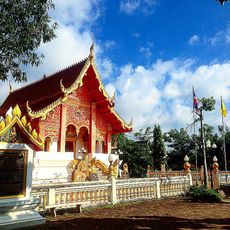
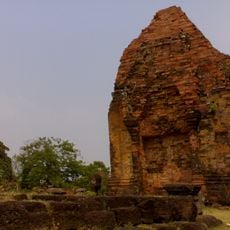
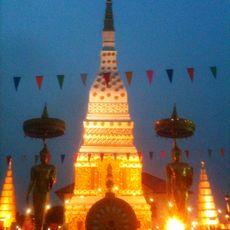
That Ing Hang, Buddhist pagoda in Savannakhet Province, Laos
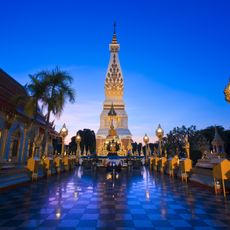
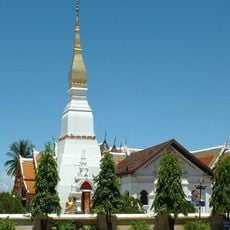
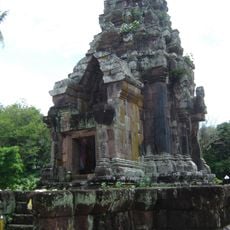
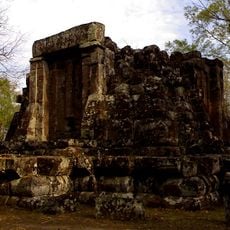
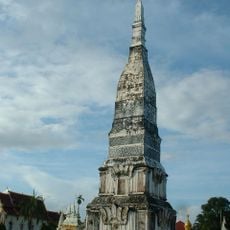
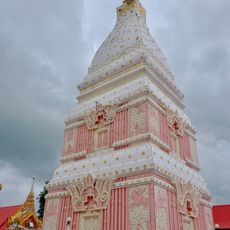
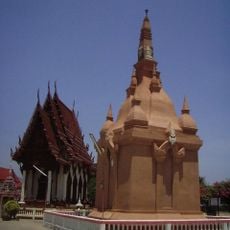
That Ing Hang is a Buddhist stupa in Savannakhet Province, Laos, with a square base and a height of 25 metres. Its name comes from "phing rang", meaning leaning against a rang tree, where the Buddha is said to have rested and received alms. The stupa has been modified over time, with Hindu additions and later Lao-style spires.
According to the Urankha That legend, That Ing Hang was built by King Sumintha Lat in 600 CE during the Kottabura kingdom, though other sources date it to around 400 CE. It was later adapted as a Hindu sanctuary under Angkor rule, restored by King Fa Ngum in 1353, and converted back to a Buddhist site by King Setthathirath in the 16th century, who added a Lao-style spire. Further restorations after 1949 expanded the grounds with an entrance arch, cloister and sermon hall.
The name comes from "phing rang", leaning against a rang tree where the Buddha is said to have stopped to receive alms at Si Khotrabun; his collarbone relic is kept in the stupa. The site is revered as a twin of Phra That Phanom, and the Urangkhathat legend links its founding to the Buddha's visit to Phra Sikhottabong.
That Ing Hang stands about 5 km northeast of Savannakhet town, so most visitors reach it by tuk-tuk or car rather than on foot. The base is a square, and the 25-metre spire is best seen in the morning light. The cloister, entrance gate and sermon hall added after 1949 frame the walk up to the stupa.
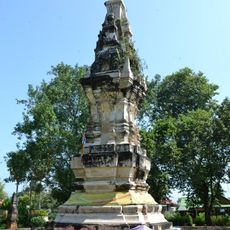
The name comes from "phing rang", leaning against a rang tree where the Buddha is said to have stopped to receive alms at Si Khotrabun; the site later received a relic, said to be a spinal bone, enshrined in the stupa. A low-relief carving added in the Angkor period remains visible on the structure.
The community of curious travelers
AroundUs brings together thousands of curated places, local tips, and hidden gems, enriched daily by 93,472 contributors worldwide.