Raouché Rocks, Natural limestone formations at Mediterranean coast in Beirut, Lebanon.
Raouché Rocks are two limestone formations in the sea off Beirut's western Corniche. The larger one, about 70 metres high with an average height of 25 metres, has a hollow centre; the smaller one is pointed by weathering. Visitors sail around them and pass through the opening.
Archaeological discoveries near the rocks reveal ancient human settlements, with stone tools and flints found along the shore indicating habitation for thousands of years. These artifacts suggest the area has been inhabited since prehistoric times.
The name Raouché is probably from the Aramaic 'rosh', meaning head, though some researchers link it to the French 'rocher' and the French Mandate period. Locals also call the rocks Hammam Rock, Love Rock and Suicide Rock, though suicides are rare and usually occur in the bay facing them. Climbers and candidates in the civil war have used the rock for banners and portraits.
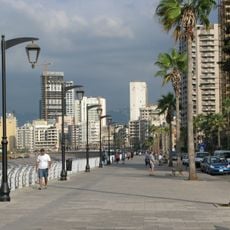
The formations are best viewed from the Corniche, a seaside promenade that runs along western Beirut and offers multiple vantage points. The area is easily accessible on foot, with several spots to stop and observe the rocks from different angles.
These rock formations emerged from strong seismic activity in the Mediterranean during the 13th century, making them a geological phenomenon that reveals rare insights into the region's tectonic forces. Their creation through natural upheaval continues to shape how the shoreline appears today.
The community of curious travelers
AroundUs brings together thousands of curated places, local tips, and hidden gems, enriched daily by 93,574 contributors worldwide.