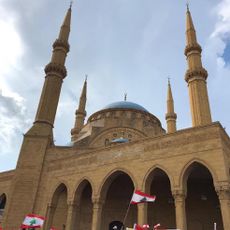
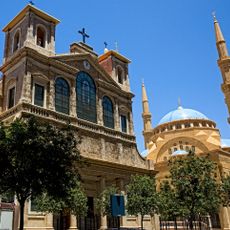
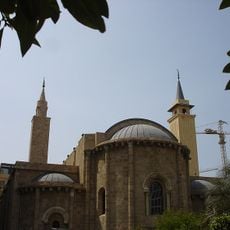
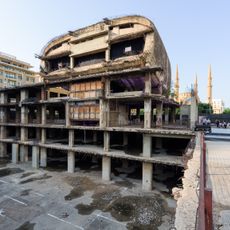
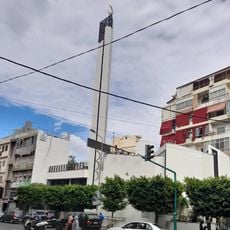
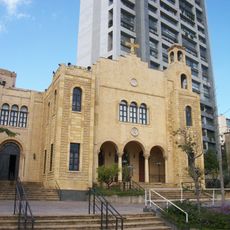
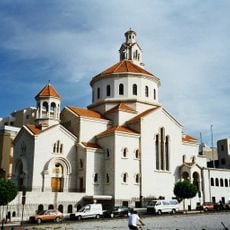
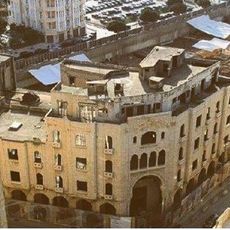
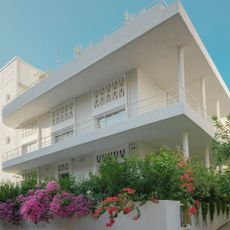
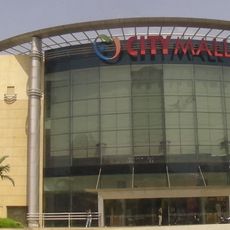
Al-Farouq Mosque, Mosque in Al-Zaydaniyah, Beirut, Lebanon
Al-Farouq Mosque is a religious building in Beirut that spreads across multiple floors, with spaces designed to accommodate visitors for prayer and activities. The structure includes areas for worship as well as rooms for teaching and gathering.
Construction began in 1890 (1308 AH) on land likely endowed by Hajj Muhammad Mustafa al-Butari, with Sheikhs Taha al-Nusuli and Abd al-Rahman al-Hut supervising and collecting donations. Abd al-Basit al-Unsi's 1909 guide noted work had started about a year earlier. In 1965 the Islamic Endowments Directorate demolished shops facing the mosque to create its current facade, funded by Hajj Anwar al-Bal'a. A 1981 renovation, delayed by the 1982 Israeli invasion, was completed in 1991.
The mosque is also known as Jami' Raml al-Zaydaniyya, after the Zaydaniyya quarter where it stands. It houses the 'Ulum al-Islam library, a hall for social activities and a school for Quran memorization. A girls' school, Tahdhib al-Fatat, once adjoined it on the west side.
The mosque stands in the Zaydaniyya quarter of the Musaytbeh area, north of the Raml; its current facade and entrance replaced shops demolished in 1965. A lift and escalator, added in 2001 at the expense of Prime Minister Rafic Hariri, serve elderly and disabled visitors. The prayer hall is on the upper floors, with a library, social hall and Quran school attached.
In 2001 a basement level was added, along with a lift and an escalator paid for by Prime Minister Rafic Hariri, so that elderly people, the sick and visitors with disabilities could reach the prayer halls; this was the first such installation in a Beirut mosque.
The community of curious travelers
AroundUs brings together thousands of curated places, local tips, and hidden gems, enriched daily by 93,483 contributors worldwide.