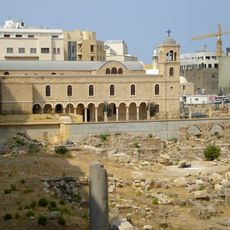
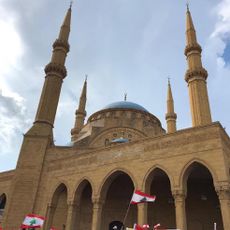
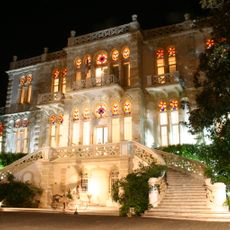
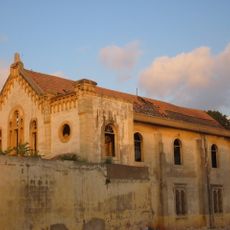
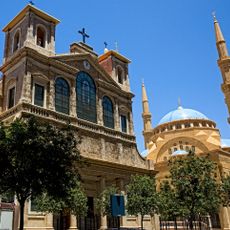
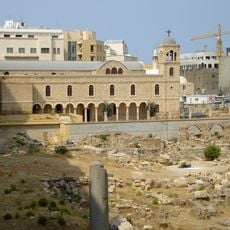
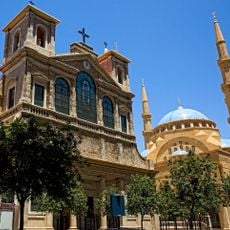
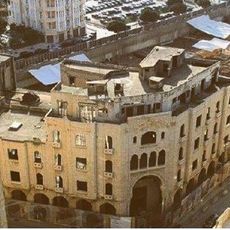
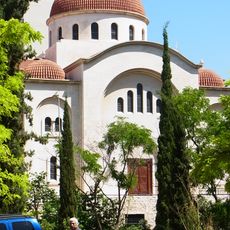
Al-Omari Grand Mosque, Romanesque mosque in central Beirut, Lebanon.
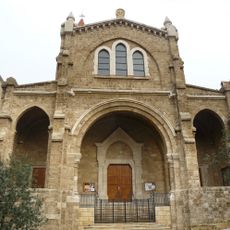
Al-Omari Grand Mosque is a mosque in central Beirut with a cross-shaped floor plan and sandstone walls. The building blends Romanesque, Byzantine, and Mamluk design elements into one structure.
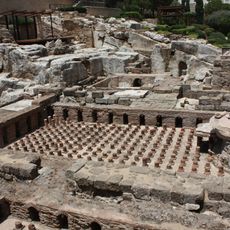
The building originally stood as a Roman temple dedicated to Jupiter and was later converted into a Byzantine church. Under Mamluk rule in 1291, it was finally transformed into a mosque.
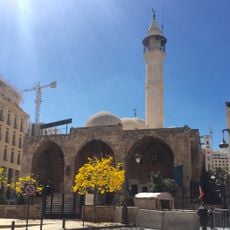
The name Al-Omari honours Umar ibn al-Khattab, the second caliph, and the building is also called Jami' Al-Kabir, the Great Mosque. It is the oldest place of worship in Lebanon, used successively as a temple, church and mosque. The Mamluk entrance and minaret added in 1350 still show traces of the former Crusader church's Byzantine style.
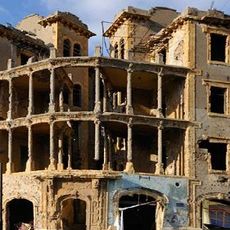
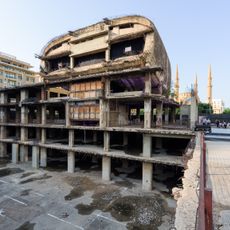
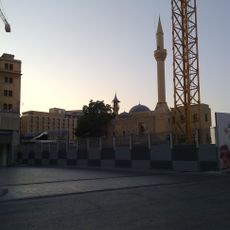
The mosque stands in Beirut's central district, its main entrance opening onto Maarad Street through a portico added in the French Mandate era. A second minaret rises at the north-west corner, and a columned courtyard was added in the 2004 restoration. Visitors should note that the building was badly damaged in the 1975–1990 civil war before that refurbishment.
The mosque's columns and foundations are the surviving parts of the Roman temple of Jupiter, and the 1350 Mamluk entrance and minaret still show traces of the earlier Byzantine church. A second minaret was later built at the northwest corner, above a new column-supported courtyard.
The community of curious travelers
AroundUs brings together thousands of curated places, local tips, and hidden gems, enriched daily by 93,469 contributors worldwide.