St. Louis Cathedral, Roman Catholic cathedral in Bab Idriss, Beirut, Lebanon
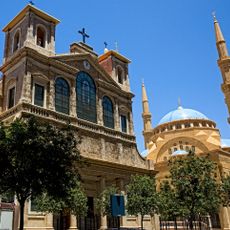
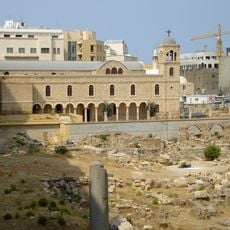
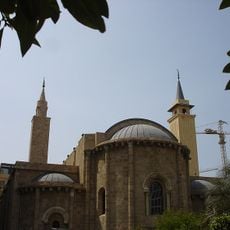
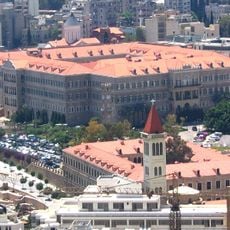
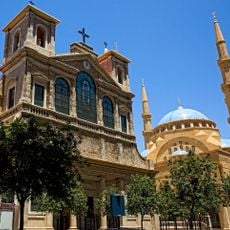
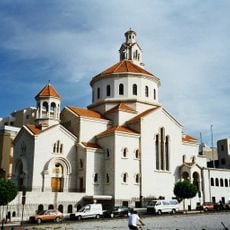
St. Louis Cathedral is a Latin Catholic church and convent on the northern slope of Serail Hill, next to Bab Idris. French architect Edmond Duthoit designed it in an eclectic Romanesque-Byzantine style using local materials; it has sandstone facades, pink-toned windows and a seven-sided bell tower added in 1950.
Capuchins reached Beirut in 1628 and used the old Saint George of the Maronites church before building a first Saint Louis church near today's Riad al-Solh square in 1730–1732. The present cathedral, designed by Edmond Duthoit, was built in 1864–1868 next to Bab Idris and served as the only Latin parish in Beirut. Raided in December 1975, it was looted and burned and friar Ferdinand Abu Jaoudeh was killed; after restoration it reopened in 2000 or 2002.
The cathedral is the seat of the apostolic vicariate of Beirut, erected in 1953, and its parish was the only Latin-rite parish in the city. It was served by Italian Capuchins from 1868 to 1903, then by French Capuchins until 1952, and since then by the Capuchin Vice-Province of the Middle East. The building is also known as Saint Louis of the French.
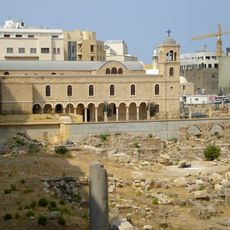
The cathedral stands on the northern slope of Serail Hill beside Bab Idris, one of Beirut's seven historic city gates, just north of the Grand Serail. The entrance is reached on foot through the dense central district, so allow time for traffic and walking. The restored interior reopened in 2000 and can be visited outside service times.
The bell tower added in 1950 is heptagonal, and the church's sandstone facades carry windows of a pink hue. The architect was Edmond Duthoit, who reached Beirut on 2 January 1862 with Melchior de Vogüé's archaeological mission and left for Cyprus before construction began in 1864.
The community of curious travelers
AroundUs brings together thousands of curated places, local tips, and hidden gems, enriched daily by 93,650 contributors worldwide.