Archaeological Museum of the American University of Beirut, archaeological museum on the American University of Beirut campus, Beirut, Lebanon
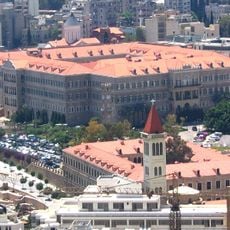
The Archaeological Museum of the American University of Beirut occupies Post Hall, opened in 1902, on the Beirut campus. Displays run along the gallery walls in chronological order, tracing pottery from the Neolithic to the Roman era, with a mezzanine added in 2006 holding coins, scarabs, seals, lamps and jewellery in table cases.
Founded in 1868 after Luigi Palma di Cesnola gave Cypriot pottery to the new American University of Beirut, the museum is the third oldest in the Near East after Cairo and Constantinople. Georges Post was its first curator, and Morris Jesup funded Post Hall, opened in 1902. It closed during World War II, reopened in 1948, and doubled its floor space under Dimitri Baramki in 1964.
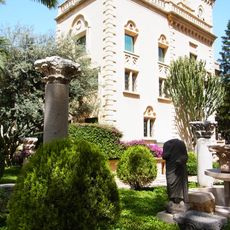
The Phoenician showcases explain how purple dye was extracted from murex shells, beside Phoenician pottery and glass. Phoenician religion appears through a large stela of a priest, the throne of Astarte, libation spoons and a glass amulet. The Ford Mandible, from the 5th century BC, shows the earliest known example of dentistry.
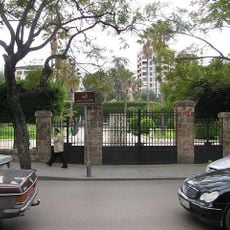
The museum occupies Post Hall on the AUB campus; enter from the main campus gates and ask for the archaeology museum. The mezzanine, reached by a staircase lined with sarcophagi, holds the coin, scarab and seal cases. Restoration work has followed the 2020 blast, so confirm access before crossing campus.
The Ksar Akil collection, donated by a Boston University team that excavated the site in 1948, shows a 23-metre sequence of 37 layers radiocarbon dated between 50,000 and 18,000 BP, including a human jaw dated to 40,000 BP and a complete skull dated to 35,000 BP.
The community of curious travelers
AroundUs brings together thousands of curated places, local tips, and hidden gems, enriched daily by 93,555 contributors worldwide.