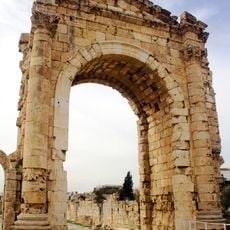
Tyre, Archaeological site and ancient city in southern Lebanon
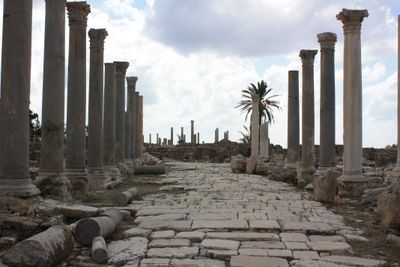
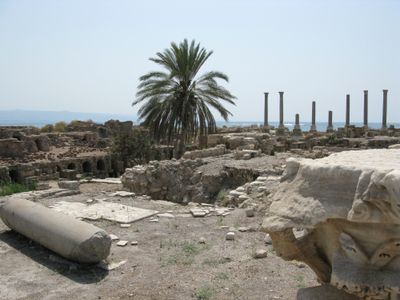
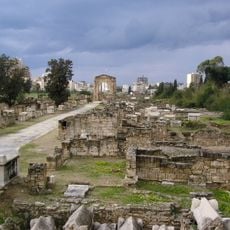
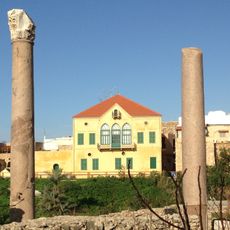
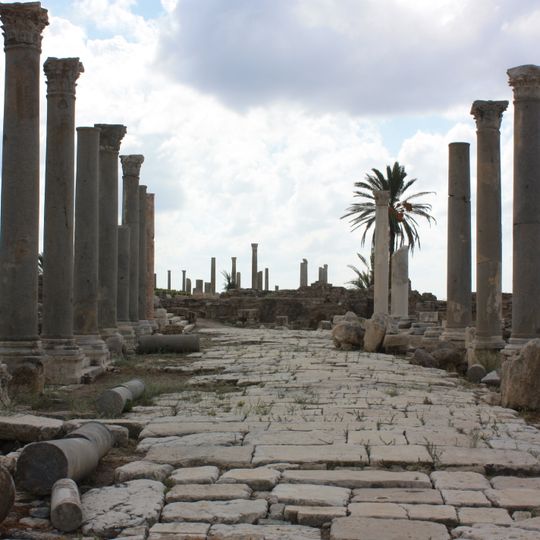
Tyre is an ancient city and archaeological site on the southern Lebanese coast. Its remains lie in two main areas: the former island, now a peninsula linked to the mainland by a causeway, and the mainland necropolis of Al-Bass. Visitors see a wide paved road lined with broken and intact columns, plus a field of low walls, fallen column drums and a single palm tree.
Tyre was founded, according to Herodotus and Philo of Byblos, around 2750 BCE by Usoos as an island called Ṣūr, "rock" in Phoenician. It fell under Egyptian influence in the New Kingdom and grew rich on glass, cedar wood and purple dye from sea molluscs. In 332 BCE Alexander the Great took the city after a seven-month siege, using rubble from the old coastal town to build a causeway that joined the island to the mainland, turning it into a peninsula.
Tyre's name comes from the Phoenician Ṣūr, "rock", for the islet where the city began. Its purple dye, made from sea molluscs, coloured cloth reserved for the aristocracy, and the trade in glass and cedar wood made the city prosper under Egyptian influence in the 18th and 19th dynasties. The god Melqart was worshipped here.
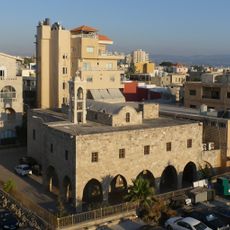
The ruins are split between the peninsula and the Al-Bass site inland, connected by the Hellenistic causeway (Hiram Street). The Al-Bass area, with the hippodrome and necropolis, lies in the El-Buss district; the peninsula holds the Roman baths and palaestra. Some areas, especially around the Crusader basilica, are poorly lit at night.
The 1984 World Heritage listing was proposed by Emir Maurice Chehab, head of Lebanon's antiquities service, who excavated at Tyre from 1957 until the civil war broke out in 1974. The protected area was only precisely defined in 2010: 148.2 hectares of archaeological zones plus 5.6 hectares of garden land, spread over three separate locations in the modern city.
The community of curious travelers
AroundUs brings together thousands of curated places, local tips, and hidden gems, enriched daily by 94,048 contributors worldwide.