Rosh HaNikra grottoes, Natural sea caves at Mediterranean coast in Northern District, Israel.
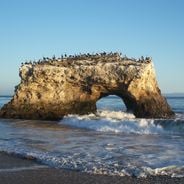
Rosh HaNikra is a set of sea caves cut by waves into a chalk cliff about 70 metres high on the Mediterranean coast. The caves run roughly 200 metres and split into two main branches that connect. The rock is pale chalk with bands of flint, and the cliff face shows horizontal layers above dark, wet rock at the waterline.
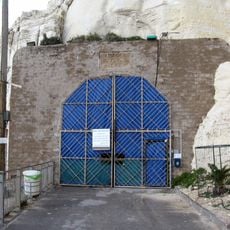
In ancient times, the location served as a known landmark and boundary point for those traveling along the coast. During World War II, military forces tunneled through the rock to connect the regional railway network as part of their operations.
The name comes from the Arabic Ras an-Naqurah, 'head of the grotto', while the Hebrew form refers to the caves themselves. The Book of Maccabees calls the headland the Ladder of Tyre, a boundary between Jewish Galilee and Tyre. A legend tells of a bride from Acre whose groans are heard in the Cave of Groans.
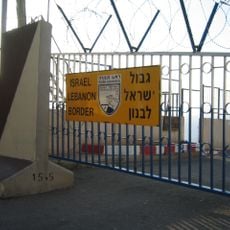
A cable car with a 60-degree gradient, made by Doppelmayr Garaventa, carries visitors from the cliff top down to the grottoes; its base station sits on the sea and storms can suspend service. The 1968 tunnel, 400 metres long, now serves as the exit route. The site lies close to the Lebanese border, about 10 km north of Nahariya.
The northern grotto is the only one cut entirely through hard rock, while the rest formed in softer layers. Divers once reached the caves only from the open sea; a 400-metre tunnel dug in 1968 opened land access, and a cable car with a 60-degree gradient now descends the cliff.
The community of curious travelers
AroundUs brings together thousands of curated places, local tips, and hidden gems, enriched daily by 93,885 contributors worldwide.