Chest opened
+${chestReward.xp} XP
Explorer
NOUVEAU ×${chestReward.collectible.quantity}
tapez pour fermer

See the monuments around you in AR Open chests in the app

Around Us is built for your phone — point your camera at the streets and discover the monuments and places around you in augmented reality. Around Us is built for your phone — chests unlock when you walk, explore and capture nearby places.

•

Enable Location

We need your location to show you interesting places around you

Discover nearby places

Find interesting locations and hidden gems around you

Precise directions

Get accurate directions and distances to places

Your location is never shared with other users. It's only used when you tap the location button.

Umm al-Amad, Lebanon

Log in to your account

Start exploring — it's free

Trusted by 93,537 travelers worldwide

Continue with Google
Continue with Apple
or

We will send you a code to connect

By continuing, you accept our Terms and Conditions and our Privacy Policy

Check your inbox

We've sent a pincode in your inbox. Please enter the code below.

Umm al-Amad, Lebanon, Archaeological site in southern Lebanon

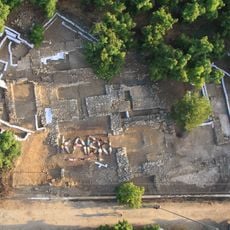
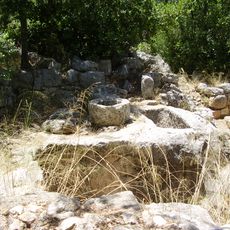
Umm al-Amad is a Hellenistic Phoenician site of over six hectares on a low hill near Naqoura, with two temples: the Temple of Milk‘ashtart and the Eastern Temple with its Throne Chapel. The temples date to between 287 and 222 BCE, and 23 Phoenician adoration steles were found there.

Umm al-Amad was built in the Persian or Hellenistic period; its two temples date to between 287 and 222 BCE. No Roman buildings were found, though Byzantine reoccupation left traces. Ernest Renan began excavating in 1861 but stopped when he found the remains were no older than the Hellenistic age. Maurice Dunand led work in 1943–1945.

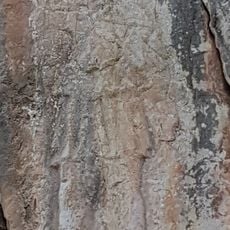
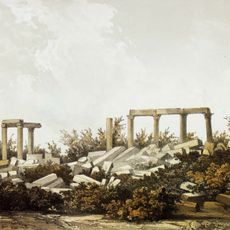
The site's Arabic name, Umm al-Amad, means "Mother of Columns", after the column remains there; the ancient name Hammon survives in nearby Wadi Hamol and the village of Hamul. Finds include 23 Phoenician adoration steles showing upright figures, and a Phoenician sundial stone. Two stone seats of Astarte were found, one in the Throne Chapel of the Eastern Temple.

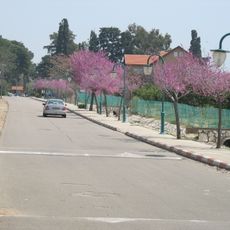
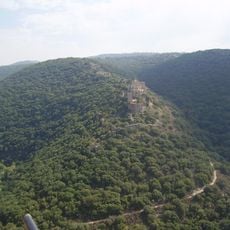
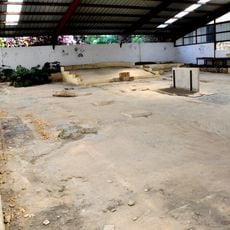
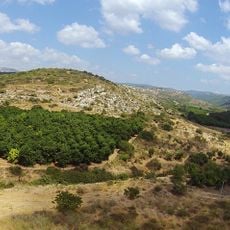
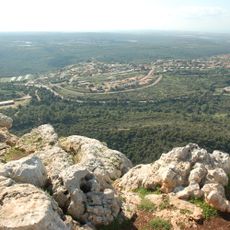
The site lies on a low hill on a rocky plain sloping toward the sea, next to Wadi Hamoul, just north of Naqoura. The municipality of Naqoura cleaned and arranged the site in 2015 to prepare it for visitors and researchers. The ground is uneven and parts of the excavations are exposed, so sturdy footwear helps.

Among the finds is a Phoenician sundial stone, one of the site's most noted objects. The site also yielded a 4.40-metre decorated lintel from the Eastern Temple's entrance, carved with a winged sun disc, uraei and figures holding staffs topped with stag heads and stars inside crescents.

The community of curious travelers

AroundUs brings together thousands of curated places, local tips, and hidden gems, enriched daily by 93,537 contributors worldwide.


Start exploring
Part of
Samian Research
GPS coordinates
33.12800,35.15350
Latest update
November 1, 2026 03:01
Reviews
Share your experience

No review yet

Discussions
Start a discussion...

No discussion yet

« Umm al-Amad, Lebanon - Archaeological site in southern Lebanon » is provided by Around Us (aroundus.com). Images and texts are derived from Wikimedia project under a Creative Commons license. You are allowed to copy, distribute, and modify copies of this page, under the conditions set by the license, as long as this note is clearly visible.

Discover hidden gems everywhere you go!

From secret cafés to breathtaking viewpoints, skip the crowded tourist spots and find places that match your style. Our app makes it easy with voice search, smart filtering, route optimization, and insider tips from travelers worldwide. Download now for the complete mobile experience.

Around Us App Screenshot
❝

A unique approach to discovering new places❞

— Le Figaro

❝

All the places worth exploring❞

— France Info

❝

A tailor-made excursion in just a few clicks❞

— 20 Minutes

Around Us
Travel Guide & Maps
Download

Send to your phone

QR Code
1

Open the camera app on your mobile.

2

Point at the QR code with your camera. A notification will appear.

3

Tap the notification to open the link.