Montfort Castle, Crusader castle in Northern District, Israel
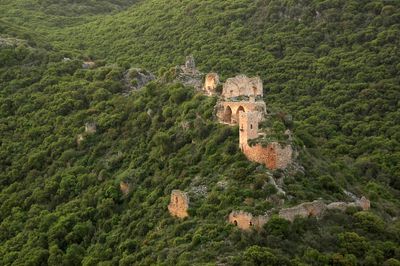
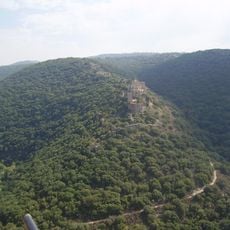
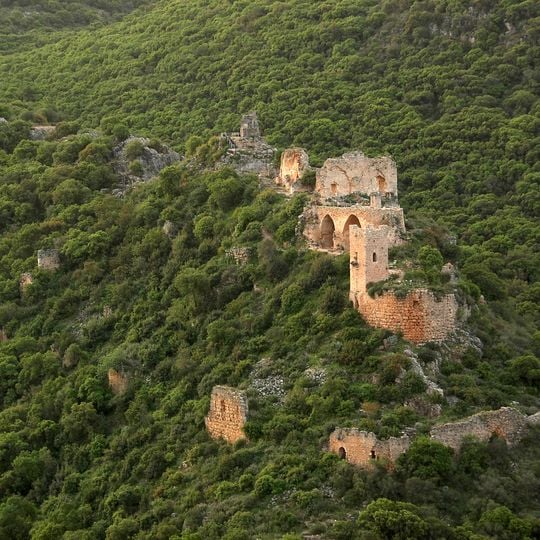
Montfort Castle is a ruined spur castle on a narrow, steep ridge above the southern bank of Nahal Kziv. Its defences cluster at the eastern side, where two ditches precede a large D-shaped tower. The main surviving structure is an elongated two-storey hall-type building, the former keep, with pale tan and pinkish-brown masonry, a rounded projection and two pointed arch openings below; a rectangular tower with a small window and reddish-orange stone at its base stands to the right.
The de Milly family built a fortified farm here in the mid-12th century; it passed to the Teutonic Knights in 1220, who made it their headquarters with archive and treasury. In 1266 an army of Sultan Baibars besieged it without success, but in 1271 Baibars returned, breached the outer walls and forced the knights to surrender. The Mamluks then demolished the castle over twelve days.
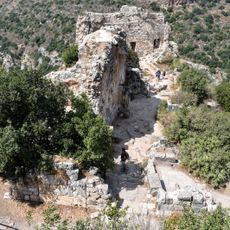
The fortification displays military building styles from France and Germany, visible in how the outer walls and inner keep were constructed differently. The layout of the defensive structures shows choices made by medieval builders about protection and control of the space.
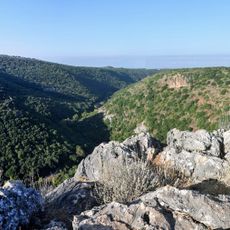
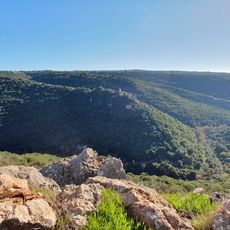
The ruins connect to a hiking trail that runs through the Kziv Nature Reserve and requires sturdy shoes and several hours to walk. The path is demanding but does not need special equipment to enjoy.
The castle's Arabic name, Qal'at al-Qurain, means "Castle of the Little Horn", after the spur it stands on. The Teutonic Order kept its headquarters, archive and treasury here from 1229; after the 1271 surrender the archive was carried intact to Acre, then to Tyrol in Austria, where it remains a key source for Crusader history.
The community of curious travelers
AroundUs brings together thousands of curated places, local tips, and hidden gems, enriched daily by 92,638 contributors worldwide.