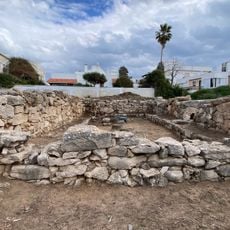
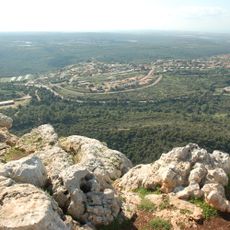
Hurvat Manot, Archaeological ruins in Northern District, Israel.
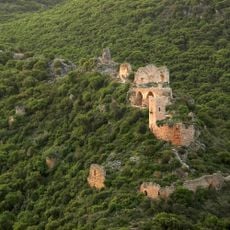
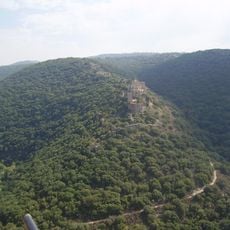
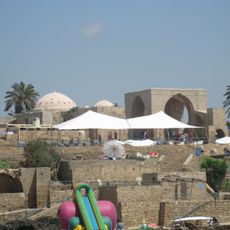
Hurvat Manot is a fortified Crusader-era sugar-producing farm on a small hill 91 m above sea level on the southern bank of Nahal Kziv, east of Route 70 near Nahariya. Its walls stand up to seven metres high, and the ground level today lies about three metres above the original floor, buried by landslide and silt. A conduit from the stream fed a water wheel that turned millstones, and the vaulted boiling hall measures 35 by 8 metres.
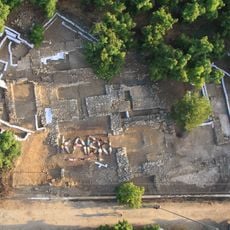
A settlement stood on nearby Hurvat Sogar in the Roman and Byzantine periods, identified with Bivra of the Jerusalem Talmud; building remains, a church, caves and winepresses survive there. The Crusaders renewed settlement on this hill in the 12th century, when the estate Manueth is first recorded. After Saladin took the fortress in 1187 it returned to Crusader hands, was sold to the Templars in 1212 and taken by the Mamluk sultan Baybars in 1260.
The name Manueth appears in Crusader charters from the second half of the 12th century, when the knight Geoffroy le Tor leased the estate from the Church of San Salvatore on Mount Tabor and grew sugar cane there. Sugar boiled in the vaulted hall was poured into clay pots, in which it was exported to Europe.
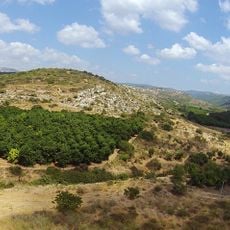
The site lies on a small hill on the southern bank of Nahal Kziv, east of Route 70 near Nahariya, where the stream leaves the Galilee hills for the coastal plain. The hill is covered in natural scrub tended by KKL-JNF, which cleared much of the vegetation over the remains. The ground level today stands about three metres above the original Crusader floor, so look for the tops of walls and the water channel rather than whole rooms.
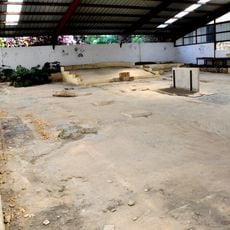
The complex preserves every stage of Crusader sugar production: an aqueduct from Nahal Kziv turned a paddle wheel that drove millstones crushing cane, and the juice was boiled in a 35-by-8-metre vaulted hall whose northern wall still shows the stoking openings. The ground level today lies about three metres above the original floor, burying further parts of the plant.
The community of curious travelers
AroundUs brings together thousands of curated places, local tips, and hidden gems, enriched daily by 94,456 contributors worldwide.