Tomb of Shah Rukn-e-Alam, 14th-century Islamic mausoleum in Multan District, Pakistan
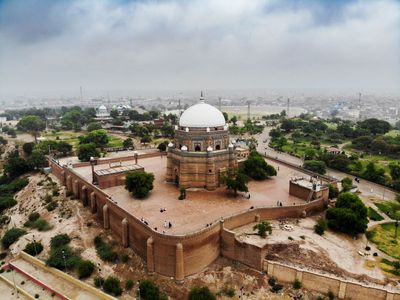
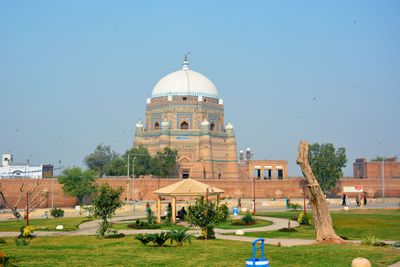
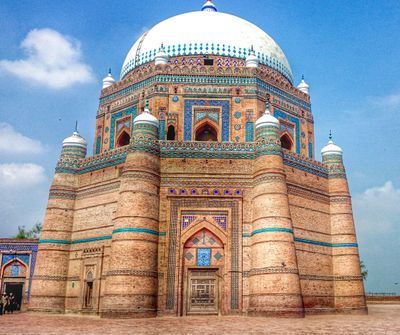
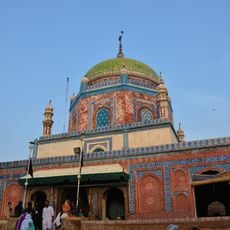
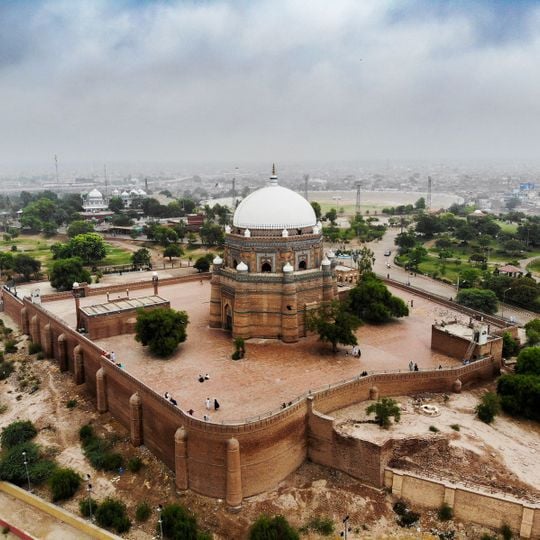
The Tomb of Shah Rukn-e-Alam is a 14th-century structure in Multan District, Pakistan, whose octagonal form rises 35 meters (115 feet) into the sky. Its outer walls of red brick are covered with terracotta tiles that form geometric patterns and reflect light in varying shades.
Construction took place between 1320 and 1324 under the patronage of Ghiyath al-Din Tughluq and stands as the earliest example of Tughluq architecture. The building was originally intended as a resting place for the sultan himself, but later became dedicated to the revered Sufi saint.
The saint's name translates to "Pillar of the World," reflecting his standing among followers who visit throughout the year. People come to pray at the inner chamber, where lamps burn continuously and the air carries the scent of rose water.
Visitors can enter the building through three doorways, with the main entrance positioned on the eastern side facing Mecca. The rooms inside are cool and half-lit, so it may take a few moments for eyes to adjust to the subdued light.
The massive dome stands without any internal support columns and spans the entire space with only the outer shell holding it in place. Inside, the saint rests alongside 72 family members, whose graves cover the floor of the main chamber.
The community of curious travelers
AroundUs brings together thousands of curated places, local tips, and hidden gems, enriched daily by 91,535 contributors worldwide.